
Chalk AI
Paid ✓ VerifiedChalk AI is a feature store and real-time data platform for machine learning that lets engineers define features once and serve them online and offline with low latency.
📋 About Chalk AI
Chalk AI is a data platform for machine learning teams that unifies feature engineering, storage, and serving into a single Python-native system. Instead of separate pipelines for training and production, engineers define features as Python functions that Chalk orchestrates to compute on demand, cache, and serve with sub-millisecond latency to inference endpoints. The platform handles streaming data, windowed aggregations, and third-party API enrichments behind the same interface.
Chalk targets a painful set of problems in production ML: training-serving skew, data pipeline fragility, and the ever-growing complexity of feature logic spread across notebooks, DAGs, and inference code. By turning features into first-class Python primitives with type-checked inputs and outputs, Chalk makes it easy to test features, version them, and roll back when issues arise. Native integrations connect to Postgres, Snowflake, Kafka, and dozens of SaaS APIs so features can blend internal data with external signals like credit bureau pulls or identity verification services.
The platform is widely adopted by fintech companies, fraud and risk teams, and marketplaces where low-latency feature serving drives real production decisions. Customers cite dramatic reductions in engineering time required to ship new models, along with better observability into why a given prediction was made. Chalk is aimed at serious ML infrastructure teams rather than prototype builders, and pricing reflects enterprise deployment scenarios.
⚡ Key Features of Chalk AI
Python-Native Feature Definitions
Define features as typed Python functions with clear inputs and outputs. Chalk compiles these definitions into a dependency graph it can execute online or offline with the same logic, eliminating training-serving skew. Engineers benefit from type checking, unit tests, and standard Python tooling.
Online and Offline Serving
Serve features at sub-millisecond latency to inference endpoints and simultaneously compute historical versions for model training with point-in-time correctness. A single feature definition powers both paths, removing the duplication and divergence that plague traditional ML stacks.
Streaming and Windowed Aggregations
Handle event streams from Kafka, Kinesis, and other brokers with windowed aggregations defined in Python. Chalk maintains rolling counts, sums, and derived signals with backfill support so features stay fresh without handwritten stream processors. Backfills use the same definitions as live compute.
Third-Party Data Integrations
Native connectors pull from Postgres, Snowflake, BigQuery, and dozens of SaaS APIs including credit bureaus, identity providers, and enrichment services. Features can blend internal and external signals seamlessly, with automatic caching to control cost on rate-limited APIs.
Observability and Versioning
Every feature computation is logged with inputs, outputs, latency, and version so teams can debug individual predictions, audit model decisions, and roll back bad feature changes safely. Dashboards show feature drift, freshness, and serving error rates in real time.
Training Dataset Generation
Produce point-in-time correct training datasets at any historical cutoff by replaying the feature graph against stored data. This eliminates a major source of data leakage in production ML and saves the handwritten historical queries that typically compose training data.
Enterprise Deployment
Available as managed cloud or customer-hosted deployments within private VPCs for organizations with strict data residency requirements. SOC 2 compliance, SSO, and audit logging meet enterprise security standards. Pricing scales with feature compute and serving volume.
🎯 Use Cases for Chalk AI
⚖️ Chalk AI Pros & Cons
Advantages
- ✓Unifies online and offline feature serving with one definition
- ✓Python-native with full type checking and testing
- ✓Sub-millisecond serving latency suitable for real-time decisioning
- ✓Strong observability and versioning built in
- ✓Handles streaming, batch, and third-party enrichments uniformly
Drawbacks
- ✗Enterprise pricing not suitable for small teams or prototypes
- ✗Requires ML engineering sophistication to adopt fully
- ✗Less turnkey than SaaS ML platforms aimed at business users
📖 How to Use Chalk AI
Request access at chalk.ai and set up either a managed cloud workspace or customer-hosted deployment.
Connect your data sources including databases, warehouses, streams, and third-party APIs.
Define features as Python functions in the Chalk repository with types and tests.
Deploy features and query them in training notebooks or from production inference endpoints using the client libraries.
Monitor feature health, drift, and serving metrics in the observability dashboard.
Version and roll back feature changes using standard Git workflows integrated with the Chalk CLI.
❓ Chalk AI FAQ
Chalk is a Python-native feature store and real-time data platform for machine learning that lets engineers define features once and serve them for both online inference and offline training with consistent logic.
Because the same Python feature definition powers both online serving and historical training dataset generation, the logic cannot drift between environments — a common cause of production ML problems.
Yes. Chalk supports Kafka, Kinesis, and other event streams with windowed aggregations and backfill support using the same Python-based feature definitions.
Yes. Chalk offers both managed cloud and customer-hosted deployments inside private VPCs for organizations with strict data residency or governance requirements.
Chalk is aimed at serious ML infrastructure teams at fintech, marketplace, fraud, and risk organizations where real-time feature serving and production reliability matter. It is less suited to solo prototypes.
Related to Chalk AI

Accrete AI
Accrete AI builds autonomous enterprise AI agents for defense, government, and commercial intelligence workflows.

Ace AI
Ace AI is an AI-powered interview and career coach that helps job seekers prepare with mock interviews, resume feedback, and personalized career guidance.

Actively AI
Actively AI is an AI sales prospecting platform that researches accounts, identifies buyer signals, and writes personalized outbound at pipeline scale.

Airship AI
Airship AI provides video intelligence and data management solutions that use AI to search, analyze, and secure large-scale video evidence.

Alex AI
Alex AI is a macOS AI assistant that lives in your menu bar, offering instant writing help, code assistance, and context-aware productivity features.
Altana AI
Altana AI is a global supply chain intelligence platform that maps the world's supply networks and surfaces risks with AI and public data.
Featured on WhatIf.ai
Add this badge to your website to show you're listed on WhatIf AI
Alternatives to Chalk AI

Base44 AI
Base44 AI is an AI app builder and website builder that generates full-stack web applications from natural language descriptions with backend, database, and UI included.

Browse AI
Browse AI is a no-code web scraping and monitoring tool that extracts structured data from any website and tracks changes over time without writing code.


Cantina AI
Cantina AI is a freemium platform for building and deploying full-stack web applications using AI-assisted development with live preview and one-click deployment.
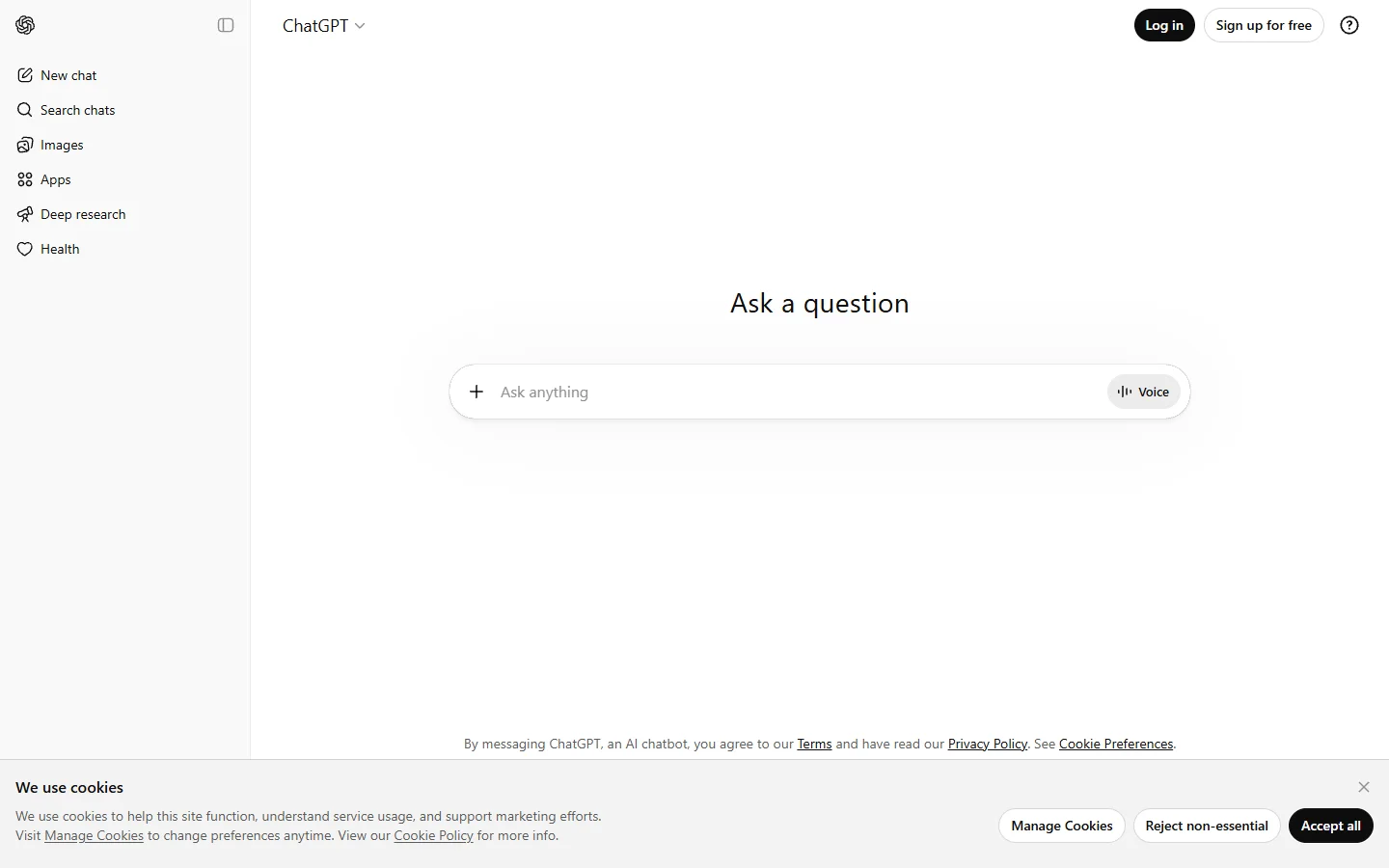

ChatGPT
ChatGPT AI assistant by OpenAI for writing, coding, research, image analysis, and everyday problem-solving.