Altana AI
Paid ✓ Verified 🔥 TrendingAltana AI is a global supply chain intelligence platform that maps the world's supply networks and surfaces risks with AI and public data.
📋 About Altana AI
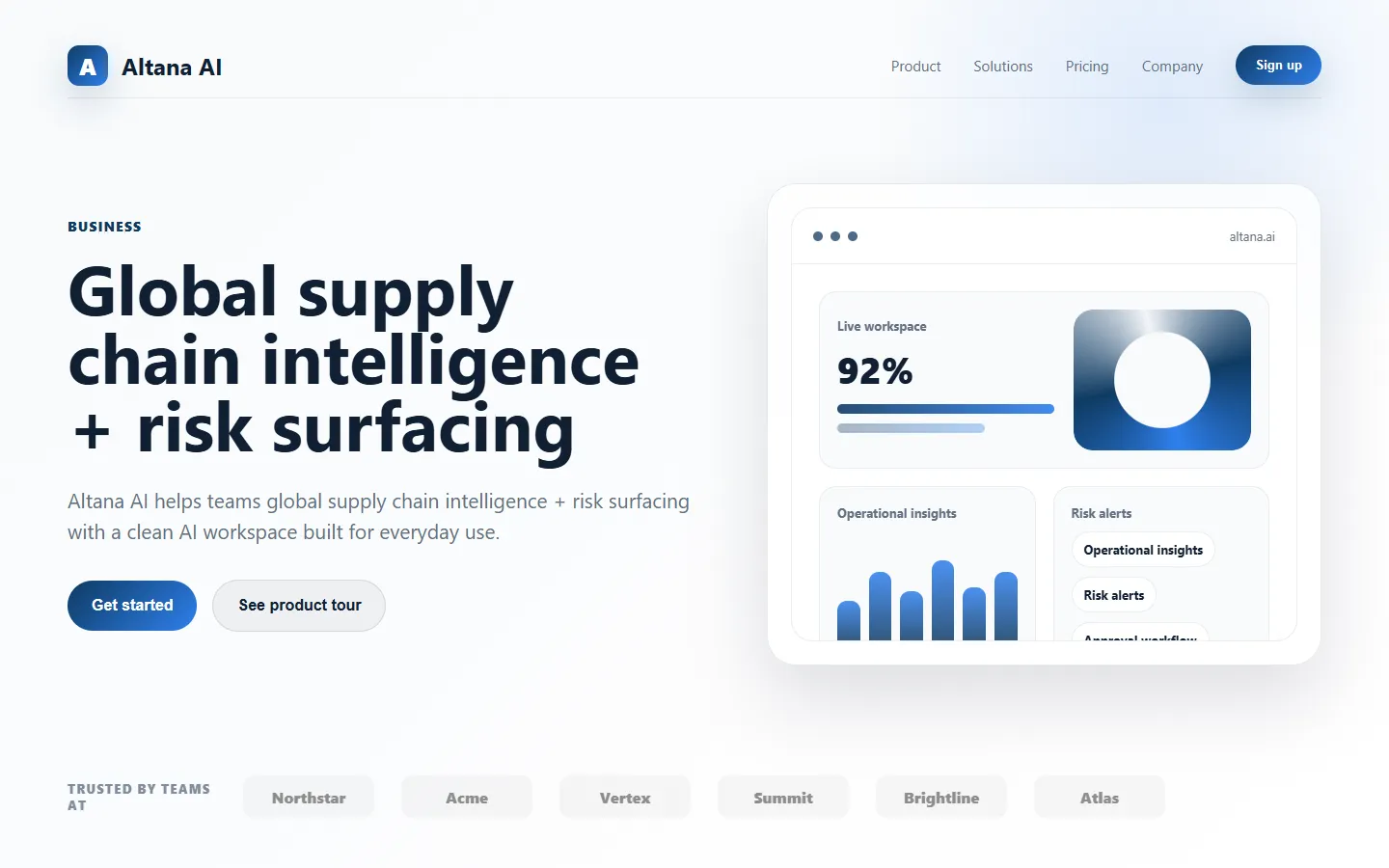
Altana AI is the leading value-chain management platform that maps and analyzes the world's interconnected supply networks using proprietary AI and federated public data sources like customs records, shipping manifests, and corporate filings. The platform gives governments and large enterprises unprecedented visibility into where their goods and suppliers ultimately come from — including indirect tiers most buyers never see — and flags exposure to sanctions, forced labor, environmental risks, and geopolitical shocks.
The Altana Atlas is the platform's core product, a dynamic map of billions of supply chain relationships that customers can query by company, product, country, or risk type. AI models infer connections where paperwork is missing and cluster entities across multiple names and registrations. The platform also powers compliance workflows like UFLPA enforcement, sanctions screening, and due diligence, embedding intelligence directly into customer operations.
Altana AI is used by Fortune 500 manufacturers, retailers, and federal agencies including US Customs and Border Protection. Its combination of scale, AI-driven inference, and compliant data sharing has made it a category-defining platform in global trade and supply chain risk.
⚡ Key Features of Altana AI
Altana Atlas Global Supply Map
A dynamic map of billions of supply chain relationships, pulling from customs records, corporate registries, shipping manifests, and partner data. Customers query it to see multi-tier supplier exposure for any product or company. The graph updates continuously as new data arrives.
AI-Driven Entity Resolution
Machine learning models cluster companies, facilities, and shipments across inconsistent spellings, jurisdictions, and ownership structures to produce a canonical view of each actor in the supply chain. This solves a problem that has defeated traditional compliance tools for decades. Resolved entities support downstream risk scoring and screening.
Risk Scoring and Alerting
Supplier and shipment risk scores combine signals across sanctions, forced labor regulations, environmental exposure, and geopolitical stress. Customers receive alerts when risk changes for any entity in their chain. This shifts compliance from periodic audits to continuous monitoring.
UFLPA and Sanctions Compliance
Workflow features map directly to US enforcement regimes like the Uyghur Forced Labor Prevention Act and OFAC sanctions, helping customers prepare detention responses and demonstrate due diligence. Reports can be generated in formats expected by regulators. This reduces legal exposure materially.
Federated Data Sharing
Altana's federated learning architecture allows customers and partners to benefit from shared intelligence without exposing raw proprietary data. This unlocks network effects that individual companies could not achieve alone. Trust and data protection are core to the platform design.
APIs and Enterprise Integrations
Data and alerts can be embedded into ERP, procurement, and compliance systems through APIs, so insights reach the people who need them at the right moment. Pre-built integrations accelerate deployment. This operationalizes supply chain intelligence rather than trapping it in a portal.
🎯 Use Cases for Altana AI
⚖️ Altana AI Pros & Cons
Advantages
- ✓Unmatched scale and depth of supply chain mapping
- ✓AI entity resolution solves a hard industry problem
- ✓Strong compliance and regulatory alignment
- ✓Federated data model protects customer IP
- ✓Deep integrations operationalize insights
Drawbacks
- ✗Enterprise pricing well beyond smaller companies
- ✗Complexity requires dedicated analyst training
- ✗Coverage varies by country and industry
- ✗Primarily English-language regulatory coverage
📖 How to Use Altana AI
Engage Altana AI's sales team to scope use cases and supplier scope.
Provide internal supplier and product data under a secure data-sharing agreement.
Work with Altana's team to configure risk models and alert thresholds.
Train compliance and procurement teams on the Atlas interface and API.
Integrate alerts and data feeds into internal ERP and compliance systems.
Iterate risk models as regulatory requirements evolve.
❓ Altana AI FAQ
Large multinational enterprises, financial institutions, and government agencies including US Customs and Border Protection use Altana for supply chain intelligence and enforcement.
A combination of public customs and corporate records, commercial partnerships, and federated customer data shared under strict governance.
AI entity resolution and cross-source validation significantly improve accuracy compared with raw records alone, though customers should still validate critical findings.
Yes. Enterprises can pull alerts, entity records, and risk scores into their own systems through robust APIs.
Pricing is enterprise and based on scope and use case. Contact sales for a quote.
Related to Altana AI

A2E AI
A2E AI productivity platform converts audio and video recordings into transcripts, summaries, and action items with speaker identification.

Abnormal AI
Abnormal AI uses behavioral AI to detect business email compromise, account takeover, and socially engineered phishing that bypasses secure email gateways.

Abridge AI
Abridge AI medical documentation platform that records and summarizes clinical conversations into structured physician notes in real time.

Accrete AI
Accrete AI builds autonomous enterprise AI agents for defense, government, and commercial intelligence workflows.

Forge AI
Forge AI is an enterprise AI platform that automates back-office operations by extracting data from unstructured documents and orchestrating workflows.

Gather AI
Gather AI is an autonomous warehouse inventory platform that uses drones and computer vision to automate cycle counts in distribution centers.
Featured on WhatIf.ai
Add this badge to your website to show you're listed on WhatIf AI
Alternatives to Altana AI
A2E AI
A2E AI productivity platform converts audio and video recordings into transcripts, summaries, and action items with speaker identification.
Abnormal AI
Abnormal AI uses behavioral AI to detect business email compromise, account takeover, and socially engineered phishing that bypasses secure email gateways.
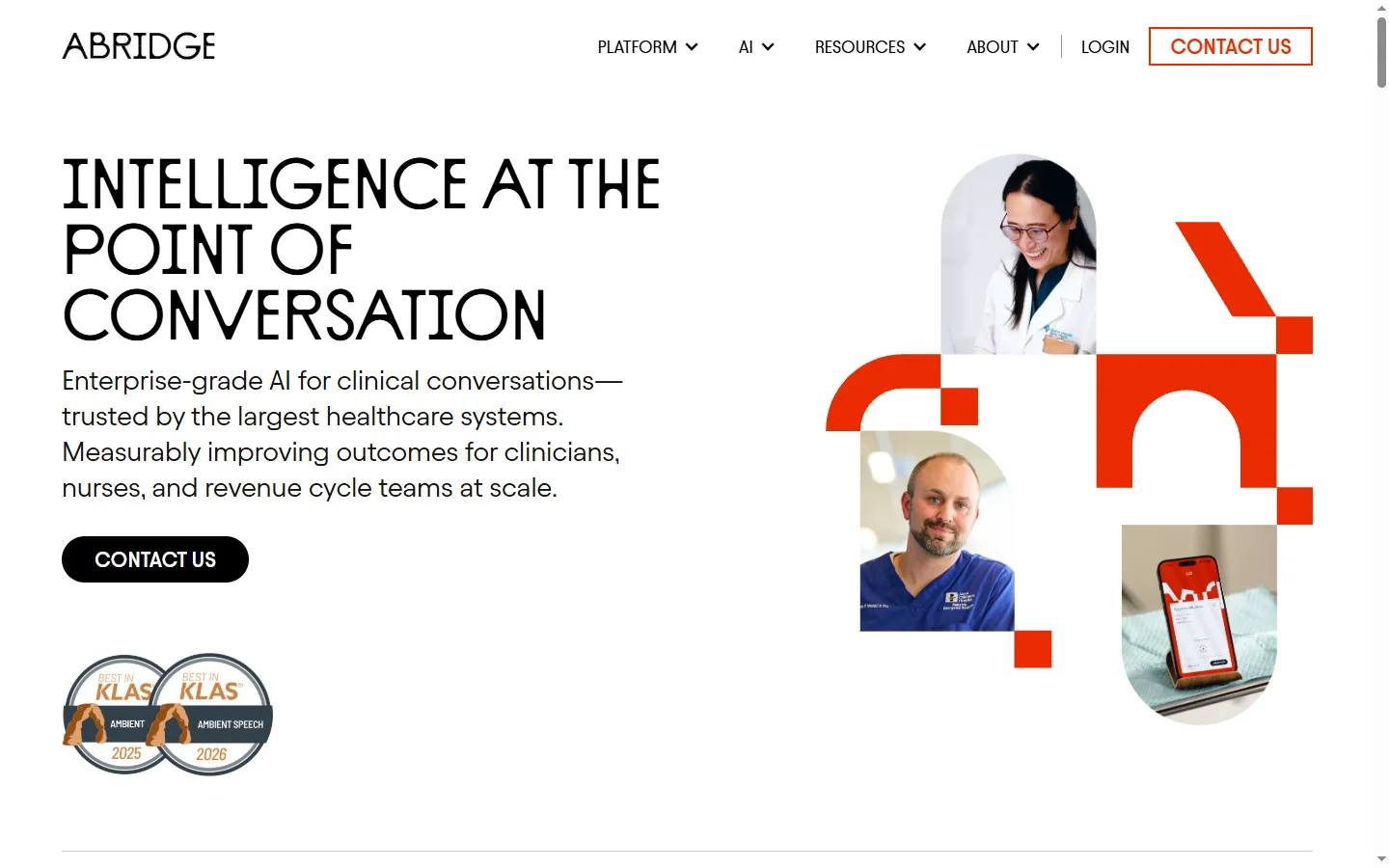
Abridge AI
Abridge AI medical documentation platform that records and summarizes clinical conversations into structured physician notes in real time.

Air AI
Air AI conducts autonomous full-length AI phone calls for sales prospecting, appointment setting, and customer service without human agents.