
Sloyd AI
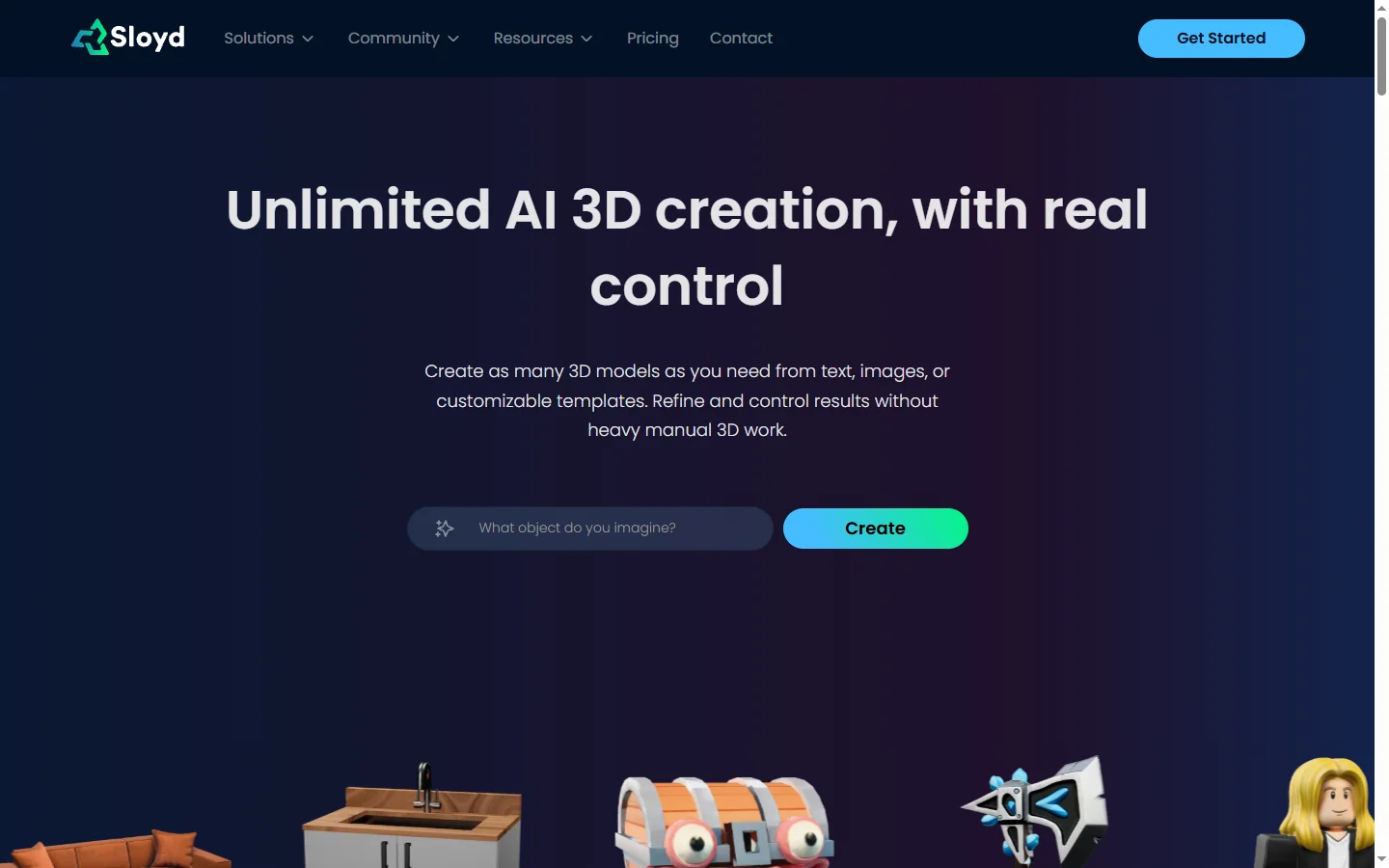
Freemium ✓ VerifiedSloyd AI is a 3D model generator that creates optimized, game-ready 3D assets from text prompts or parameter sliders for games and interactive experiences.
📋 About Sloyd AI
Sloyd AI is a 3D asset generator purpose-built for creating game-ready, optimized 3D models without manual modeling. The sloyd ai platform combines procedural generation with AI-assisted parameterization so users can generate assets by typing natural-language prompts or tweaking sliders in a library of object templates — from buildings and vehicles to props and furniture. Output includes clean topology, UV maps, and texture sets, ready to drop into Unity, Unreal Engine, Blender, or Three.js projects.
Unlike pure neural 3D generation approaches that often produce messy, unusable geometry, Sloyd leverages procedural rules refined by AI to ensure output is predictably clean and lightweight. Models can be exported at multiple LOD (level-of-detail) levels for different performance targets. The platform also provides a runtime SDK that lets end-users customize assets inside shipped products — for example, letting players design their own spaceships in a game at runtime. As an ai 3d generator, Sloyd targets the practical needs of game developers and XR creators rather than concept art.
Sloyd AI serves indie game developers, larger studios, XR/VR experience creators, and architects prototyping environments. Users typically cite speed as the biggest benefit — hours of modeling compressed into seconds — along with the game-ready quality that skips cleanup steps. Subscription plans scale with export volume and commercial licensing terms, and enterprise plans support custom template development and on-premise deployment. A growing community shares asset templates and integration techniques across engines.
⚡ Key Features of Sloyd AI
Game-Ready 3D Output
Generated models have clean topology, proper UV maps, and optimized triangle counts suitable for real-time rendering. Multiple LOD levels are exported per asset so developers can balance visual quality and performance. The sloyd ai platform avoids the messy meshes common in neural-only approaches. Output drops directly into game engines without cleanup.
Template Library with Parameters
Hundreds of template categories — buildings, vehicles, props, furniture, characters, plants — each with adjustable parameters exposed as sliders. Users can tweak a few sliders to generate thousands of variations. This is ideal for producing sets of similar assets rather than one-off hero pieces. Templates are regularly updated and expanded.
Text-Prompt Generation
Describe an asset in natural language — 'a rusty medieval watchtower with ivy' — and Sloyd maps the prompt to template parameters automatically. This lowers the barrier to entry for non-technical users. Text prompting combines with slider tuning for fast iteration. The ai 3d generator preserves coherent style across related assets.
Runtime SDK
Embed Sloyd inside shipped games or applications so end-users can customize assets at runtime — designing their own vehicles, buildings, or characters. This enables user-generated content features without requiring a full 3D editor. Runtime customization is performant and networkable for multiplayer scenarios. Licensing supports commercial game distribution.
Multi-Engine Export
Export to Unity, Unreal Engine, Blender, glTF, FBX, OBJ, and Three.js-friendly formats. Textures, materials, and LODs are preserved across formats. This fits into any 3D pipeline without conversion headaches. The sloyd ai platform continues to add engine-specific optimizations for performance.
Commercial Licensing
Generated assets can be used commercially under Sloyd's license terms, including in shipped games, training materials, and architectural visualizations. Different plan tiers cover different volume and redistribution needs. This removes legal ambiguity that plagues many AI content tools. Enterprise licensing supports custom templates and on-premise use.
🎯 Use Cases for Sloyd AI
⚖️ Sloyd AI Pros & Cons
Advantages
- ✓Game-ready output with clean topology and UV maps
- ✓Multi-engine export across Unity, Unreal, Blender, and glTF
- ✓Runtime SDK enables user-generated content in games
- ✓Template + parameter approach more predictable than pure neural
- ✓Free tier available for evaluation
Drawbacks
- ✗Limited to template categories — no truly arbitrary generation
- ✗Hero-quality unique assets still need manual modeling
- ✗Learning curve for parameter tuning
- ✗Paid plans required for commercial-volume export
📖 How to Use Sloyd AI
Sign up at sloyd.ai for a free account and explore the template library.
Pick a template category — building, vehicle, prop, etc. — that matches your target asset.
Use sliders to customize parameters, or type a natural-language prompt to auto-configure.
Preview the model in the 3D viewer, rotating and adjusting until satisfied.
Export in your preferred format (FBX, glTF, OBJ) with appropriate LOD and texture settings.
Drop the sloyd ai asset into Unity, Unreal, Blender, or your target engine and refine as needed.
❓ Sloyd AI FAQ
Yes. Sloyd offers a free tier with access to the template library and limited exports. Paid plans unlock higher export volume, commercial licensing, and premium templates.
Yes. Models come with clean topology, UV maps, and multiple LODs, ready to drop into Unity, Unreal Engine, or other real-time rendering pipelines without cleanup.
Yes. Commercial use is covered under Sloyd's license, with different plan tiers supporting different volume and redistribution requirements. Review current terms for specifics.
Yes. The sloyd ai runtime SDK lets developers embed Sloyd's generator inside shipped games, enabling end-users to customize assets at runtime with performant, networkable output.
Pure neural generators often produce messy geometry requiring significant cleanup. Sloyd's template-plus-parameter approach yields predictably clean, optimized output ready for real-time use.
Related to Sloyd AI

Airship AI
Airship AI provides video intelligence and data management solutions that use AI to search, analyze, and secure large-scale video evidence.

Akuma AI
Akuma AI is an AI music generation platform that creates original songs, instrumentals, and soundtracks from text prompts for creators and indie artists.

Alex AI
Alex AI is a macOS AI assistant that lives in your menu bar, offering instant writing help, code assistance, and context-aware productivity features.

Aragon AI
Aragon AI professional headshot generator that creates studio-quality portrait photos from uploaded selfies using a personalized AI model.

Arcads AI
Arcads AI generates UGC-style video ads using AI actors from scripts, enabling performance marketers to produce ad creative variations at scale.

Claude
Claude AI assistant by Anthropic with a 200K context window, strong reasoning, and safety-focused design for writing, coding, and analysis.
Featured on WhatIf.ai
Add this badge to your website to show you're listed on WhatIf AI
Alternatives to Sloyd AI
Aragon AI
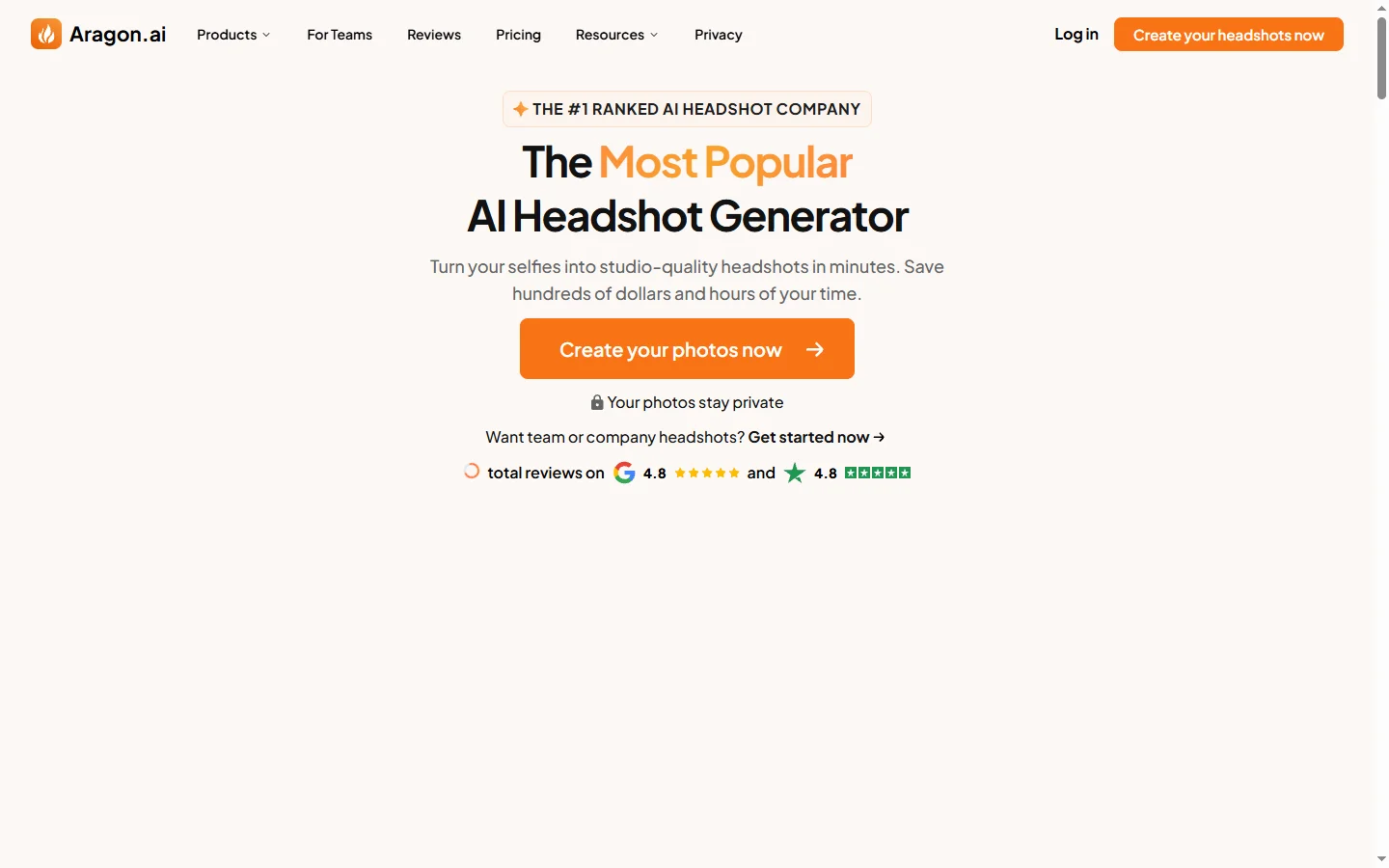
Aragon AI professional headshot generator that creates studio-quality portrait photos from uploaded selfies using a personalized AI model.
Arcads AI
Arcads AI generates UGC-style video ads using AI actors from scripts, enabling performance marketers to produce ad creative variations at scale.


ArtGuru AI
ArtGuru AI generates images from text prompts in a wide range of artistic styles, with additional tools for face enhancement, background removal, and image upscaling.


Artlist AI
Artlist AI music generation and royalty-free licensing platform for video creators, filmmakers, and content producers needing commercially cleared tracks.