
Raspberry AI
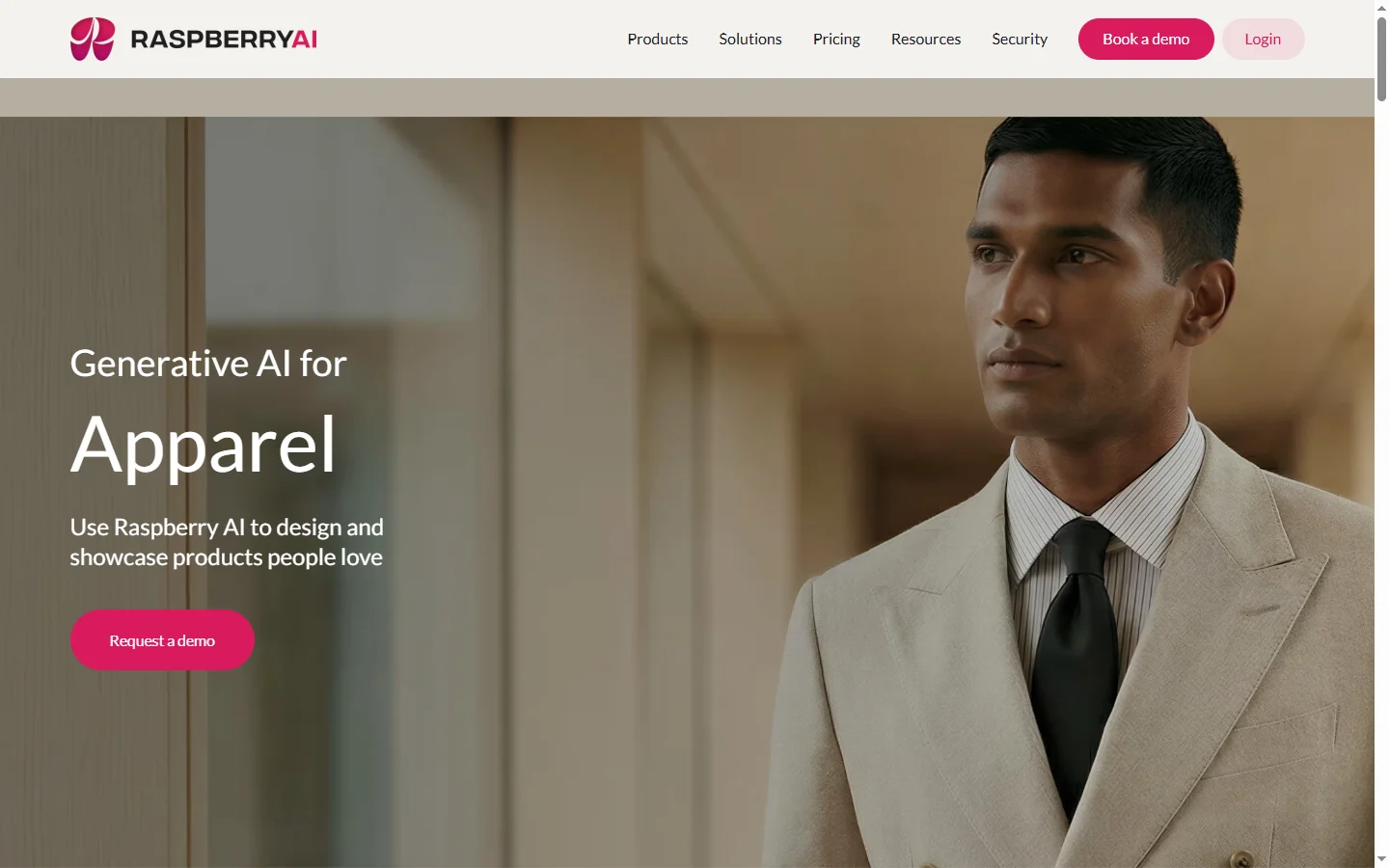
Paid ✓ Verified 🔥 TrendingRaspberry AI is a generative AI platform for fashion designers that accelerates design iteration, tech pack generation, and product development.
📋 About Raspberry AI
Raspberry AI is a generative AI platform built specifically for the fashion industry, helping designers and product teams move from concept to production faster. The raspberry ai platform combines image generation, pattern adaptation, colorway exploration, and tech pack automation into a single workflow tuned for apparel, accessories, and footwear. Designers sketch or upload a reference, and Raspberry produces detailed, brand-consistent variations — different silhouettes, fabrics, trims, and colorways — in seconds rather than weeks.
The platform understands fashion-specific concepts like garment construction, fabric drape, pattern repeats, and seasonal trend cycles, which sets it apart from general image generators. Raspberry integrates with PLM systems and design software so outputs flow into existing production pipelines, and its tech pack generator produces detailed specification documents with measurements, materials, and construction notes. As an ai fashion design tool, Raspberry addresses the industry's chronic pressure to produce more SKUs faster while maintaining brand identity.
Raspberry AI serves fashion brands, designers at apparel companies, trend agencies, and manufacturers who need faster design cycles. Customers span emerging DTC brands, mid-market apparel companies, and larger fashion groups. Key benefits include compressed design cycles (often from weeks to days), more variations explored per concept, and reduced reliance on external sample production during early iteration. Pricing is subscription-based with tiers for individuals, teams, and enterprises, and the platform continues to add capabilities specific to textile print design, footwear, and accessories.
⚡ Key Features of Raspberry AI
Fashion-Aware Image Generation
Generate apparel, footwear, and accessory designs that respect garment construction, fabric behavior, and seasonal aesthetics. The raspberry ai engine produces renderings that look like real fashion product photography rather than generic AI art. Designers can specify silhouette, fabric, trims, and styling cues in natural language. Output is usable in line sheets and marketing materials.
Colorway and Variation Exploration
Apply dozens of colorways to a base design in seconds, enabling rapid exploration of palette decisions. Pattern tiling and print placement adjust automatically to garment geometry. This compresses the time-consuming variation phase that typically consumes designer hours. Brands can test more options before committing to production.
Tech Pack Generation
Auto-generate production-ready tech packs with measurements, material callouts, stitching details, and construction notes from a finalized design. This reduces the administrative burden of preparing documents for factories. The ai fashion design tool ensures consistency across tech pack formats. Manufacturers receive cleaner, more complete specifications.
Brand Style Training
Train the platform on a brand's existing catalog so generated designs match house style — silhouettes, fit proportions, color palettes, and aesthetic codes. This personalization is what makes output feel like an extension of the in-house team rather than generic AI. Brand style profiles can evolve season-over-season. Consistency across collections improves.
PLM and Workflow Integration
Integrates with major PLM systems and design software so outputs flow into existing production pipelines without re-entry. Tech packs, design files, and metadata sync automatically. The raspberry ai platform fits into established workflows rather than replacing them. This keeps adoption friction low for larger organizations.
Trend Mood Boards
Generate trend mood boards from inspiration prompts or reference images, including color palettes, silhouette studies, and print direction. Designers start seasonal concepting with AI-assisted research rather than blank pages. Boards can be shared with merchandising and marketing teams for alignment. This accelerates pre-production planning.
🎯 Use Cases for Raspberry AI
⚖️ Raspberry AI Pros & Cons
Advantages
- ✓Fashion-specific generation understands garment construction
- ✓Tech pack automation reduces production friction
- ✓Brand style training preserves house aesthetic
- ✓PLM integration fits into existing workflows
- ✓Significantly compresses design cycles
Drawbacks
- ✗Paid-only with no permanent free tier
- ✗Requires some designer training for best results
- ✗Hero creative work still needs human craftsmanship
- ✗Focused on fashion — not general image generation
📖 How to Use Raspberry AI
Contact Raspberry AI through raspberry.ai to schedule an onboarding session.
Upload your brand's existing catalog to train the platform on your house style and aesthetic.
Start a new project by uploading inspiration images or typing a natural-language design brief.
Generate variations — silhouettes, colorways, fabric treatments — and refine through iteration.
Export selected designs as production-ready tech packs with measurements and construction notes.
Sync the raspberry ai output to your PLM system or design software for factory production.
❓ Raspberry AI FAQ
No. Raspberry is a paid platform with subscription tiers for individual designers, teams, and enterprise fashion brands. Pricing scales with usage and features required.
The raspberry ai platform covers apparel, footwear, and accessories, with specialized capabilities for textile prints, colorways, and production-ready tech packs.
Yes. Raspberry can be trained on your existing catalog to produce designs consistent with your brand's silhouettes, palette, and aesthetic codes.
Yes. The ai fashion design tool integrates with major PLM systems so designs, tech packs, and metadata flow into your production pipeline without re-entry.
No. Raspberry augments designers by accelerating iteration and administrative work, but creative direction, final curation, and quality control remain human responsibilities.
Related to Raspberry AI

Accrete AI
Accrete AI builds autonomous enterprise AI agents for defense, government, and commercial intelligence workflows.

Ace AI
Ace AI is an AI-powered interview and career coach that helps job seekers prepare with mock interviews, resume feedback, and personalized career guidance.

Actively AI
Actively AI is an AI sales prospecting platform that researches accounts, identifies buyer signals, and writes personalized outbound at pipeline scale.
Airship AI
Airship AI provides video intelligence and data management solutions that use AI to search, analyze, and secure large-scale video evidence.
Altana AI
Altana AI is a global supply chain intelligence platform that maps the world's supply networks and surfaces risks with AI and public data.

Claude
Claude AI assistant by Anthropic with a 200K context window, strong reasoning, and safety-focused design for writing, coding, and analysis.
Featured on WhatIf.ai
Add this badge to your website to show you're listed on WhatIf AI
Alternatives to Raspberry AI

Aragon AI
Aragon AI professional headshot generator that creates studio-quality portrait photos from uploaded selfies using a personalized AI model.

Arcads AI
Arcads AI generates UGC-style video ads using AI actors from scripts, enabling performance marketers to produce ad creative variations at scale.


ArtGuru AI
ArtGuru AI generates images from text prompts in a wide range of artistic styles, with additional tools for face enhancement, background removal, and image upscaling.


Blaze AI
Blaze AI generates on-brand social media posts, blog articles, email campaigns, and ad copy for marketers and small businesses using configurable brand voice settings.