
Pathos AI
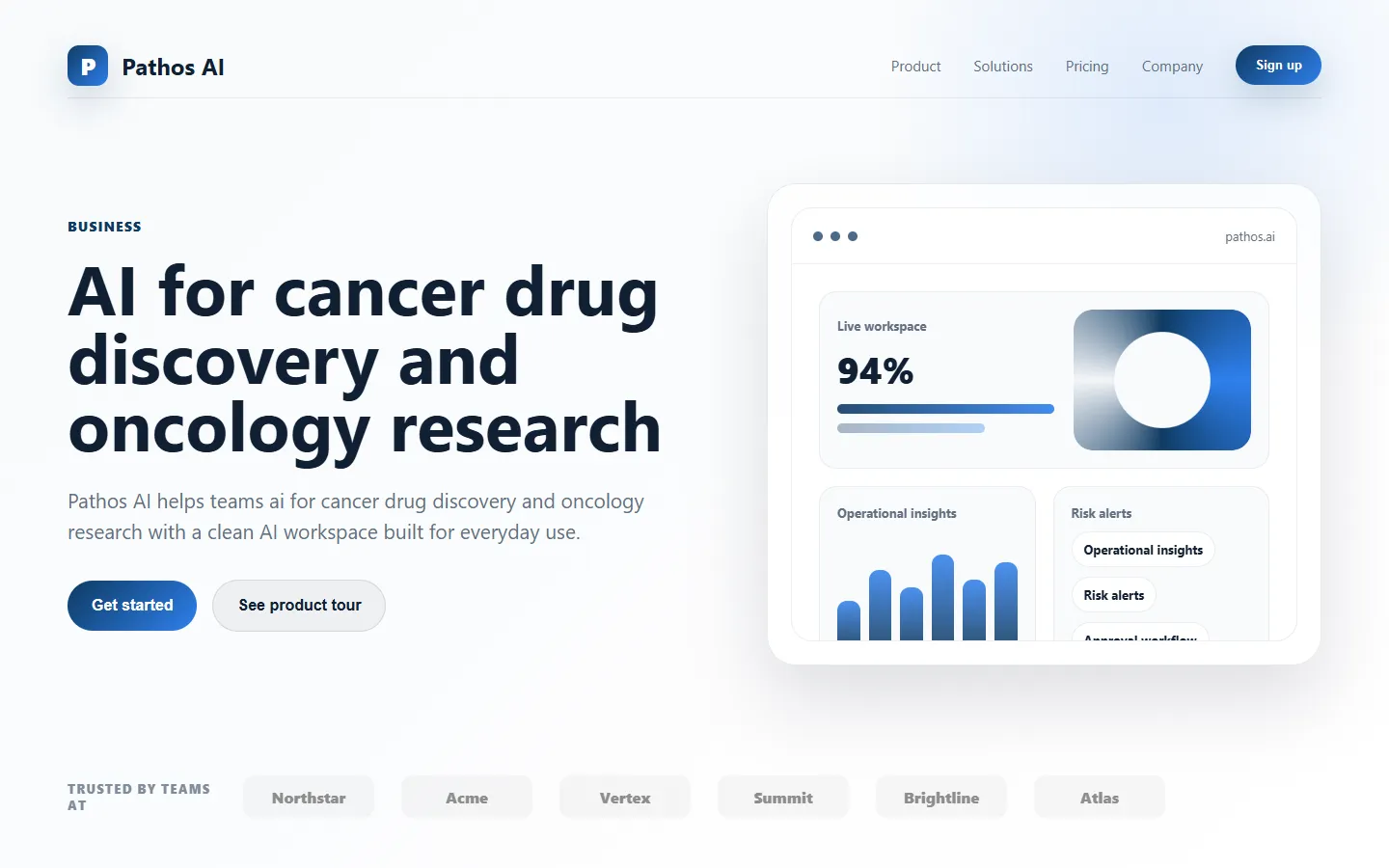
Paid ✓ VerifiedPathos AI is a biotech company using artificial intelligence and clinical data to accelerate precision oncology drug development and trial design.
📋 About Pathos AI
Pathos AI is a precision oncology biotechnology company that applies machine learning to large-scale clinical, molecular, and real-world data to accelerate the discovery and development of cancer therapies. Founded by veterans of Tempus and Flatiron Health — companies that pioneered oncology data infrastructure in the previous decade — Pathos operates at the intersection of AI-driven biology and drug development, using its proprietary data platform to identify promising drug candidates, predict patient response, and design smarter clinical trials. The company positions itself as a tech-enabled biotech rather than a pure software vendor, meaning its ultimate output is novel cancer therapies moving through clinical development rather than a software product sold to others.
The Pathos platform integrates diverse oncology data sources — genomic sequencing, treatment histories, imaging, pathology, real-world outcomes — and applies machine learning to identify patient subgroups most likely to respond to specific drug mechanisms, predict toxicity profiles, and uncover biomarker-guided combination strategies. This reduces the trial-and-error cycle that characterizes traditional oncology drug development, where many candidates fail in Phase II or III because the wrong patient population was enrolled. Pathos also acquires promising drug assets from other biotechs and pharmas, applying its data platform to re-evaluate them in the right patient context rather than starting discovery from scratch.
Pathos AI serves the broader oncology ecosystem indirectly: its customers are ultimately patients who benefit from more precisely targeted therapies, and its commercial counterparties include pharmaceutical partners, asset originators, and clinical trial sites. The company has raised significant funding from leading healthcare venture investors and operates in a competitive tech-bio landscape that includes Insitro, Recursion, and Relay Therapeutics, each with distinct data-and-platform approaches to accelerating drug discovery. Pathos's differentiator is its origin in the oncology-specific real-world data world and its focus on improving late-stage trial success rather than early target discovery.
⚡ Key Features of Pathos AI
Multi-Modal Oncology Data Platform
Pathos integrates genomic sequencing, treatment histories, imaging, pathology, and real-world outcomes into a unified platform that machine learning models can query across modalities. This cross-modal integration is essential because no single data type captures the full picture of why a patient responds or fails to respond to a therapy, and most pharma R&D still works with siloed data that misses the interactions.
AI-Driven Patient Subgroup Identification
Machine learning models identify the patient subgroups most likely to respond to specific drug mechanisms, using combinations of genomic, clinical, and real-world evidence to define response predictors. This is the core driver of precision oncology — matching the right drug to the right patient — and Pathos's platform is designed to surface these matches with higher confidence than traditional biomarker discovery.
Trial Design Optimization
By predicting which patient populations are most likely to respond before a trial enrolls, Pathos can design clinical trials that are smaller, faster, and more likely to succeed at Phase II and III — the stages where most oncology drug candidates fail. Better trial design translates directly to faster time-to-approval and lower development cost per successful drug.
Asset Acquisition and Reevaluation
Pathos acquires promising drug candidates from other biotechs and pharmas that showed signal in early trials but did not find a clear path to approval, then applies its data platform to identify the right patient subgroup or combination strategy to unlock the candidate's potential. This is a capital-efficient way to build a clinical pipeline without the failure risk of entirely de novo discovery.
Biomarker-Guided Combination Strategies
The platform identifies promising drug combinations — where two mechanisms targeting different biology produce synergistic response in specific patient contexts — that would be difficult to uncover through single-agent analysis alone. Combination strategies have become central to modern oncology practice, and AI-driven identification of promising combinations is a key capability for any serious precision oncology program.
Team Origins in Oncology Data Infrastructure
Pathos's founding team and scientific leadership include veterans of Tempus and Flatiron Health, which built much of the modern oncology real-world data infrastructure. This origin gives Pathos unusual access to the data, networks, and context needed to execute precision oncology effectively, and distinguishes it from tech-first startups entering biotech without a deep domain foundation.
🎯 Use Cases for Pathos AI
⚖️ Pathos AI Pros & Cons
Advantages
- ✓Founding team from Tempus and Flatiron provides deep domain foundation
- ✓Multi-modal data integration across genomic, clinical, and real-world sources
- ✓AI-driven patient subgroup identification targets the core precision-oncology problem
- ✓Capital-efficient asset acquisition and reevaluation strategy
- ✓Focus on late-stage trial success where most oncology drug failures occur
Drawbacks
- ✗Long, uncertain drug development cycles characteristic of biotech
- ✗Not a software product available to general customers
- ✗Competitive tech-bio landscape with well-funded alternatives
- ✗Success depends on clinical outcomes that take years to validate
📖 How to Use Pathos AI
Visit pathos.ai to review the company's public research, pipeline, and partnership opportunities.
For pharmaceutical partnerships, contact the business development team with specific precision oncology programs or asset-level discussions in mind.
For academic collaboration, reach out through the research contact channels on the website with proposed scientific questions.
Clinical investigators interested in Pathos-designed trials should engage through standard site-selection and trial-enrollment pathways as specific trials open.
Prospective employees and scientific collaborators can review open roles and publication lists on the company site.
Monitor Pathos's pipeline progress through clinical trial registries and scientific conferences where interim results are typically presented.
❓ Pathos AI FAQ
Pathos AI is a precision oncology biotech that uses artificial intelligence and large-scale clinical data to identify, acquire, and develop cancer therapies in the patient subgroups most likely to respond. Its ultimate output is novel drug programs moving through clinical development.
No. Pathos is a biotech company, not a software vendor. The data platform and AI models are used internally to discover and develop cancer therapies, rather than sold as a standalone product to other organizations.
Pathos was founded by veterans of Tempus and Flatiron Health — pioneers in oncology real-world data infrastructure — alongside experienced drug developers and clinicians. This origin gives the company deep domain foundations in both clinical oncology and data science.
Pathos focuses on precision oncology therapies, meaning treatments designed to work particularly well in specific genetically or molecularly defined patient subgroups. Specific pipeline programs are disclosed publicly as they advance through development.
Insitro and Recursion use AI primarily for early-stage biology and target discovery, often across multiple disease areas. Pathos is specifically focused on late-stage precision oncology, with a real-world data foundation and a strategy that leans heavily on asset acquisition and clinical trial optimization.
Related to Pathos AI

15.ai
15.ai is a free AI voice cloning tool famous for generating realistic speech from cartoon, video game, and animated show characters using as little as 15 seconds of source audio.

Abby AI
Abby AI is an AI therapy and mental wellness chatbot that offers CBT-informed conversations, mood tracking, and self-guided coping tools.

Accrete AI
Accrete AI builds autonomous enterprise AI agents for defense, government, and commercial intelligence workflows.

Ace AI
Ace AI is an AI-powered interview and career coach that helps job seekers prepare with mock interviews, resume feedback, and personalized career guidance.

Actively AI
Actively AI is an AI sales prospecting platform that researches accounts, identifies buyer signals, and writes personalized outbound at pipeline scale.

Airship AI
Airship AI provides video intelligence and data management solutions that use AI to search, analyze, and secure large-scale video evidence.
Featured on WhatIf.ai
Add this badge to your website to show you're listed on WhatIf AI
Alternatives to Pathos AI

Chalkie AI
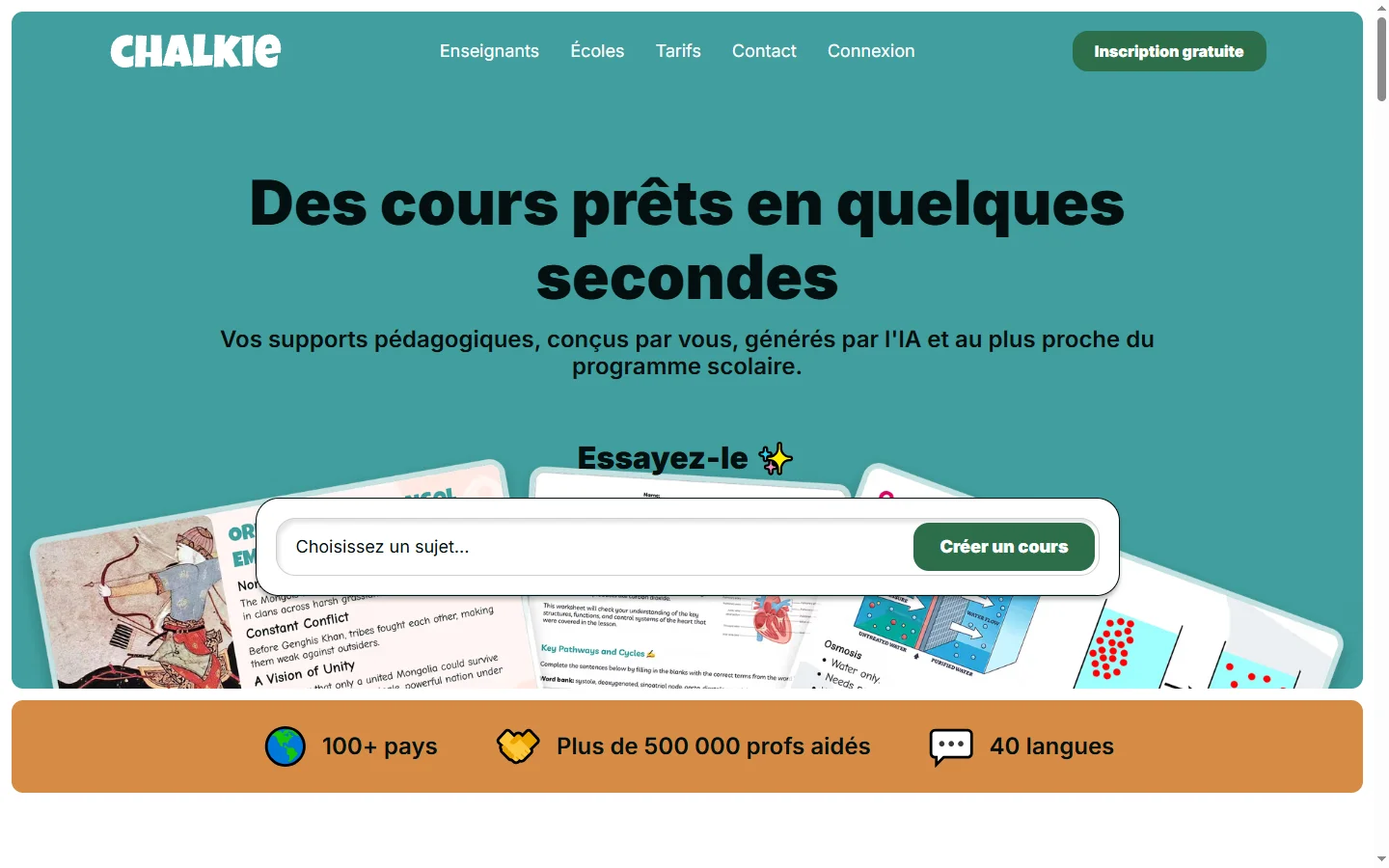
Chalkie AI creates lesson plans, worksheets, quizzes, and differentiated materials mapped to curriculum standards for teachers and tutors.

ChatGPT
ChatGPT AI assistant by OpenAI for writing, coding, research, image analysis, and everyday problem-solving.

Cheater Buster AI
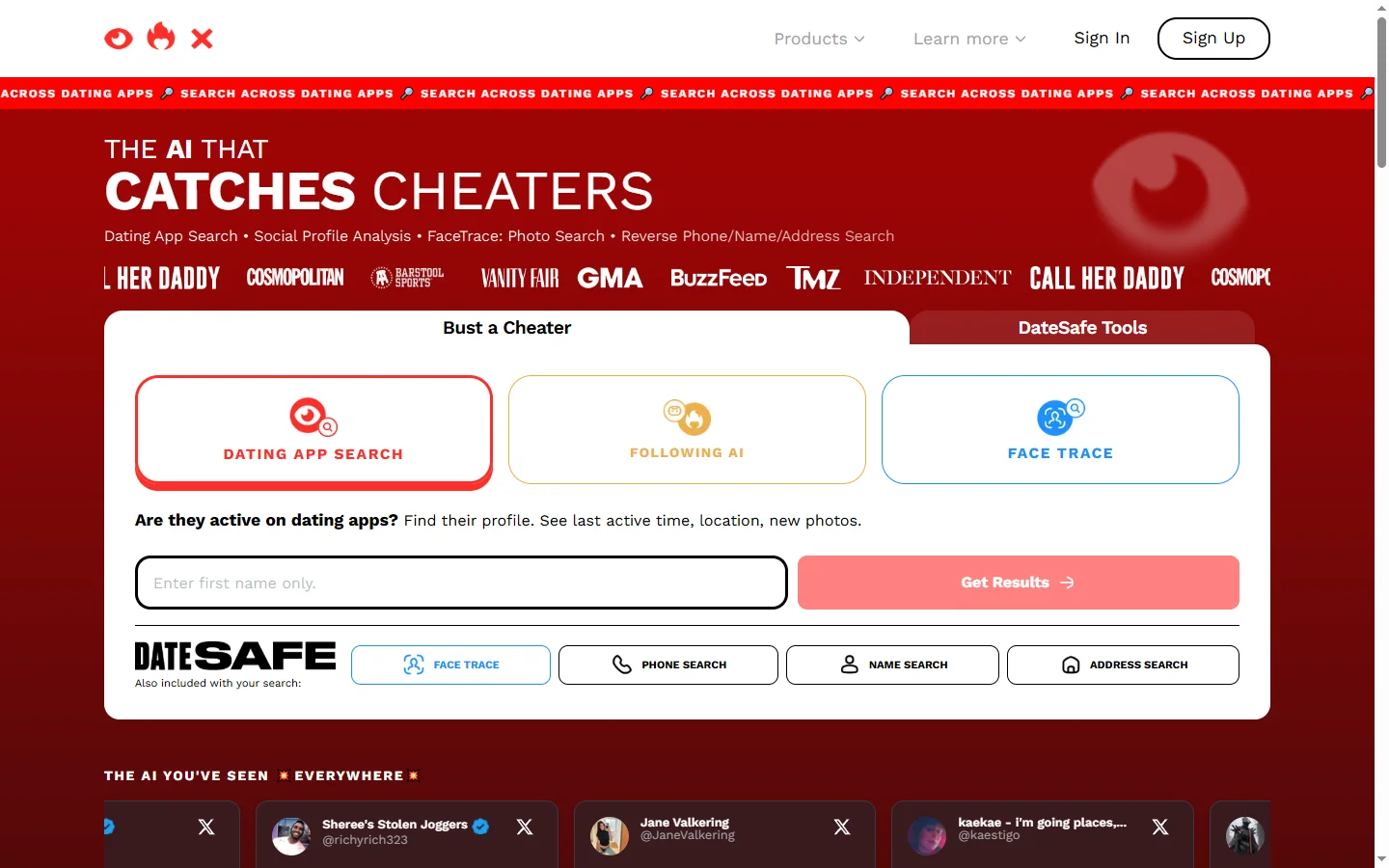
Cheater buster ai tool that searches dating apps by name and location to find matching profiles discreetly.

Claude
Claude AI assistant by Anthropic with a 200K context window, strong reasoning, and safety-focused design for writing, coding, and analysis.