
Overland AI
Paid ✓ Verified 🔥 TrendingOverland AI builds autonomous off-road vehicle software for defense and industrial use, enabling uncrewed ground systems to drive in unmapped, GPS-denied terrain.
📋 About Overland AI
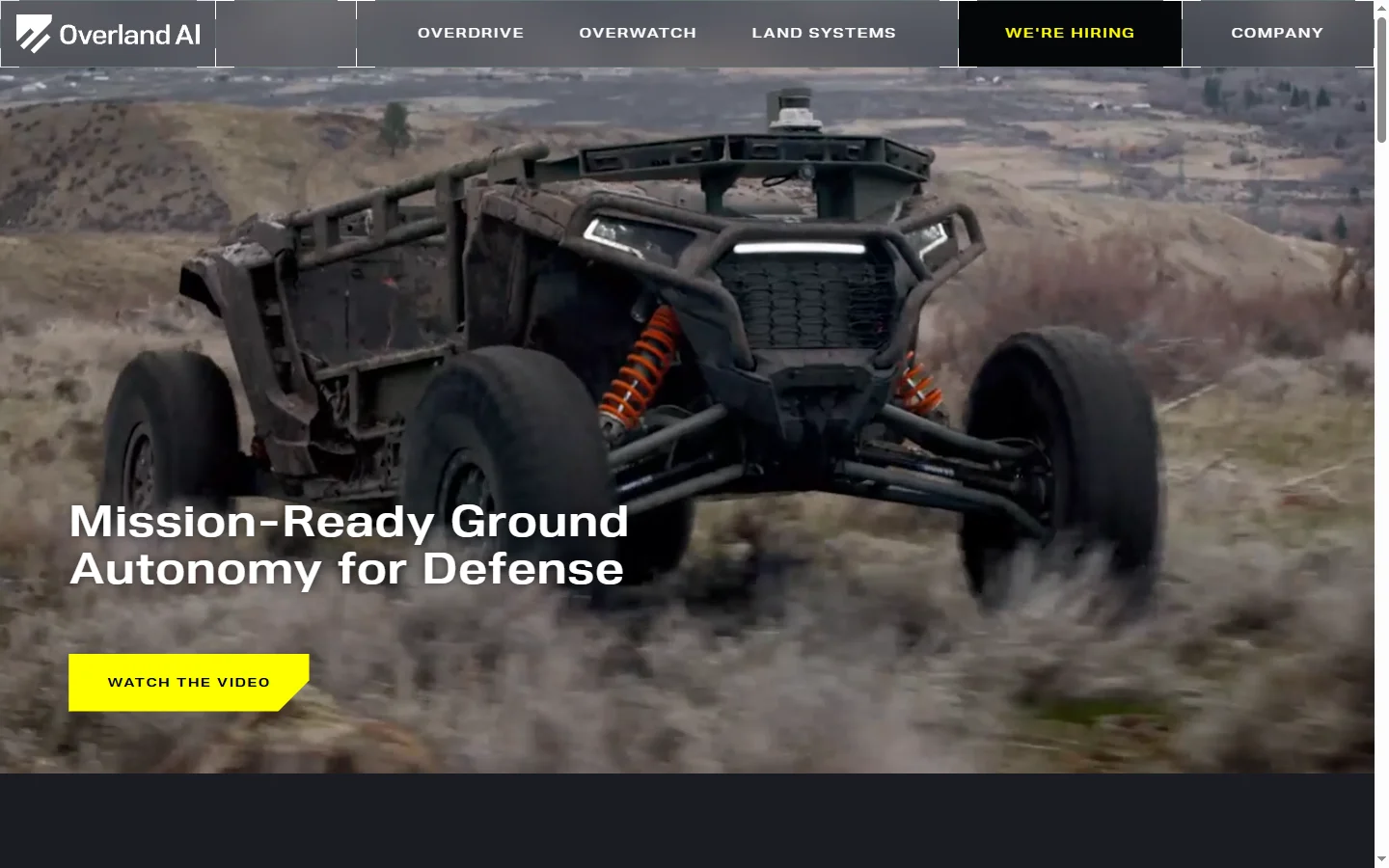
Overland AI is a defense-focused autonomy company building the software stack that lets uncrewed ground vehicles drive independently through unstructured, unmapped, and often GPS-denied terrain. The overland ai platform powers UGVs for the U.S. Department of Defense and allied militaries, handling missions that range from logistics resupply and reconnaissance to combat engineering. Unlike on-highway self-driving systems that depend on HD maps and lane markings, Overland AI is engineered for forests, deserts, mud, snow, and rubble — the environments where conventional autonomy stacks typically break down.
The core product is OverDrive, an autonomy software layer that can be installed on a wide range of military and commercial off-road platforms. OverDrive fuses lidar, radar, cameras, and inertial sensing to perceive terrain, identify hazards, and plan paths through environments with no prior map. It is designed for limited or zero connectivity, making it viable where satellite and cellular links cannot be trusted. The stack also emphasizes mission-style command interfaces where operators assign goals rather than joystick the vehicle, freeing soldiers to focus on higher-level decisions.
Overland AI serves defense agencies, prime contractors, and industrial operators who need autonomy that works far from paved roads. It is particularly valued in logistics and reconnaissance missions where risk to human operators is high or operational tempo requires continuous ground movement. By adapting the same core autonomy to different chassis and payloads, Overland AI has become a platform-agnostic player in the rapidly growing market for defense and off-road autonomous systems.
⚡ Key Features of Overland AI
OverDrive Off-Road Autonomy Stack
OverDrive is Overland AI's software layer for perception, planning, and control of uncrewed ground vehicles in unstructured terrain. It runs on a wide range of platforms from small tactical robots to heavy military transports. The stack is designed to operate without HD maps, relying instead on real-time sensing and on-the-fly terrain modeling. This makes it practical for environments where mapping infrastructure does not exist or cannot be trusted.
GPS-Denied and Disconnected Operation
The overland ai platform is engineered to keep driving safely when GPS signals are jammed, spoofed, or unavailable. Localization falls back on visual and inertial odometry combined with environmental cues. The same resilience extends to communications, so vehicles continue executing assigned missions when links to operators drop. These capabilities are essential for defense contexts where adversaries deliberately degrade the electromagnetic environment.
Multi-Platform Chassis Agnosticism
Overland AI's autonomy is portable across many vehicle platforms — tracked robots, wheeled resupply vehicles, and heavier combat-support trucks. This lets defense customers pick the best chassis for a mission and add autonomy on top rather than buying purpose-built autonomous vehicles. New platforms can be integrated through a standardized interface that abstracts the autonomy from the underlying vehicle controller. The approach is similar in spirit to how avionics suites are certified across airframes.
Sensor Fusion for Rugged Perception
Lidar, radar, cameras, and IMU data are fused into a real-time terrain model that handles dust, low light, mud, and heavy vegetation. The system classifies drivable versus non-drivable surfaces at range, which is critical for keeping heavy platforms out of terrain traps. Redundant sensing means one degraded modality does not stop the mission. This is a fundamental departure from on-highway autonomy, which can rely on clean surface markings and expected object classes.
Mission-Level Commanding
Operators assign high-level objectives — reach a waypoint, follow a leader vehicle, patrol a perimeter — and the vehicle plans and executes the details autonomously. This contrasts with traditional teleoperation where a human manages every steering input. Mission-level commanding scales operator attention across multiple vehicles and aligns with emerging doctrine for human-machine teaming. It also reduces cognitive load in high-stakes scenarios.
Teaming and Swarm-Ready Architecture
OverDrive is designed to support coordinated multi-vehicle operations, from simple convoying to more complex distributed missions. Shared situational awareness lets vehicles adapt to each other's movements without central control. This aligns with modern defense concepts that emphasize distributed, survivable formations. It also opens the door to commercial use cases like coordinated mining or agricultural fleets.
Proven Defense Partnerships and Programs
Overland AI has active programs with the U.S. Army and allied defense customers, including participation in formal experimentation events where the overland ai stack is tested against operational mission sets. These engagements generate a steady flow of real-world data and validate the system against conditions that simulation alone cannot fully capture. Working inside official programs also accelerates certification and procurement pathways.
🎯 Use Cases for Overland AI
⚖️ Overland AI Pros & Cons
Advantages
- ✓Purpose-built for unmapped, GPS-denied, disconnected environments
- ✓Portable autonomy stack works across many UGV platforms
- ✓Mission-level commanding reduces operator cognitive load
- ✓Active programs with U.S. and allied defense customers
- ✓Sensor fusion architecture is robust to dust, mud, and low light
Drawbacks
- ✗Defense-first focus means limited public product documentation
- ✗Long enterprise and government sales cycles
- ✗Not intended for paved-road or consumer applications
- ✗Access to the platform typically requires contractual and clearance arrangements
📖 How to Use Overland AI
Review overland.ai to understand the OverDrive capabilities, platforms supported, and relevant defense or industrial use cases.
Contact the Overland AI partnerships team using the enterprise contact form to scope a potential program.
Define the target platform, mission set, and operational environment in collaboration with Overland AI engineers.
Integrate OverDrive onto the selected UGV through Overland AI's standardized vehicle interface.
Conduct controlled field testing in representative terrain to validate performance and tune the operational design domain.
Transition to operational use under the governance and oversight framework appropriate to the program.
❓ Overland AI FAQ
Overland AI builds the autonomy software — called OverDrive — that lets uncrewed ground vehicles drive themselves through unmapped, GPS-denied off-road terrain. The overland ai platform is used primarily for defense and industrial missions such as logistics, reconnaissance, and off-road work.
On-highway autonomy relies heavily on HD maps, lane markings, and continuous connectivity. Overland AI is engineered for environments where none of those exist — mud, forests, deserts, rubble, and jammed radio spectrum — so its perception, planning, and localization are built from the ground up for unstructured conditions.
Overland AI has active programs with the U.S. Army and allied defense customers, and works with prime contractors and platform manufacturers to integrate OverDrive onto a range of UGVs. Industrial partners in mining, forestry, and energy also explore the platform for off-road automation.
Overland AI sells its autonomy software as a platform and service rather than complete vehicles, and customer engagement is contract-based. Potential partners should contact Overland AI through the overland.ai website.
OverDrive provides autonomy and perception; weapons are handled by separate payload systems owned and governed by the customer. Overland AI operates within the ethical and policy frameworks set by defense customers, which keep human oversight in the loop for any lethal decision.
Related to Overland AI

15.ai
15.ai is a free AI voice cloning tool famous for generating realistic speech from cartoon, video game, and animated show characters using as little as 15 seconds of source audio.

Abby AI
Abby AI is an AI therapy and mental wellness chatbot that offers CBT-informed conversations, mood tracking, and self-guided coping tools.

Accrete AI
Accrete AI builds autonomous enterprise AI agents for defense, government, and commercial intelligence workflows.

Ace AI
Ace AI is an AI-powered interview and career coach that helps job seekers prepare with mock interviews, resume feedback, and personalized career guidance.

Actively AI
Actively AI is an AI sales prospecting platform that researches accounts, identifies buyer signals, and writes personalized outbound at pipeline scale.
Airship AI
Airship AI provides video intelligence and data management solutions that use AI to search, analyze, and secure large-scale video evidence.
Featured on WhatIf.ai
Add this badge to your website to show you're listed on WhatIf AI
Alternatives to Overland AI
15.ai
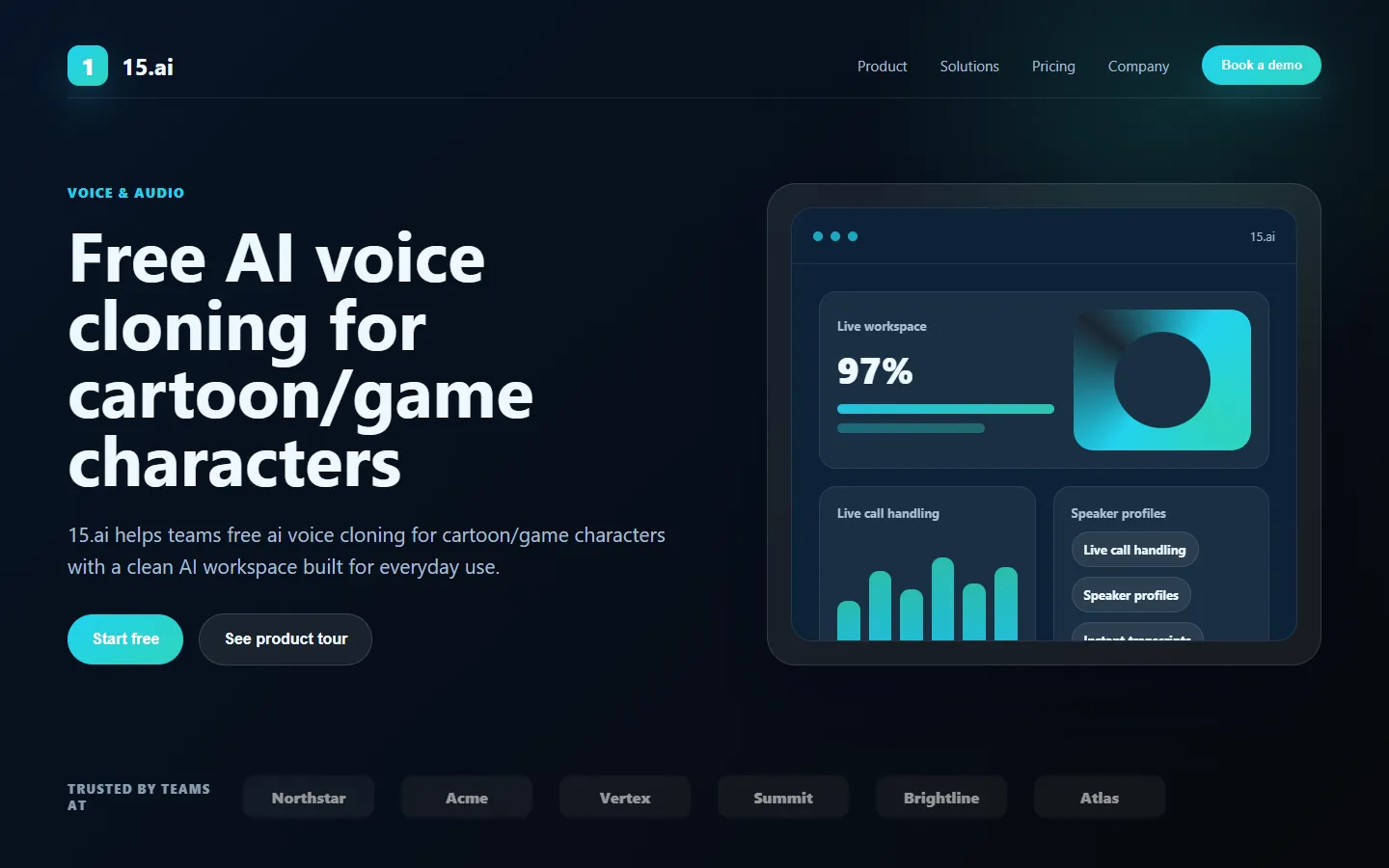
15.ai is a free AI voice cloning tool famous for generating realistic speech from cartoon, video game, and animated show characters using as little as 15 seconds of source audio.

Abby AI
Abby AI is an AI therapy and mental wellness chatbot that offers CBT-informed conversations, mood tracking, and self-guided coping tools.

Accrete AI
Accrete AI builds autonomous enterprise AI agents for defense, government, and commercial intelligence workflows.

Ace AI
Ace AI is an AI-powered interview and career coach that helps job seekers prepare with mock interviews, resume feedback, and personalized career guidance.