
Orby AI
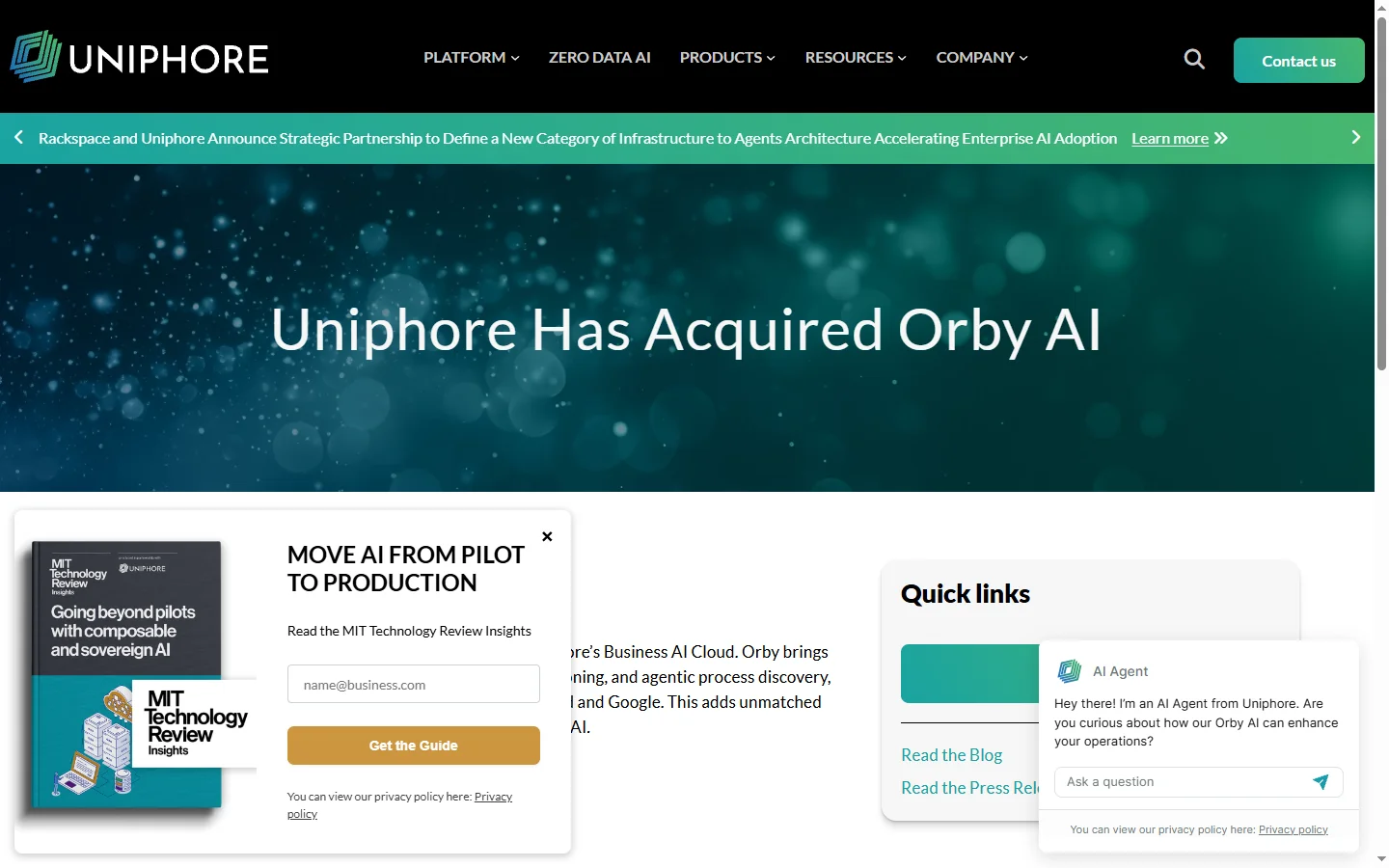
Paid ✓ VerifiedOrby AI is an enterprise agentic automation platform that learns from user actions to build end-to-end AI agents for business processes.
📋 About Orby AI
Orby AI is an enterprise-grade agentic automation platform that combines large action models with observational learning to automate complex, multi-step business processes without traditional scripting or RPA rulebuilders. The orby ai platform watches how expert users perform tasks in real applications — web, desktop, and enterprise systems — and constructs reusable AI agents that can execute the same workflows at scale with adaptive reasoning when exceptions occur.
At the core of orby ai is a proprietary Large Action Model (LAM) that understands user intent, interprets on-screen elements, and chains actions across applications the way a human employee would. Unlike rigid robotic process automation, the orby ai agent can adapt when a user interface changes, when a form has new fields, or when a business rule evolves, reducing the maintenance burden that historically plagues enterprise automation programs. Agents are generated through a no-code designer that captures demonstrations, then refined by process engineers and business analysts through a visual editor.
Orby AI is designed for large enterprises in finance, insurance, healthcare, and shared services that run thousands of hours of repetitive back-office work each week. Typical deployments automate claims processing, invoice reconciliation, customer onboarding, compliance reporting, and complex data extraction across legacy systems. The platform provides governance, audit logs, and role-based controls required for regulated industries, and it integrates with existing identity, ticketing, and workflow orchestration tools.
⚡ Key Features of Orby AI
Large Action Model for Business Processes
Orby's proprietary Large Action Model is trained to understand business applications and translate high-level goals into the correct sequence of clicks, form fills, and API calls across enterprise systems. Unlike generic LLMs, the orby ai LAM is optimized for reliable action execution, grounding each step against on-screen context rather than hallucinating steps. This makes it suitable for regulated workflows where correctness and traceability matter more than creative generation. The model also generalizes across similar applications, so an agent trained on one ERP can often be adapted to another with minimal retraining.
Observational Learning from Demonstrations
Orby AI captures how subject-matter experts perform a process by recording their screens, keystrokes, and application events, then compiles those demonstrations into a reusable agent. This learn-by-watching approach eliminates the need for analysts to write detailed process documents before automation can begin. The orby ai platform automatically segments demonstrations into steps, identifies decision points, and generalizes patterns across multiple recordings. This dramatically shortens time-to-automation compared to traditional RPA, which requires explicit scripting of every click.
Adaptive Exception Handling
When an unexpected screen, missing data field, or new validation rule appears, the orby ai agent reasons about the situation instead of failing like a brittle RPA script. The agent can route to a human for approval, attempt a reasonable next step based on learned patterns, or log the exception for later review. This adaptive behavior is one of the main reasons enterprises choose agentic platforms over traditional RPA, as it reduces the engineering effort required to maintain automations as applications evolve. Exception data also feeds back into the model to improve future performance.
No-Code Agent Designer
Business analysts and process engineers use a visual designer to refine recorded demonstrations, add branching logic, and bind steps to enterprise data sources without writing code. The orby ai designer exposes high-level actions such as "open invoice" or "validate vendor" rather than low-level UI events, making process maps easier to read and maintain. Changes in the designer propagate to running agents, enabling rapid iteration as business rules change. The tool also generates documentation automatically, which supports compliance and knowledge transfer.
Enterprise Governance and Audit
Orby AI includes role-based access control, detailed audit logs, and data residency controls required by regulated industries such as banking, insurance, and healthcare. Every action an agent takes is logged with inputs, outputs, and context for later review by compliance teams or auditors. Integration with single sign-on and secrets management ensures that agents operate under controlled credentials rather than shared logins. These capabilities allow orby ai deployments to meet SOC 2, HIPAA, and similar regulatory requirements.
Human-in-the-Loop Workflows
For processes that require judgment or approval, orby ai agents can pause and request input from a human reviewer through a task inbox or integration with existing ticketing tools. This is particularly useful for claims adjudication, exception clearing, and onboarding approvals where automation handles the mechanical steps while humans make the final call. The platform tracks human decisions and uses them as training signal for continuous improvement. Over time, the agent can be trusted with increasingly more autonomy as its accuracy is verified.
Integration with Enterprise Systems
Orby AI operates across web applications, desktop software, Citrix environments, and APIs, allowing it to automate workflows that span modern SaaS tools and legacy mainframes. Pre-built connectors exist for common systems such as SAP, Oracle, ServiceNow, Salesforce, and Workday, while the agent can also operate on any interface it can see. This universal reach is critical for real enterprise processes, which rarely live within a single application. Orby also integrates with orchestration tools to coordinate agents with human workflows.
🎯 Use Cases for Orby AI
⚖️ Orby AI Pros & Cons
Advantages
- ✓Large Action Model adapts to UI and process changes
- ✓Learn-by-demonstration reduces scripting effort
- ✓Strong governance and audit for regulated industries
- ✓Works across web, desktop, and legacy applications
- ✓Human-in-the-loop support for high-judgment tasks
Drawbacks
- ✗Enterprise-only pricing not suited to small teams
- ✗Requires change management to roll out at scale
- ✗Initial training and onboarding can take weeks
- ✗Limited self-service documentation for evaluators
📖 How to Use Orby AI
Contact Orby AI sales to schedule an enterprise discovery and identify high-value automation candidates.
Install the Orby recorder and capture demonstrations from subject-matter experts performing the target process.
Refine the generated agent in the no-code designer, adding branching logic and integrations as needed.
Run the agent in a test environment against representative data, reviewing exception cases with the team.
Deploy the agent into production with role-based controls, audit logging, and human-in-the-loop approvals.
Monitor performance dashboards and iterate on the agent as upstream applications and business rules change.
❓ Orby AI FAQ
Traditional RPA relies on brittle scripts that break when interfaces change, while orby ai uses a Large Action Model to reason about UI elements and adapt to variations. This reduces maintenance cost and allows automation of processes that are too variable for classic RPA.
No. Most agents are built through demonstration and refined in a visual no-code designer. Developers can still extend behavior with custom connectors or scripts when advanced logic is needed.
Yes. Orby AI offers role-based access control, audit logging, data residency options, and integrations with enterprise identity and secrets management, which supports SOC 2, HIPAA, and similar compliance programs.
High-volume, repetitive workflows that span multiple applications and contain occasional exceptions are a particularly good fit. Examples include invoice processing, claims triage, onboarding, and compliance reporting.
Simple processes can be automated in days, while complex, cross-system workflows in regulated environments typically take several weeks as teams work through integration, testing, and change management steps.
Related to Orby AI

15.ai
15.ai is a free AI voice cloning tool famous for generating realistic speech from cartoon, video game, and animated show characters using as little as 15 seconds of source audio.

A2E AI
A2E AI productivity platform converts audio and video recordings into transcripts, summaries, and action items with speaker identification.

Abby AI
Abby AI is an AI therapy and mental wellness chatbot that offers CBT-informed conversations, mood tracking, and self-guided coping tools.

Abnormal AI
Abnormal AI uses behavioral AI to detect business email compromise, account takeover, and socially engineered phishing that bypasses secure email gateways.
Flowise AI
Flowise AI is an open-source low-code platform for building custom LLM apps, agents, and chatbots via a drag-and-drop flow editor.

Minion AI
Minion AI is an autonomous web agent that browses, clicks, and completes multi-step tasks across websites on your behalf.
Featured on WhatIf.ai
Add this badge to your website to show you're listed on WhatIf AI
Alternatives to Orby AI
A2E AI
A2E AI productivity platform converts audio and video recordings into transcripts, summaries, and action items with speaker identification.
Abnormal AI
Abnormal AI uses behavioral AI to detect business email compromise, account takeover, and socially engineered phishing that bypasses secure email gateways.

Abridge AI
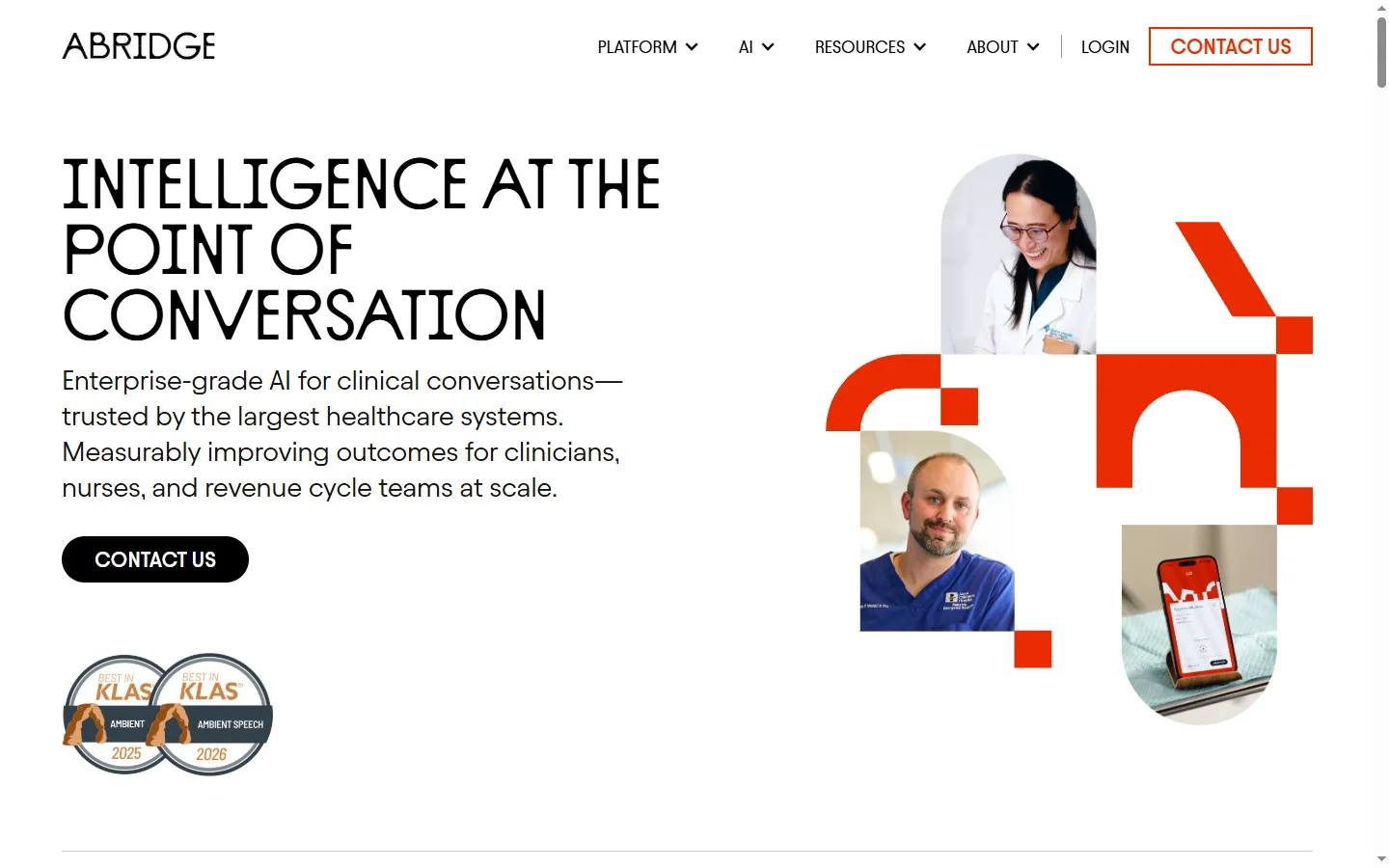
Abridge AI medical documentation platform that records and summarizes clinical conversations into structured physician notes in real time.

Air AI
Air AI conducts autonomous full-length AI phone calls for sales prospecting, appointment setting, and customer service without human agents.