
LiveReach AI
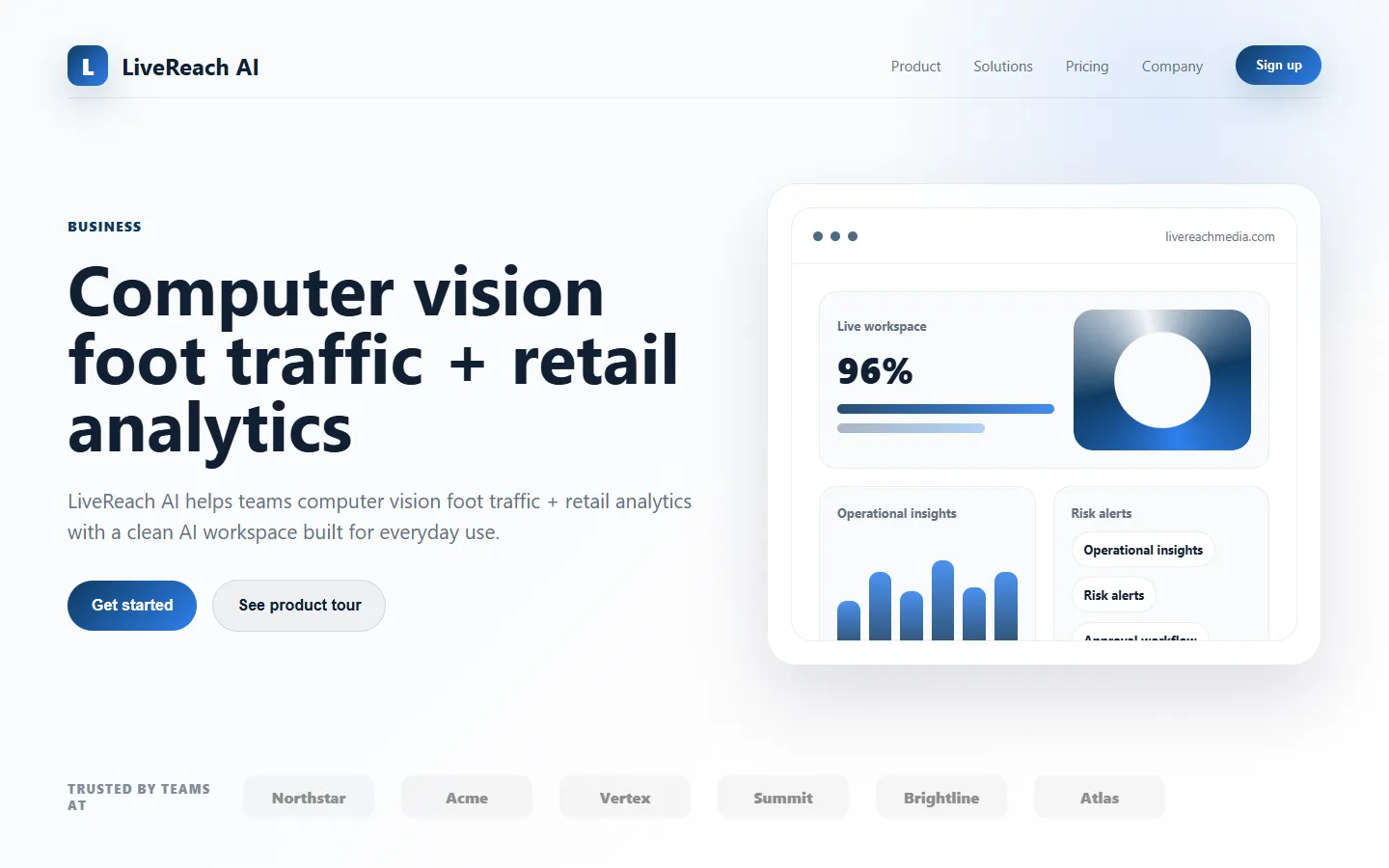
Paid ✓ VerifiedLiveReach AI is a computer-vision platform that turns retail and venue camera feeds into foot traffic, conversion, and occupancy analytics.
📋 About LiveReach AI
LiveReach AI is a computer-vision analytics platform that turns existing security and in-store camera feeds into a rich source of foot traffic, dwell time, occupancy, and conversion data for brick-and-mortar retail, airports, stadiums, and large public venues. Instead of relying on legacy beam counters or manual headcounts, livereach ai processes video in real time to produce accurate metrics on how many people enter, how they move through the space, which zones they dwell in, and how those patterns convert to sales or tickets. Personally identifiable features are not stored, which keeps deployments compliant with privacy standards.
The platform supports multi-camera stitching so retailers can measure journeys across an entire store rather than just the entrance. Real-time occupancy dashboards help venue operators manage capacity during peak times, and heatmaps reveal which zones, displays, or merchandising decisions actually capture attention. Integration with POS data lets retailers calculate true conversion rates — the percentage of visitors who actually made a purchase — rather than relying on transaction volume alone.
LiveReach AI serves retailers, airport operators, stadium managers, and event organizers who want granular, privacy-respecting visitor analytics without deploying new sensor hardware. By extracting insights from cameras already installed for security, it delivers a rapid time-to-value that sensor-based counters cannot match. The resulting data supports staffing decisions, merchandising experiments, rent negotiations with landlords, and operational optimization for any venue whose economics depend on how people flow through physical space.
⚡ Key Features of LiveReach AI
Camera-Based Visitor Counting
Livereach ai uses computer vision on existing security or in-store cameras to count visitors entering and exiting a space with high accuracy, avoiding the need to install dedicated beam counters or sensor hardware. The algorithm handles crowded scenes, overlapping people, and variable lighting conditions better than traditional counting devices. This slashes deployment time from months to days in most venues. Count accuracy can be audited against manual spot checks for validation.
Zone Heatmaps and Journey Mapping
Stitch multiple camera feeds into a unified view of how visitors move through a store, airport terminal, or stadium concourse. Heatmaps reveal which zones attract attention and which are dead space, informing merchandising, signage, and layout decisions. Journey mapping shows common paths through the venue, exposing bottlenecks or underused areas. These insights previously required expensive one-off studies but are now continuously available.
Real-Time Occupancy Dashboards
Live dashboards show current occupancy across each zone of a venue so operators can manage capacity, staffing, and safety during peak periods. Alerts fire when occupancy crosses thresholds so managers can open additional queues, call backup staff, or trigger crowd-management procedures. The real-time nature is critical for airports, stadiums, and large retail during peak hours. Historical occupancy data also informs long-term staffing plans.
POS-Integrated Conversion Rates
Connect retail POS data to livereach ai traffic counts to calculate true conversion rates — the percentage of visitors who actually purchase — rather than relying on transaction volume alone. This transforms how retailers evaluate campaigns, window displays, and sales staff performance. Conversion trends surface whether a drop in sales is caused by fewer visitors or fewer purchases per visitor. The distinction changes which levers managers pull to respond.
Privacy-Preserving Processing
All processing is anonymized — the platform measures silhouettes, movement, and count data without storing personally identifiable facial features or profiles. This keeps deployments compliant with GDPR, CCPA, and similar privacy standards while still delivering rich analytics. Audit trails and configurable data retention support enterprise compliance reviews. Privacy-by-design is a core reason retailers adopt livereach ai over riskier alternatives.
Works with Existing Camera Infrastructure
LiveReach AI operates on the cameras a venue already has installed for security, avoiding capital expenditure on new hardware. Supported camera types cover the overwhelming majority of installations found in retail and public venues. The software-only deployment model dramatically lowers the total cost of adopting foot-traffic analytics. This is particularly compelling for multi-location chains where new hardware rollout would be prohibitively expensive.
🎯 Use Cases for LiveReach AI
⚖️ LiveReach AI Pros & Cons
Advantages
- ✓Uses existing camera infrastructure — no new sensors required
- ✓Privacy-respecting anonymized processing
- ✓Real-time dashboards for operational decisions
- ✓POS integration enables true conversion rate measurement
- ✓Fast deployment compared to sensor-based alternatives
Drawbacks
- ✗Requires cameras meeting minimum quality standards
- ✗Not designed for very small single-location operations
- ✗POS integration complexity varies by retailer
- ✗Some advanced features require higher-tier plans
📖 How to Use LiveReach AI
Contact livereach to schedule a deployment review of your existing camera infrastructure.
Work with the onboarding team to configure camera mappings, zones, and entry lines.
Connect POS or ticketing systems if you want conversion-rate analytics.
Set occupancy thresholds and alert recipients in the real-time dashboard.
Review weekly heatmaps and journey reports to identify merchandising or flow improvements.
Use benchmarking reports across locations to prioritize interventions at underperforming sites.
❓ LiveReach AI FAQ
In most cases, no. Livereach ai operates on the security and in-store cameras most venues already have installed. The onboarding team confirms compatibility during deployment review.
Yes. The platform anonymizes processing and does not store personally identifiable facial features, supporting GDPR, CCPA, and similar privacy standards.
Yes. When POS or ticketing systems are connected, livereach ai calculates true conversion rates by combining visitor counts with transaction data, giving a more meaningful metric than transaction volume alone.
The platform supports retail stores, airports, stadiums, arenas, event venues, and other large public spaces where visitor flow analytics informs operations.
Because livereach ai is software-only and uses existing cameras, most deployments go live within days rather than the months required for sensor-based alternatives.
Related to LiveReach AI

15.ai
15.ai is a free AI voice cloning tool famous for generating realistic speech from cartoon, video game, and animated show characters using as little as 15 seconds of source audio.

Abby AI
Abby AI is an AI therapy and mental wellness chatbot that offers CBT-informed conversations, mood tracking, and self-guided coping tools.

Accrete AI
Accrete AI builds autonomous enterprise AI agents for defense, government, and commercial intelligence workflows.

Ace AI
Ace AI is an AI-powered interview and career coach that helps job seekers prepare with mock interviews, resume feedback, and personalized career guidance.

Lighthouse AI
Lighthouse AI is an intelligent home security system that uses computer vision to recognize people, pets, and events in real time.

Lunchbox AI
Lunchbox AI is an AI-powered restaurant marketing platform that automates guest engagement, loyalty, and promotions for independent restaurants.
Featured on WhatIf.ai
Add this badge to your website to show you're listed on WhatIf AI
Alternatives to LiveReach AI

Arcads AI
Arcads AI generates UGC-style video ads using AI actors from scripts, enabling performance marketers to produce ad creative variations at scale.


Blaze AI
Blaze AI generates on-brand social media posts, blog articles, email campaigns, and ad copy for marketers and small businesses using configurable brand voice settings.

Instantly AI
Instantly AI is a cold email and sales engagement platform for sending high-volume outbound campaigns with AI-powered personalization and inbox warmup.

Matador AI
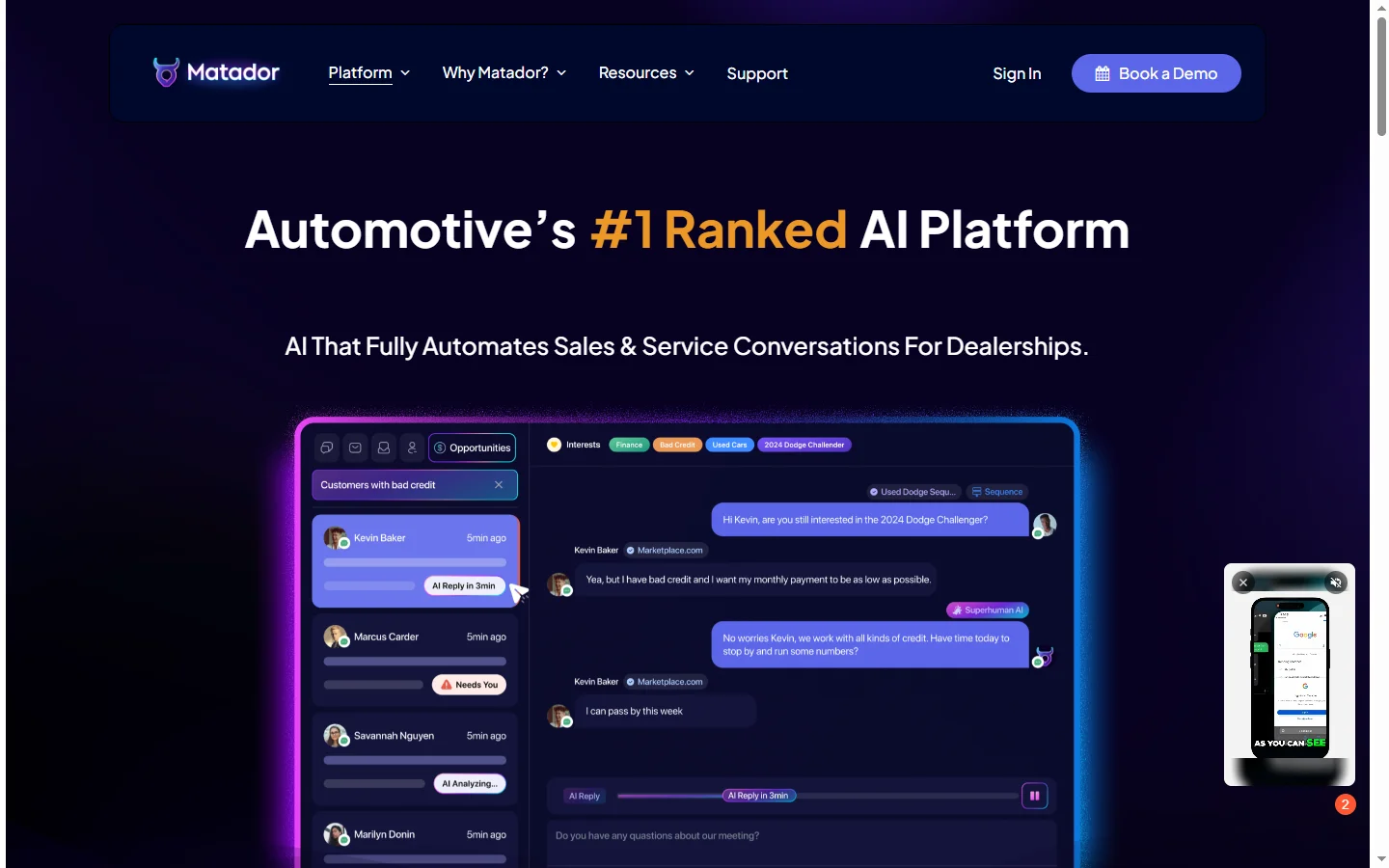
Matador AI automates dealership customer communications via SMS, webchat, and messaging to handle lead qualification, appointment booking, and service follow-ups.