
Kodiak AI
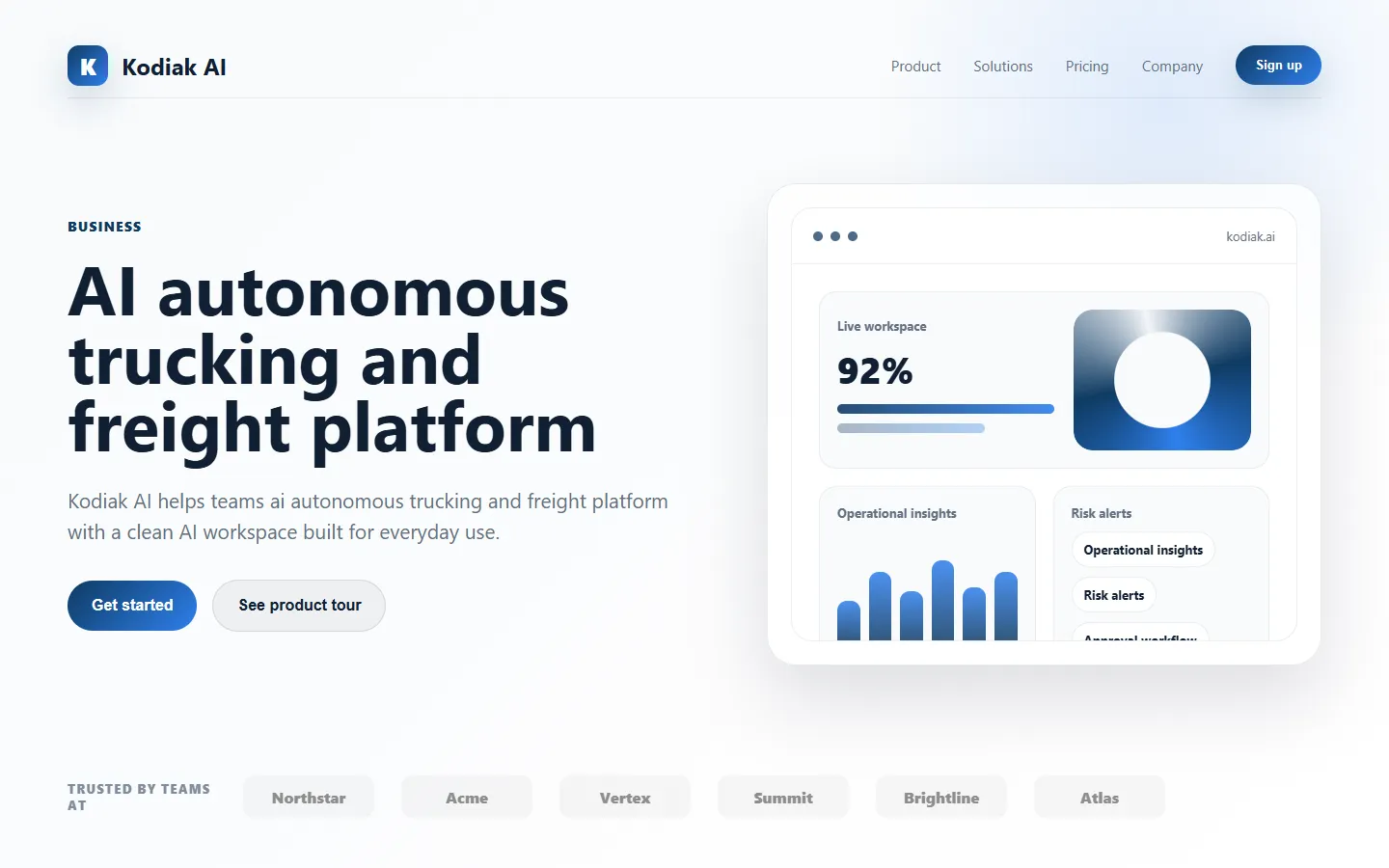
Paid ✓ Verified 🔥 TrendingKodiak AI is an autonomous trucking platform from Kodiak Robotics that powers self-driving long-haul freight and off-road defense vehicles.
📋 About Kodiak AI
Kodiak AI is the autonomous driving platform built by Kodiak Robotics, a company focused on commercial self-driving trucks and rugged autonomous vehicles for defense and off-road use. The core of the platform is the Kodiak Driver, a modular software and sensor stack that can be integrated into heavy-duty trucks from multiple manufacturers. The kodiak ai system combines cameras, radar, and lidar with deep learning perception and planning models to handle highway long-haul routes, urban pickup legs, and unpaved terrain.
Kodiak's approach emphasizes a decoupled, sensor-fusion-first architecture rather than end-to-end neural networks, which improves safety transparency and makes the system easier to certify for commercial freight. The company runs autonomous freight operations across the U.S. Sun Belt, partnering with carriers like Martin Brower and IKEA Supply Chain to move loads on predefined lanes. In parallel, Kodiak has expanded into autonomous off-road vehicles for the U.S. Department of Defense, adapting the same autonomy stack to drive unmanned ground vehicles across rugged environments without GPS or mapped roads.
Kodiak AI serves freight carriers, logistics companies, and defense agencies that need long-haul driving automated reliably at scale. For fleet operators, the value is driver shortage relief, higher asset utilization, and predictable fuel efficiency. For defense customers, Kodiak offers proven autonomy that operates safely in unstructured environments where commercial self-driving stacks typically fail. The company is a leading example of dual-use autonomy built on a single software foundation.
⚡ Key Features of Kodiak AI
Kodiak Driver Autonomy Stack
A modular software and sensor stack that turns a standard Class 8 truck into a self-driving freight hauler on mapped highway lanes. The kodiak ai system handles perception, planning, localization, and vehicle control through a decoupled architecture that is easier to validate than end-to-end neural models. The stack is designed to be portable across multiple truck OEMs rather than locked to a single chassis. This flexibility lets carriers integrate Kodiak into existing fleets without full vehicle replacement.
Multi-Modal Sensor Fusion
Kodiak AI fuses cameras, radar, and lidar to build a continuously updated model of surrounding vehicles, pedestrians, and road structure. Redundant sensors allow the system to keep driving safely even when one sensor is degraded by weather or debris. Long-range sensing extends detection well beyond human reaction distance, which is critical for 80,000-pound trucks that need hundreds of feet to stop. The sensor suite is packaged into modular pods that can be swapped and recalibrated quickly in the field.
Autonomous Long-Haul Freight Operations
Kodiak runs real revenue-generating autonomous freight lanes across the U.S., delivering for logistics partners on predefined Sun Belt routes. Runs operate around the clock, which dramatically improves asset utilization compared to a standard driver-hours-of-service model. Each completed load adds operational data that is fed back into map refinement and model training. This real-world deployment is a key differentiator from autonomy companies still limited to test miles.
Off-Road Autonomy for Defense
The kodiak driver has been adapted to power unmanned ground vehicles for the U.S. Department of Defense, driving across unpaved terrain without relying on HD maps or GPS. This required building obstacle perception and terrain planning that work in dust, low light, and GPS-denied environments. The same foundational stack used for highway trucks underpins these off-road deployments, validating the core autonomy on radically different use cases. Defense contracts also fund rapid capability development that benefits the commercial trucking product.
Safety Case and Operational Design Domain
Kodiak publishes and continuously updates a formal safety case defining exactly where and how the kodiak ai system is allowed to operate. This structured ODD approach makes regulator engagement clearer and reduces the ambiguity that often complicates autonomous-vehicle deployments. The safety case is backed by thousands of simulation scenarios and real-world miles, each tied to specific capability claims. This is widely regarded as a best practice for commercial autonomy rollout.
Remote Operations and Fleet Management
Kodiak operates a central oversight center where human operators monitor autonomous trucks, assist with exceptional situations, and coordinate logistics handoffs at terminals. Drivers of the autonomous fleet never have to physically sit in the cab for the long-haul segment, but trucks are never unsupervised. Fleet management tools let carrier partners track loads, ETA, fuel burn, and sensor health in real time. This tightly integrated ops model is what turns the autonomy stack into a usable service.
Hub-to-Hub Freight Architecture
Kodiak's commercial service is built around a hub-to-hub model, where autonomous trucks run the long highway leg between freight hubs while human drivers handle urban first- and last-mile pickup and delivery. This division of labor plays to the system's strengths — controlled access highways — while avoiding the hardest parts of urban driving. Hubs also provide clean environments for pre-trip inspections and sensor calibration. The architecture integrates naturally with existing carrier operations.
🎯 Use Cases for Kodiak AI
⚖️ Kodiak AI Pros & Cons
Advantages
- ✓Operates real revenue-generating autonomous freight lanes rather than just pilots
- ✓Portable autonomy stack works across multiple truck OEM chassis
- ✓Dual-use design spans commercial trucking and defense off-road vehicles
- ✓Strong safety case methodology and transparent operational design domain
- ✓Redundant multi-modal sensor fusion resilient to sensor degradation
Drawbacks
- ✗Service currently focused on U.S. Sun Belt corridors rather than national coverage
- ✗Hub-to-hub model still requires human drivers for first and last mile
- ✗Long enterprise sales cycles for both freight and defense customers
- ✗Deep-tech platform rather than a developer-accessible API
📖 How to Use Kodiak AI
Visit kodiak.ai and review the freight and defense solution pages to identify the relevant deployment model for your operation.
Contact the Kodiak sales or partnerships team using the enterprise contact form to discuss lane or mission requirements.
Work with Kodiak engineers to define an operational design domain that matches your routes, cargo, and risk tolerance.
Integrate the Kodiak Driver onto compatible Class 8 trucks or qualifying off-road platforms with support from Kodiak's field teams.
Use Kodiak's fleet management dashboard to monitor autonomous loads, sensor health, and ETA across active runs.
Scale additional lanes or units as operational data from the kodiak ai platform validates performance on your network.
❓ Kodiak AI FAQ
Kodiak AI is the autonomy platform built by Kodiak Robotics. It powers self-driving Class 8 trucks for long-haul freight and has been adapted into autonomous off-road vehicles for defense customers, all built on the same underlying Kodiak Driver software stack.
Kodiak has demonstrated driverless operation and runs autonomous freight lanes commercially in the U.S., with remote oversight from a central operations center. Deployment depth varies by corridor and by customer, and the company continues to expand its validated operational design domain.
The kodiak driver uses a modular, decoupled architecture with multi-modal sensor fusion rather than a single end-to-end neural network. This design is easier to validate, portable across truck OEMs, and versatile enough to drive both on-highway trucks and off-road defense vehicles.
Logistics and retail partners including Martin Brower and IKEA Supply Chain have run freight with Kodiak, and the U.S. Department of Defense has contracted with Kodiak for autonomous ground-vehicle programs.
Kodiak primarily sells its autonomy as a service and platform to freight carriers and defense customers rather than retail buyers. Potential partners should contact Kodiak directly via the kodiak.ai website.
Related to Kodiak AI

15.ai
15.ai is a free AI voice cloning tool famous for generating realistic speech from cartoon, video game, and animated show characters using as little as 15 seconds of source audio.

Abby AI
Abby AI is an AI therapy and mental wellness chatbot that offers CBT-informed conversations, mood tracking, and self-guided coping tools.

Accrete AI
Accrete AI builds autonomous enterprise AI agents for defense, government, and commercial intelligence workflows.

Ace AI
Ace AI is an AI-powered interview and career coach that helps job seekers prepare with mock interviews, resume feedback, and personalized career guidance.

Actively AI
Actively AI is an AI sales prospecting platform that researches accounts, identifies buyer signals, and writes personalized outbound at pipeline scale.
Airship AI
Airship AI provides video intelligence and data management solutions that use AI to search, analyze, and secure large-scale video evidence.
Featured on WhatIf.ai
Add this badge to your website to show you're listed on WhatIf AI
Alternatives to Kodiak AI
15.ai
15.ai is a free AI voice cloning tool famous for generating realistic speech from cartoon, video game, and animated show characters using as little as 15 seconds of source audio.

Abby AI
Abby AI is an AI therapy and mental wellness chatbot that offers CBT-informed conversations, mood tracking, and self-guided coping tools.
Accrete AI
Accrete AI builds autonomous enterprise AI agents for defense, government, and commercial intelligence workflows.
Ace AI
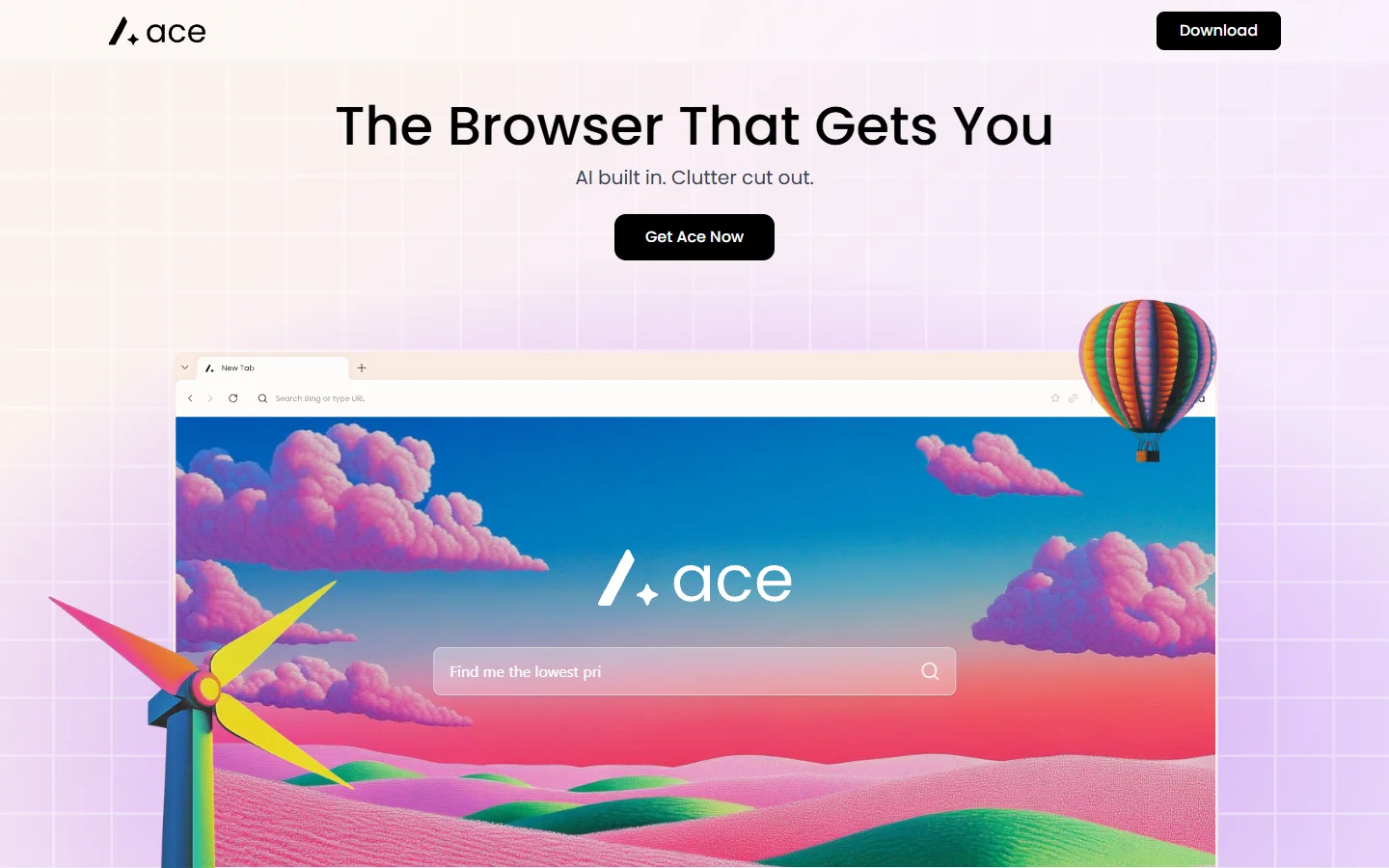
Ace AI is an AI-powered interview and career coach that helps job seekers prepare with mock interviews, resume feedback, and personalized career guidance.