
Concert AI
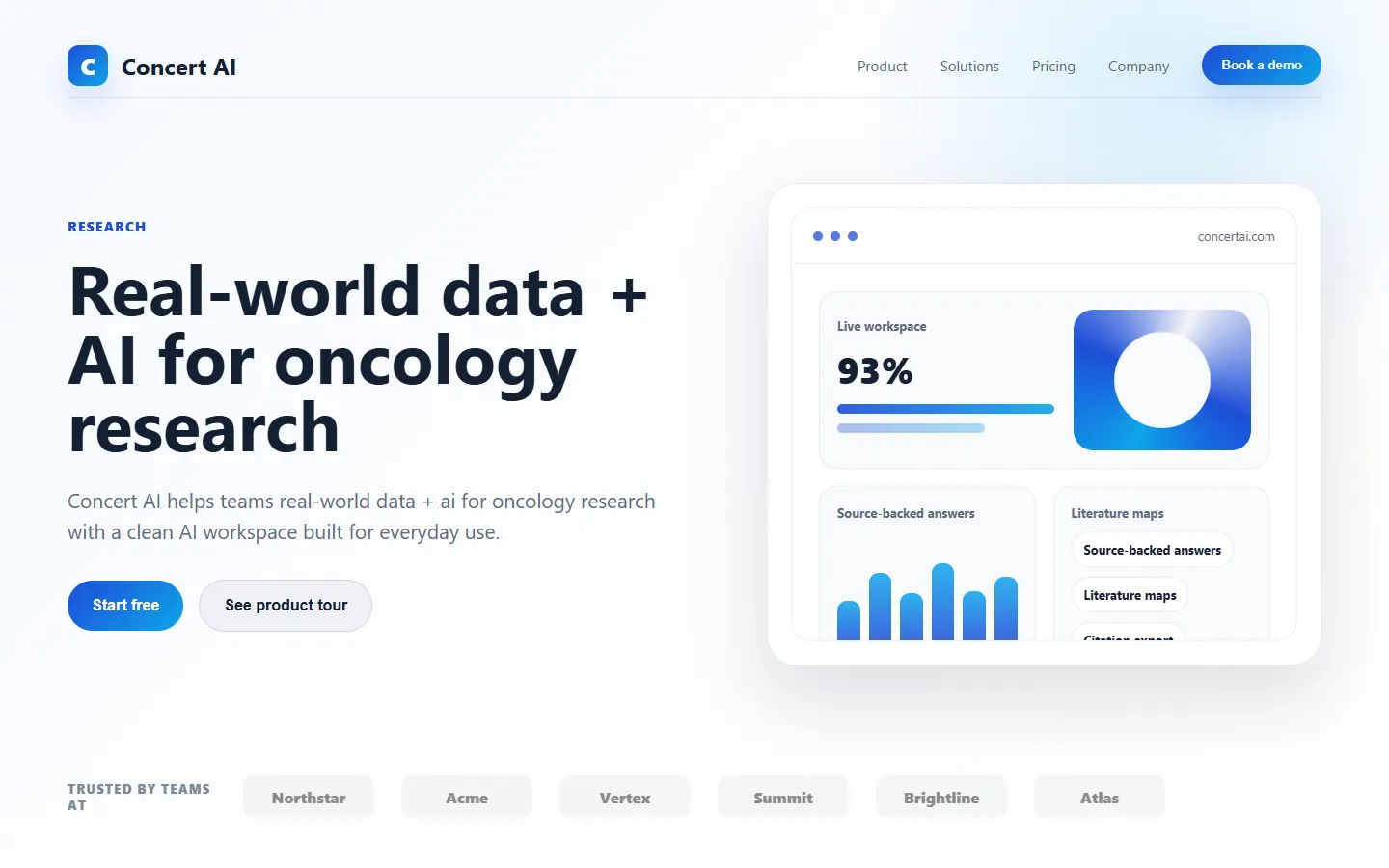
Paid ✓ VerifiedConcert AI is a real-world data and AI platform for oncology research, providing insights from clinical data to pharma and life sciences.
📋 About Concert AI
Concert AI is a real-world data and artificial intelligence platform focused on oncology research, partnering with healthcare providers, pharmaceutical companies, and biotechs to turn electronic health record data into actionable clinical insights. The concert ai platform combines curated oncology-specific datasets with machine learning tools that help life sciences teams design better trials, target effective treatments, and accelerate evidence generation for regulatory submissions. Oncology's data complexity — heterogeneous tumor types, shifting standards of care, extensive biomarker information — makes it a natural fit for specialized AI tooling.
The platform's foundation is one of the largest curated oncology real-world datasets, drawn from partnerships with major cancer centers and community practice networks. Curated data means it's been cleaned, harmonized, and enriched with structured clinical elements that raw EHR extracts lack — treatment sequences, response outcomes, biomarker testing, and mortality follow-up. On top of this foundation, concert ai builds AI tools that answer specific research questions such as which patient subpopulations respond best to a given therapy or how a real-world population compares to a clinical trial's enrolled cohort.
Concert AI serves pharmaceutical and biotech companies developing oncology therapies, as well as academic medical centers running translational research programs. By compressing the time required to generate real-world evidence, the platform accelerates drug development decisions and post-market research. In an industry where reaching actionable insight typically takes months of data engineering, concert ai's head start on curation and AI tooling represents meaningful competitive advantage for research-heavy organizations.
⚡ Key Features of Concert AI
Curated Oncology Real-World Dataset
Concert ai maintains one of the largest curated oncology real-world datasets, sourced through partnerships with major cancer centers and community practice networks. Curation includes treatment sequences, response outcomes, biomarker testing, and mortality follow-up — structured elements that raw EHR extracts typically lack. This saves life sciences teams months of data engineering they would otherwise do from scratch. The dataset underpins every downstream analysis and AI tool on the platform.
Real-World Evidence Generation
Generate real-world evidence to support regulatory submissions, label expansions, and post-market research using validated datasets and study-ready cohort tools. The platform's methodologies are designed to meet FDA and EMA expectations for real-world evidence in regulated submissions. Life sciences teams complete studies in weeks that previously took months of data wrangling. Faster evidence translates directly to faster drug approvals and labeling updates.
Trial Design and Feasibility Tools
Design oncology trials with AI-assisted feasibility analysis that models enrollment timelines, predicts site performance, and identifies patient subpopulations likely to respond. Concert ai helps sponsors avoid the costly mistake of designing trials that cannot enroll or that target the wrong population. Simulation-based feasibility replaces gut estimation with quantitative prediction. The result is faster-enrolling trials with higher success rates.
Patient Finder and Matching
Identify patients eligible for specific trials or therapies within partnered provider networks, accelerating enrollment for both sponsors and the patients they serve. The matching engine considers biomarker status, treatment history, and clinical criteria in combination rather than isolation. This improves access for patients in community settings who might otherwise miss clinical trial opportunities. Sponsors see enrollment time shortened and diversity improved.
Advanced Analytics for Outcomes Research
Run sophisticated analyses — propensity matching, survival analysis, comparative effectiveness — using prebuilt tools tuned for oncology questions rather than generic statistical packages. Researchers focus on clinical interpretation rather than statistical plumbing. The tools incorporate oncology-specific considerations like line-of-therapy semantics and tumor progression definitions. This produces defensible analyses that can withstand regulatory and peer review.
Privacy and Regulatory Compliance
All datasets are de-identified and handled according to HIPAA, GDPR, and applicable international privacy regulations, with comprehensive audit trails for regulated use. Concert AI supports the data governance requirements of pharma compliance teams and provider data partners. Use cases involving sensitive patient data operate within documented compliance frameworks. This enables adoption in settings where alternative data sources would be blocked.
🎯 Use Cases for Concert AI
⚖️ Concert AI Pros & Cons
Advantages
- ✓One of the largest curated oncology real-world datasets
- ✓Methodologies aligned with regulatory expectations
- ✓Feasibility tools reduce costly trial design mistakes
- ✓Multi-site data improves statistical power and diversity
- ✓Strong privacy and compliance posture
Drawbacks
- ✗Oncology-specific — not suited for other therapeutic areas
- ✗Enterprise-only — pricing based on scope and use case
- ✗Requires life sciences research context to use effectively
- ✗Access varies by partner network coverage
📖 How to Use Concert AI
Contact concert ai to discuss the research question or program you want to support.
Work with the team to scope data access and define your study or trial design objectives.
Complete data use agreements and compliance review required by your organization.
Run feasibility analyses or evidence-generation studies using the platform's analytical tools.
Collaborate with concert ai scientists on study design, statistical approach, and interpretation.
Translate findings into regulatory submissions, publications, or operational decisions.
❓ Concert AI FAQ
Concert ai focuses on oncology, with deep curated datasets across major tumor types. Adjacent therapeutic areas may be supported through partnerships but oncology is the primary domain.
Yes. All data is de-identified and handled according to HIPAA, GDPR, and applicable international privacy regulations, with comprehensive audit trails.
Pharmaceutical companies, biotech firms, and academic medical centers running oncology research programs use concert ai for evidence generation, trial design, and outcomes research.
Yes. Concert AI's methodologies are designed to meet FDA and EMA expectations for real-world evidence used in regulated submissions such as label expansions and post-market commitments.
Pricing is based on project scope, data access needs, and analytical support requirements. Concert AI engages through a sales and scoping process rather than listed subscription tiers.
Related to Concert AI

15.ai
15.ai is a free AI voice cloning tool famous for generating realistic speech from cartoon, video game, and animated show characters using as little as 15 seconds of source audio.

Abby AI
Abby AI is an AI therapy and mental wellness chatbot that offers CBT-informed conversations, mood tracking, and self-guided coping tools.

Accrete AI
Accrete AI builds autonomous enterprise AI agents for defense, government, and commercial intelligence workflows.

Ace AI
Ace AI is an AI-powered interview and career coach that helps job seekers prepare with mock interviews, resume feedback, and personalized career guidance.

Foundation AI
Foundation AI is an enterprise platform for building, deploying, and governing custom large language model applications with retrieval and tools.

Hermes AI
Hermes AI is an AI-powered research and analysis assistant for finance professionals, combining market data, filings, and news in one workspace.
Featured on WhatIf.ai
Add this badge to your website to show you're listed on WhatIf AI
Alternatives to Concert AI

Chalkie AI
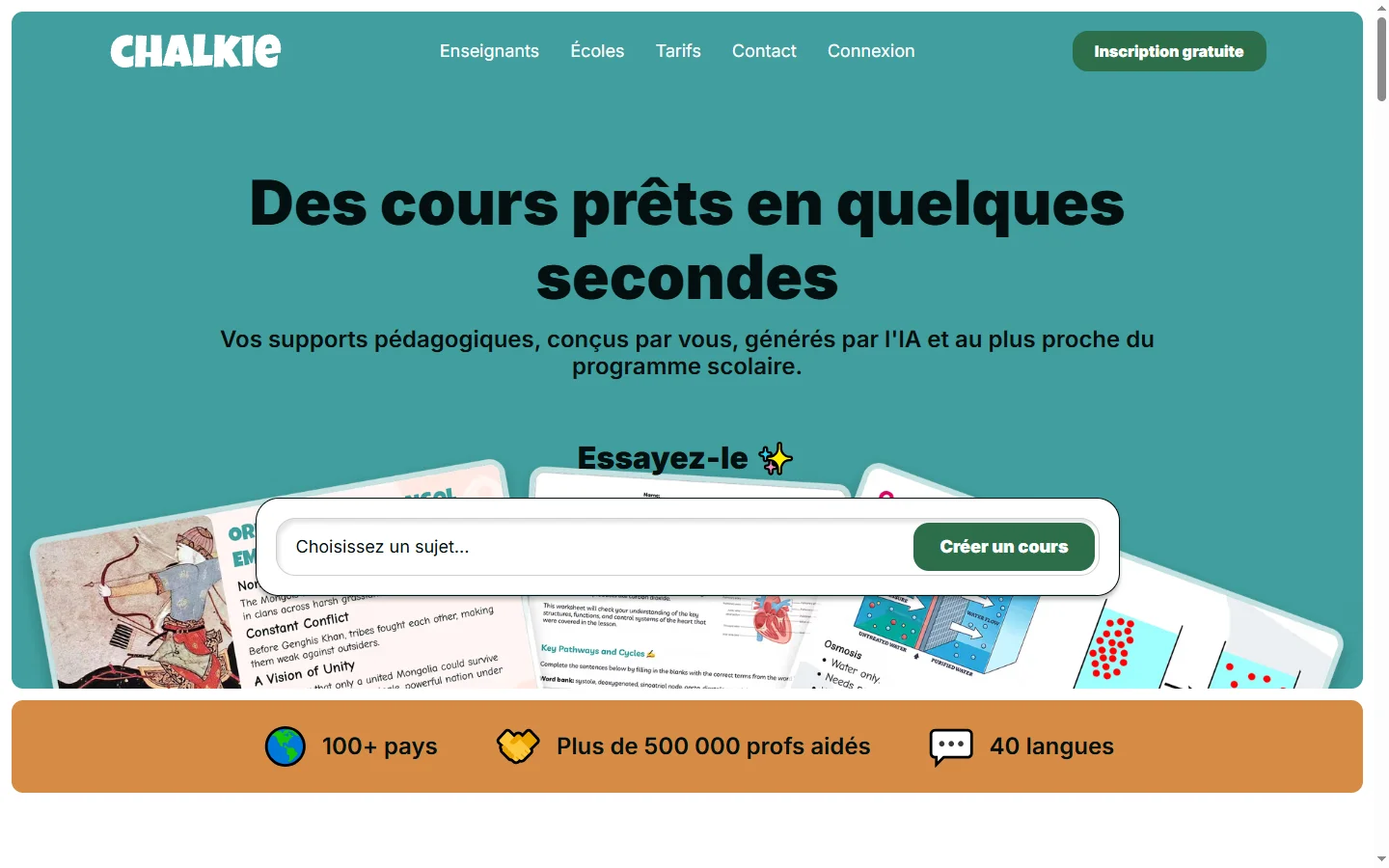
Chalkie AI creates lesson plans, worksheets, quizzes, and differentiated materials mapped to curriculum standards for teachers and tutors.

ChatGPT
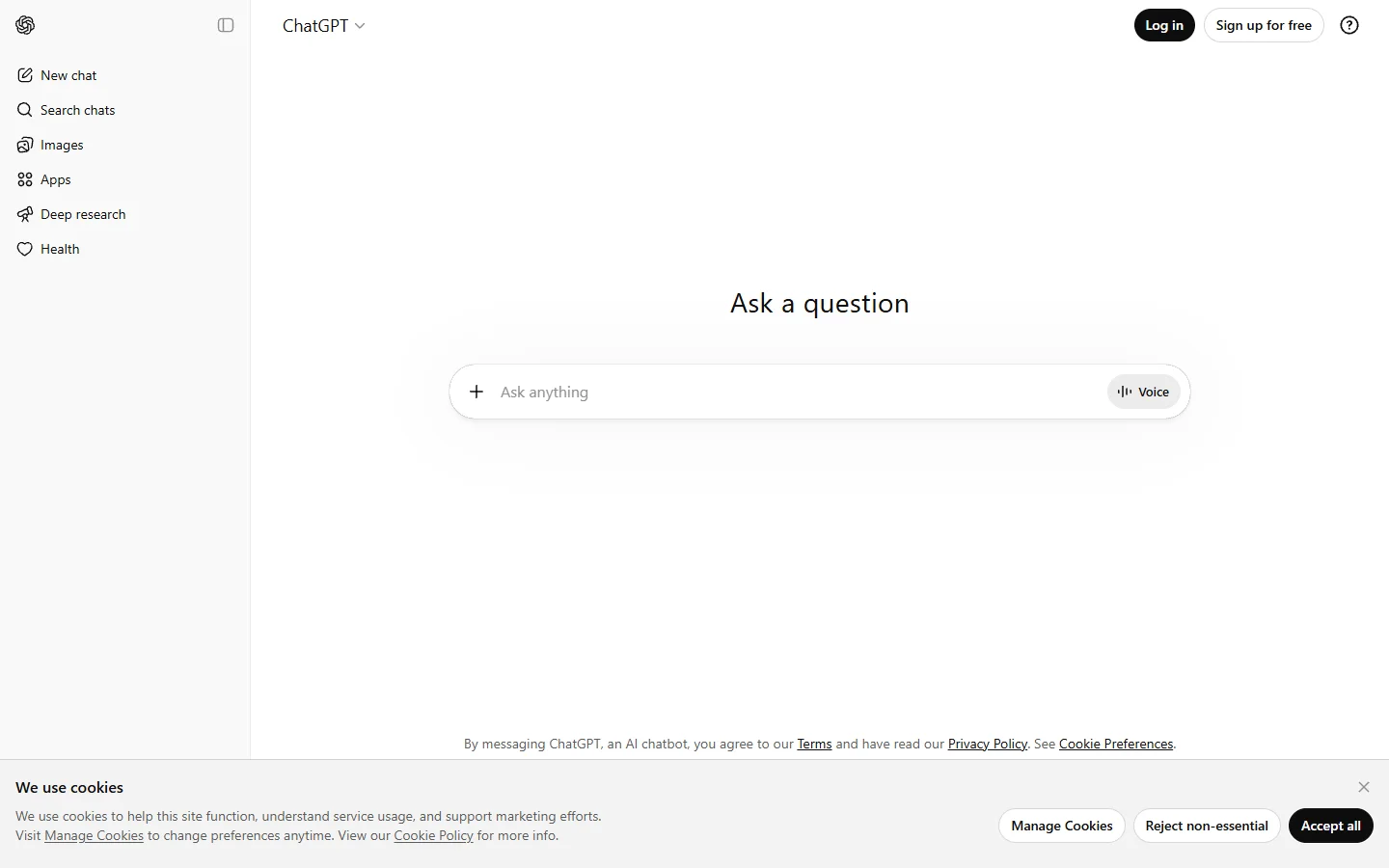
ChatGPT AI assistant by OpenAI for writing, coding, research, image analysis, and everyday problem-solving.

Cheater Buster AI
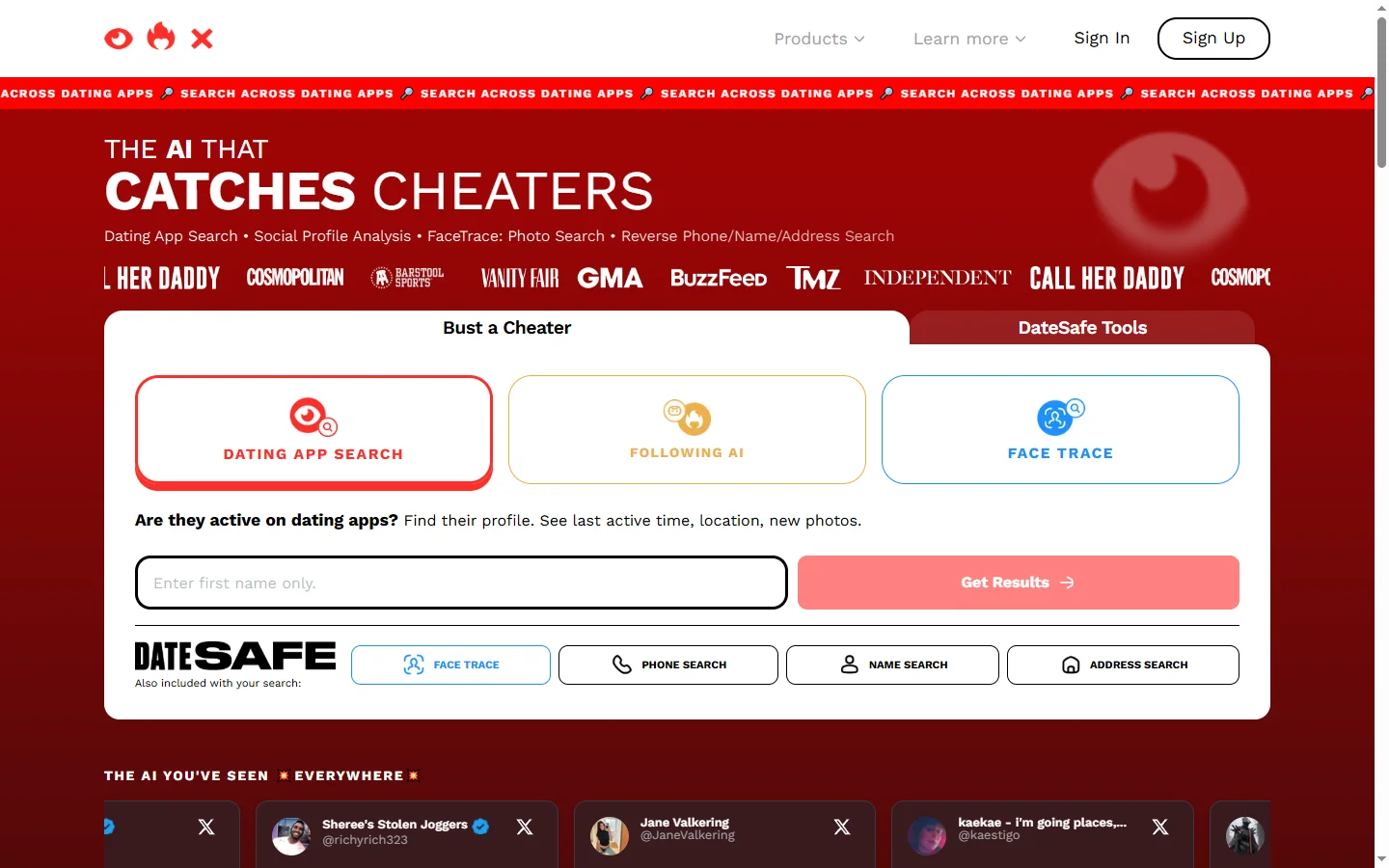
Cheater buster ai tool that searches dating apps by name and location to find matching profiles discreetly.

Claude
Claude AI assistant by Anthropic with a 200K context window, strong reasoning, and safety-focused design for writing, coding, and analysis.