
Foundation AI
Paid ✓ Verified 🔥 TrendingFoundation AI is an enterprise platform for building, deploying, and governing custom large language model applications with retrieval and tools.
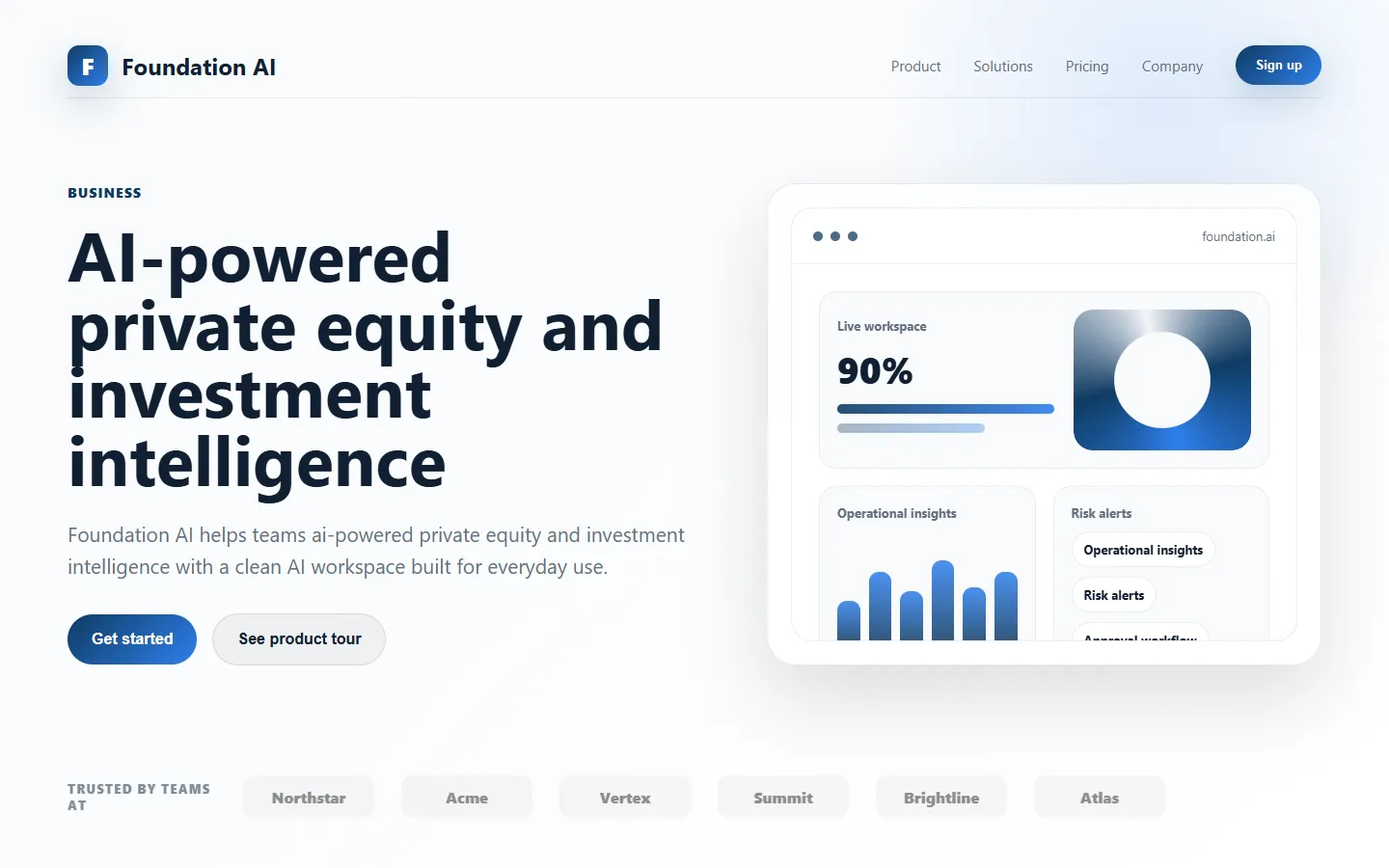
📋 About Foundation AI
Foundation AI is an enterprise LLM application platform that handles the practical infrastructure required to take generative AI from proof-of-concept to production deployment. Instead of stitching together vector databases, model endpoints, retrieval pipelines, tool calling, evaluation, and governance from separate vendors, foundation ai provides an opinionated stack where these pieces are already integrated. Development teams can ship retrieval-augmented generation chatbots, document understanding pipelines, and agentic workflows in days rather than months.
The platform supports multiple foundation models — proprietary and open-source — so teams can route different workloads to the most cost-effective or highest-quality option for each task. A built-in evaluation framework runs prompts and pipelines against golden datasets and live traffic samples to catch regressions before they reach users. Governance features including audit logging, PII filtering, and role-based access controls make foundation ai viable for regulated industries that cannot adopt consumer AI tools.
Foundation AI is aimed at enterprise engineering teams and CTOs responsible for shipping AI features into production systems. The platform trades raw flexibility for delivery speed, opinionated defaults, and compliance-ready tooling. Organizations that previously spent six months assembling their own LLM stack from primitives find they can reach production in weeks with foundation ai, freeing their AI engineers to focus on the custom parts of their applications rather than the plumbing.
⚡ Key Features of Foundation AI
Integrated RAG Pipeline
Foundation ai provides an end-to-end retrieval-augmented generation pipeline with built-in chunking, embedding, vector storage, retrieval, and prompt construction. Teams avoid assembling this from separate vendor primitives, which often takes weeks of engineering work. The pipeline supports hybrid search, metadata filtering, and re-ranking out of the box. This is the core capability that enables production chatbots grounded in enterprise documents.
Multi-Model Routing
Route different workloads to the most appropriate foundation model — high-stakes reasoning to premium models, bulk extraction to cost-efficient options, sensitive data to on-premise open-source models. Foundation ai abstracts the model layer so applications do not need to know which model they are talking to. Teams optimize cost and quality at the workload level rather than making platform-wide commitments. Switching models requires configuration changes rather than code changes.
Tool Calling and Agent Framework
Build agents that call external APIs, databases, and internal tools as part of multi-step reasoning flows. The framework handles retry logic, parameter validation, and conversation state so developers focus on business logic rather than orchestration. Agents can be exposed as chat interfaces, scheduled workers, or API endpoints. This is the foundation for workflows like customer support triage, research assistants, and process automation.
Evaluation and Regression Testing
Run prompts, pipelines, and agents against golden datasets and live traffic samples to catch regressions before they reach users. The evaluation framework supports LLM-as-judge scoring, human annotation, and traditional metrics depending on the use case. Changes to models, prompts, or retrieval configuration are tested automatically before deployment. This closes the gap between LLM software engineering and traditional production discipline.
Enterprise Governance Layer
Built-in audit logging, PII detection, content filtering, and role-based access controls make foundation ai viable for regulated industries. Administrators control which models, data sources, and tools specific applications can access. Audit trails record every prompt, response, and tool call for compliance review. This governance posture is frequently the reason enterprises choose foundation ai over assembling open-source primitives.
Deployment Flexibility
Deploy applications as hosted endpoints, embedded APIs, or private cloud deployments depending on data residency and latency requirements. Foundation AI supports major cloud providers and offers hybrid deployments that keep sensitive data on-premise while using managed infrastructure for stateless components. This flexibility matters to enterprises with complex compliance and architectural constraints. Applications move between deployment modes through configuration rather than rewrites.
🎯 Use Cases for Foundation AI
⚖️ Foundation AI Pros & Cons
Advantages
- ✓Opinionated integrated stack shortens time to production
- ✓Multi-model routing enables cost and quality optimization
- ✓Strong enterprise governance for regulated industries
- ✓Evaluation framework prevents regressions in production
- ✓Flexible deployment including hybrid and on-premise
Drawbacks
- ✗Paid only — not targeted at individual developers
- ✗Opinionated architecture may not fit every niche use case
- ✗Full feature set requires significant team investment to leverage
- ✗Enterprise features sit behind higher-tier contracts
📖 How to Use Foundation AI
Request a demo at foundation.ai and work with the team to scope your first use case.
Set up a workspace with appropriate deployment mode — hosted, private cloud, or hybrid.
Connect knowledge sources and configure the RAG pipeline for your domain data.
Build your first application using the agent framework and integrate required tools.
Create evaluation datasets and run regression tests before each deployment.
Monitor audit logs and performance dashboards post-launch, iterating based on production data.
❓ Foundation AI FAQ
Foundation ai targets enterprise engineering teams, though growth-stage startups with serious AI product bets also use it to ship faster. Very small teams may find it over-scoped compared to lightweight RAG libraries.
Foundation AI supports major proprietary foundation models including GPT, Claude, and Gemini, as well as popular open-source models for on-premise deployments. Models can be swapped per workload through configuration.
Yes. Foundation AI supports private cloud and hybrid deployments where sensitive data stays on-premise while stateless components run on managed infrastructure. This is a common configuration for regulated customers.
Foundation ai provides integrated governance, evaluation, and routing that would otherwise take months to assemble from primitives. Teams trade some flexibility for dramatic time-to-production gains and compliance-ready tooling.
Pricing is based on deployment scope, usage volume, and feature tier. Foundation AI does not offer a free public tier and engages through a sales process for enterprise contracts.
Related to Foundation AI

A2E AI
A2E AI productivity platform converts audio and video recordings into transcripts, summaries, and action items with speaker identification.

Abnormal AI
Abnormal AI uses behavioral AI to detect business email compromise, account takeover, and socially engineered phishing that bypasses secure email gateways.

Abridge AI
Abridge AI medical documentation platform that records and summarizes clinical conversations into structured physician notes in real time.

Accrete AI
Accrete AI builds autonomous enterprise AI agents for defense, government, and commercial intelligence workflows.

H2O AI
H2O AI is an open-source machine learning and generative AI platform for building, deploying, and governing enterprise AI applications.

Odin AI
Odin AI is a unified enterprise AI platform combining chatbots, knowledge management, automation, and agent workflows in one secure workspace.
Featured on WhatIf.ai
Add this badge to your website to show you're listed on WhatIf AI
Alternatives to Foundation AI
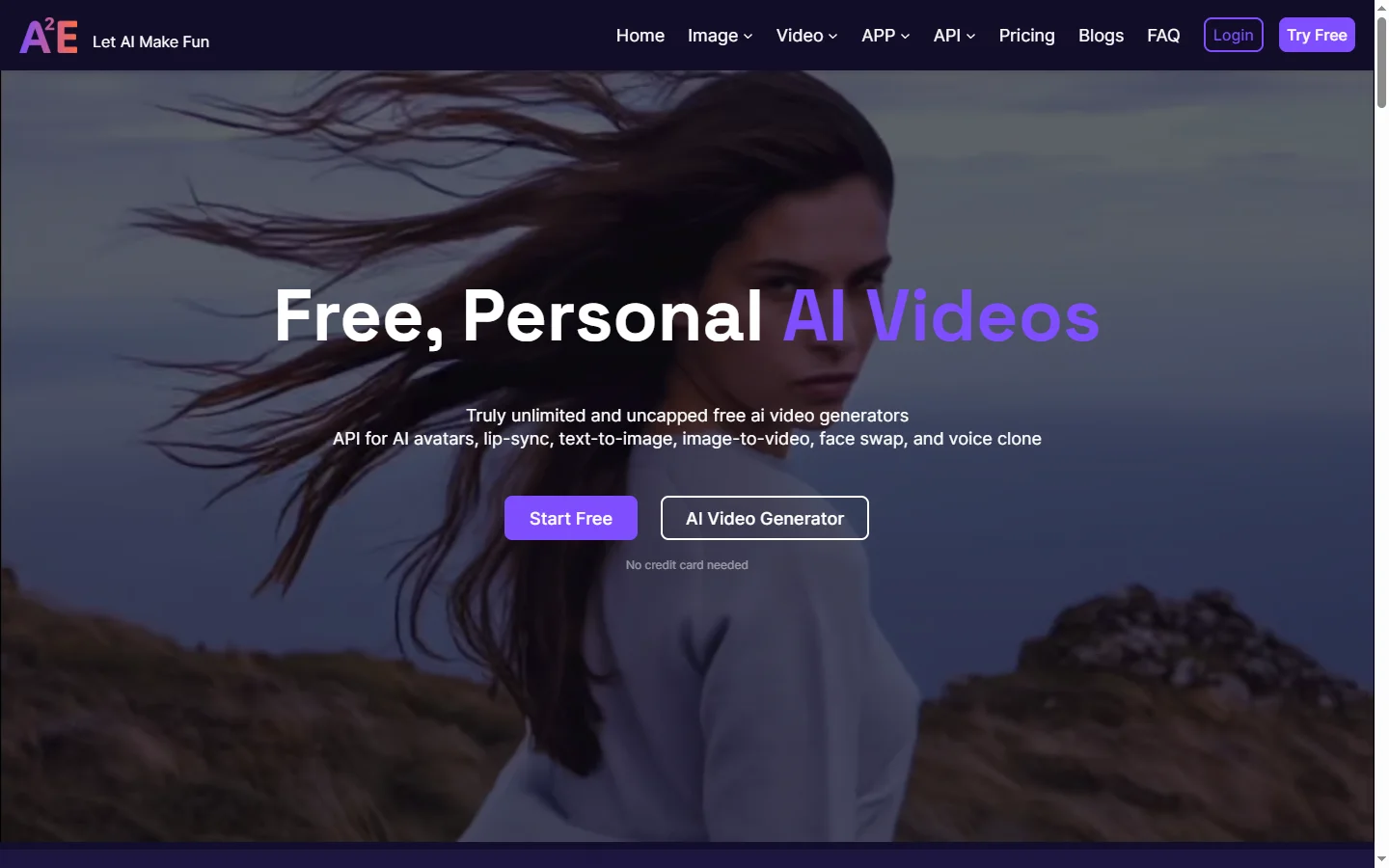
A2E AI
A2E AI productivity platform converts audio and video recordings into transcripts, summaries, and action items with speaker identification.
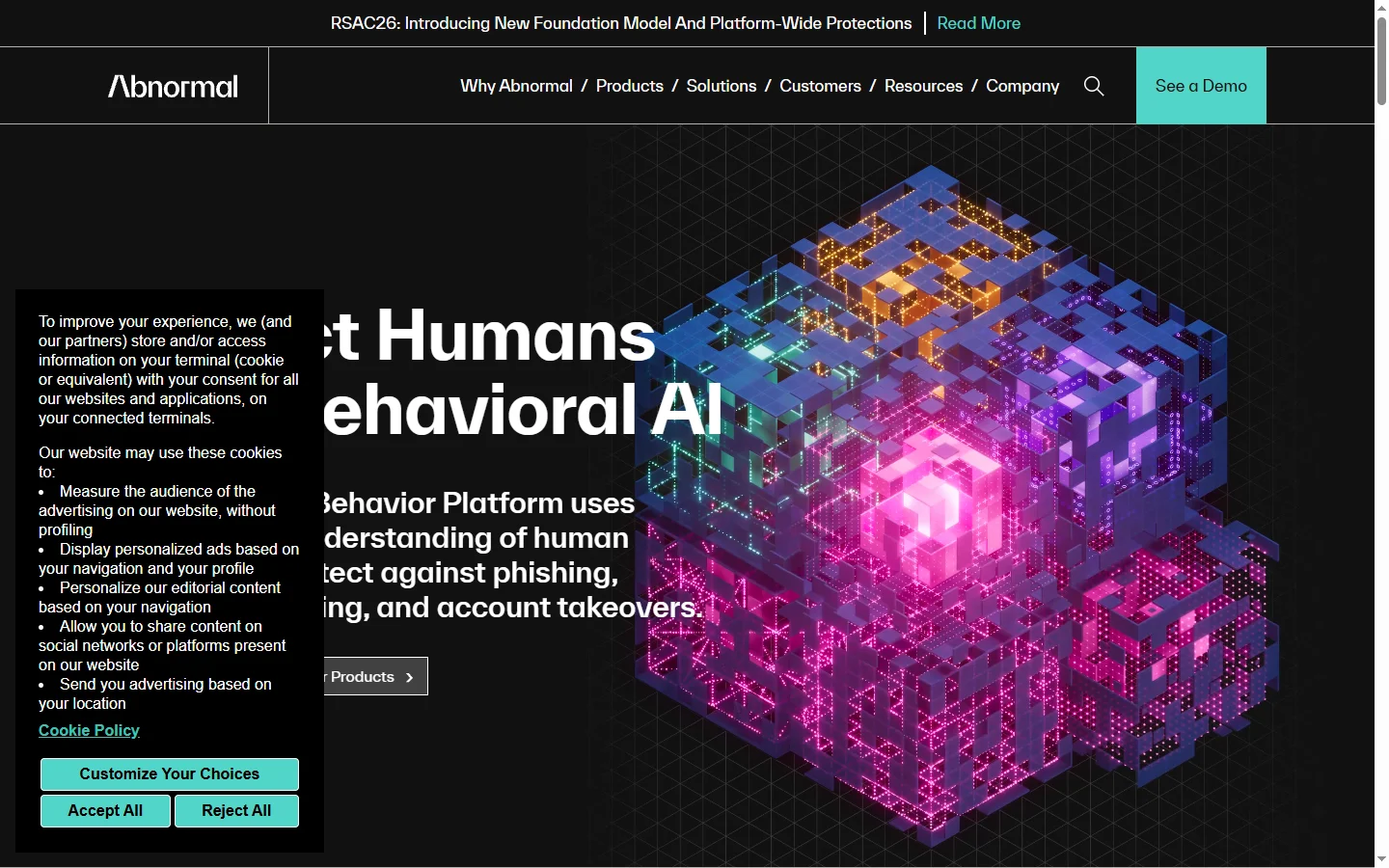
Abnormal AI
Abnormal AI uses behavioral AI to detect business email compromise, account takeover, and socially engineered phishing that bypasses secure email gateways.
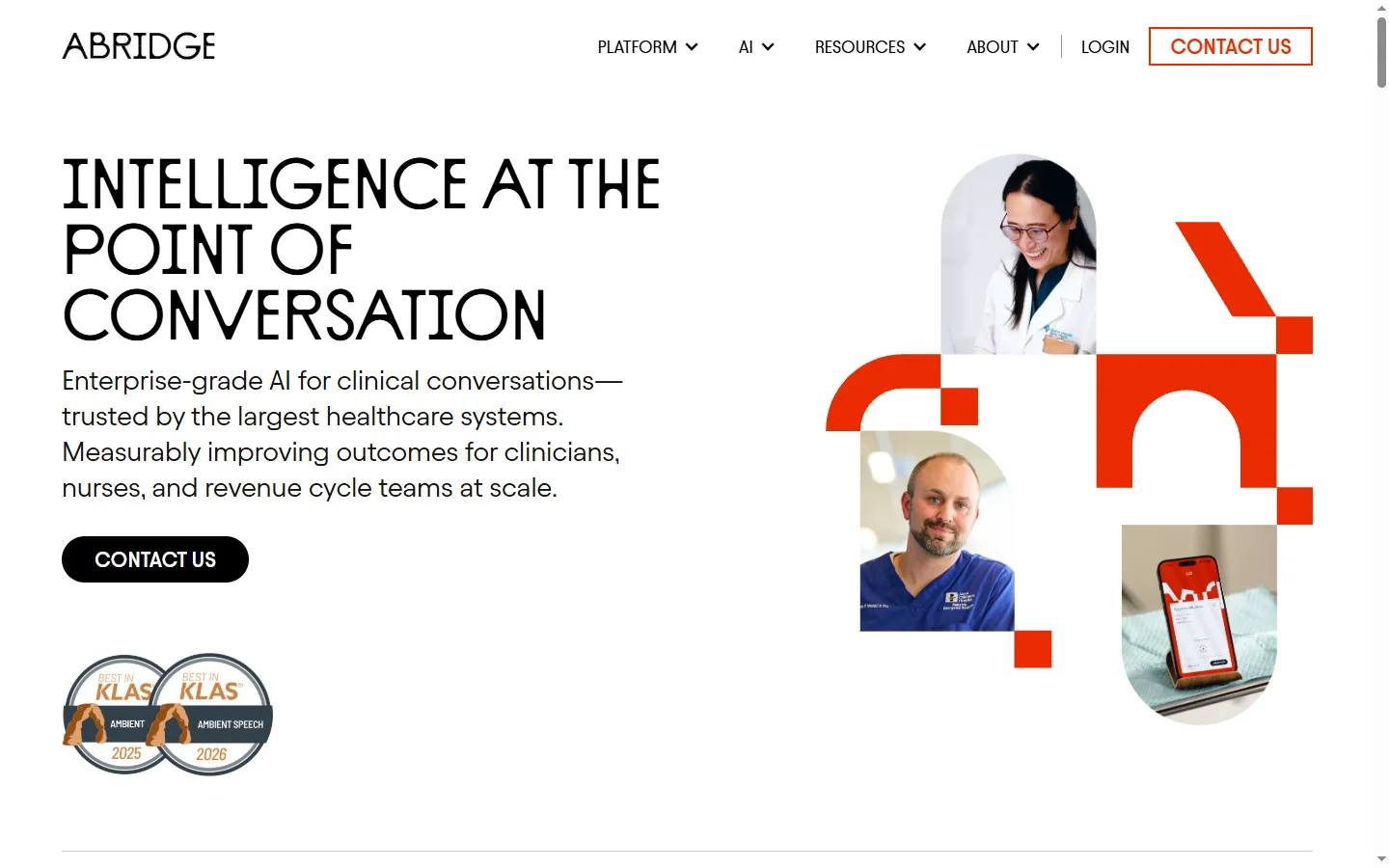
Abridge AI
Abridge AI medical documentation platform that records and summarizes clinical conversations into structured physician notes in real time.

Air AI
Air AI conducts autonomous full-length AI phone calls for sales prospecting, appointment setting, and customer service without human agents.