
Vanna AI
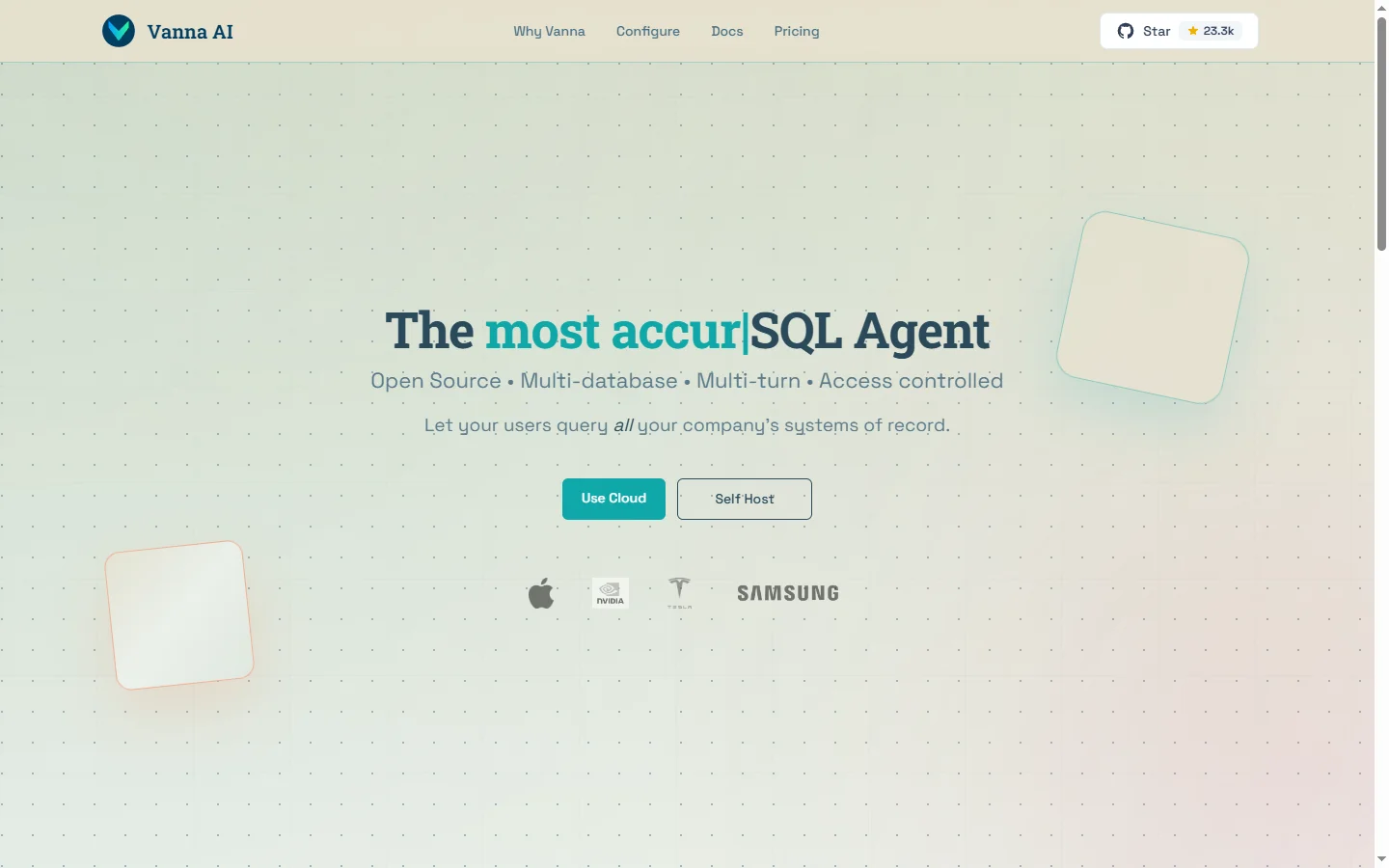
Freemium ✓ Verified 🔥 TrendingVanna AI is an open-source framework that lets users ask questions of their databases in plain English and get accurate SQL and results back.
📋 About Vanna AI
Vanna AI is an open-source Python framework that turns natural-language questions into accurate SQL queries against any database, letting analysts, product managers, and business users get trustworthy answers from data without writing SQL by hand. The vanna ai framework uses retrieval-augmented generation grounded in an organization's actual schema, example queries, and documentation, so SQL is written in the conventions of the business rather than generic boilerplate. Users ask questions like 'what were our top ten products by revenue last quarter?' and Vanna returns the SQL, the rows, and optionally a visualization.
Vanna is model-agnostic — it works with OpenAI, Anthropic, Google, and open-source LLMs — and database-agnostic, supporting Snowflake, BigQuery, Postgres, Redshift, SQLite, and other SQL engines. The core insight behind Vanna is that LLMs generate much better SQL when grounded on real DDL, example queries, and company-specific metric definitions rather than relying on the model's generic SQL training. Teams train Vanna by pointing it at their schemas, golden queries, and documentation; Vanna stores these in a vector database and retrieves relevant context at question time. Both a hosted service and a self-hosted Python library are available.
Vanna AI is most valuable for data teams drowning in ad-hoc SQL requests, product teams that need self-serve analytics without leaving tickets with engineering, and companies with heavy Snowflake or BigQuery footprints where warehouse SQL dominates. It competes with Text-to-SQL features in BI tools like Tableau Pulse, Mode, and ThoughtSpot, but differentiates through open source, model flexibility, and deep customizability. The framework has grown into a widely used library on GitHub and is especially popular with data engineers who want to build internal natural-language interfaces on top of their warehouse.
⚡ Key Features of Vanna AI
Accurate Text-to-SQL Generation
Vanna AI generates SQL grounded in the organization's actual schema, example queries, and metric definitions, producing queries that match business conventions rather than generic patterns. This grounding dramatically improves accuracy compared to asking a raw LLM to write SQL from a DDL dump. The vanna ai approach is well-suited to complex warehouses with hundreds of tables.
Model-Agnostic Architecture
Vanna works with OpenAI, Anthropic, Google, and open-source models like Llama, letting teams choose based on cost, privacy, and capability. Open source teams can run local models to keep queries inside their network entirely. This flexibility avoids the vendor lock-in common in hosted text-to-SQL products.
Database-Agnostic Support
Snowflake, BigQuery, Postgres, Redshift, SQLite, SQL Server, and other SQL engines are supported out of the box. One vanna ai setup can answer questions across multiple databases as long as the framework has connection credentials and training material. This matters for organizations with polyglot data stacks.
Training with Examples and Documentation
Teams train Vanna by adding DDL statements, golden example queries, and documentation snippets. The framework stores these in a vector store and retrieves relevant context at query time. The more a team trains Vanna on real queries, the more accurate it becomes, because generation is anchored to what analysts have actually written.
Open-Source Core
Vanna AI's core is open source on GitHub with an active community, letting engineering teams inspect, extend, and self-host the framework. This transparency is particularly important for data workflows where trust and reproducibility matter. A hosted service is available for teams that prefer managed deployment.
Results and Visualizations
Beyond generating SQL, Vanna runs the query and returns results and optional Plotly visualizations so end users get the full answer rather than needing to execute SQL themselves. Integration examples show how to expose Vanna through Streamlit, Slack, or internal dashboards. The framework is designed to be embedded in many UIs.
🎯 Use Cases for Vanna AI
⚖️ Vanna AI Pros & Cons
Advantages
- ✓Grounded SQL significantly more accurate than raw LLM prompting
- ✓Open source with active GitHub community
- ✓Model and database agnostic
- ✓Self-hostable for privacy-sensitive data
- ✓Integrates with common UIs like Streamlit and Slack
Drawbacks
- ✗Accuracy depends on quality of training examples
- ✗Complex warehouse schemas require substantial training investment
- ✗Non-technical users still need someone to set up and maintain
- ✗Hosted tier adds cost for teams preferring managed service
📖 How to Use Vanna AI
Install the Vanna AI Python package from PyPI or explore the hosted version at vanna.ai.
Connect to your database with read-only credentials scoped appropriately.
Train Vanna by adding DDL statements, example SQL queries, and documentation to the framework.
Ask questions in natural language through the Vanna API, a notebook, or a Streamlit app.
Review generated SQL, execute it, and visualize results.
Expand training over time with every new golden query to improve accuracy.
❓ Vanna AI FAQ
Vanna AI is an open-source Python framework that converts natural-language questions into accurate SQL queries against databases, grounded on organizational schema, example queries, and documentation.
The vanna ai core is free and open source under a permissive license on GitHub. A hosted commercial service is available with additional features and managed deployment.
Vanna is model-agnostic and works with OpenAI, Anthropic, Google, and open-source models including Llama variants, letting teams choose based on cost, privacy, and capability.
Snowflake, BigQuery, Postgres, Redshift, SQLite, SQL Server, and other SQL engines are supported. Adding a new dialect primarily requires a connection adapter.
Accuracy depends on the quality of training material. Teams that provide golden example queries and clear documentation typically see strong accuracy on their common question patterns, with diminishing returns as they add more examples.
Related to Vanna AI

Accrete AI
Accrete AI builds autonomous enterprise AI agents for defense, government, and commercial intelligence workflows.

Ace AI
Ace AI is an AI-powered interview and career coach that helps job seekers prepare with mock interviews, resume feedback, and personalized career guidance.

Actively AI
Actively AI is an AI sales prospecting platform that researches accounts, identifies buyer signals, and writes personalized outbound at pipeline scale.
Airship AI
Airship AI provides video intelligence and data management solutions that use AI to search, analyze, and secure large-scale video evidence.
Fleet AI
Fleet AI is an AI-powered assistant for financial professionals that answers complex tax, accounting, and regulatory questions with cited sources.

Unify AI
Unify AI is a go-to-market platform that combines B2B account intelligence with AI-generated research and outbound workflows for sales teams.
Featured on WhatIf.ai
Add this badge to your website to show you're listed on WhatIf AI
Alternatives to Vanna AI

Base44 AI
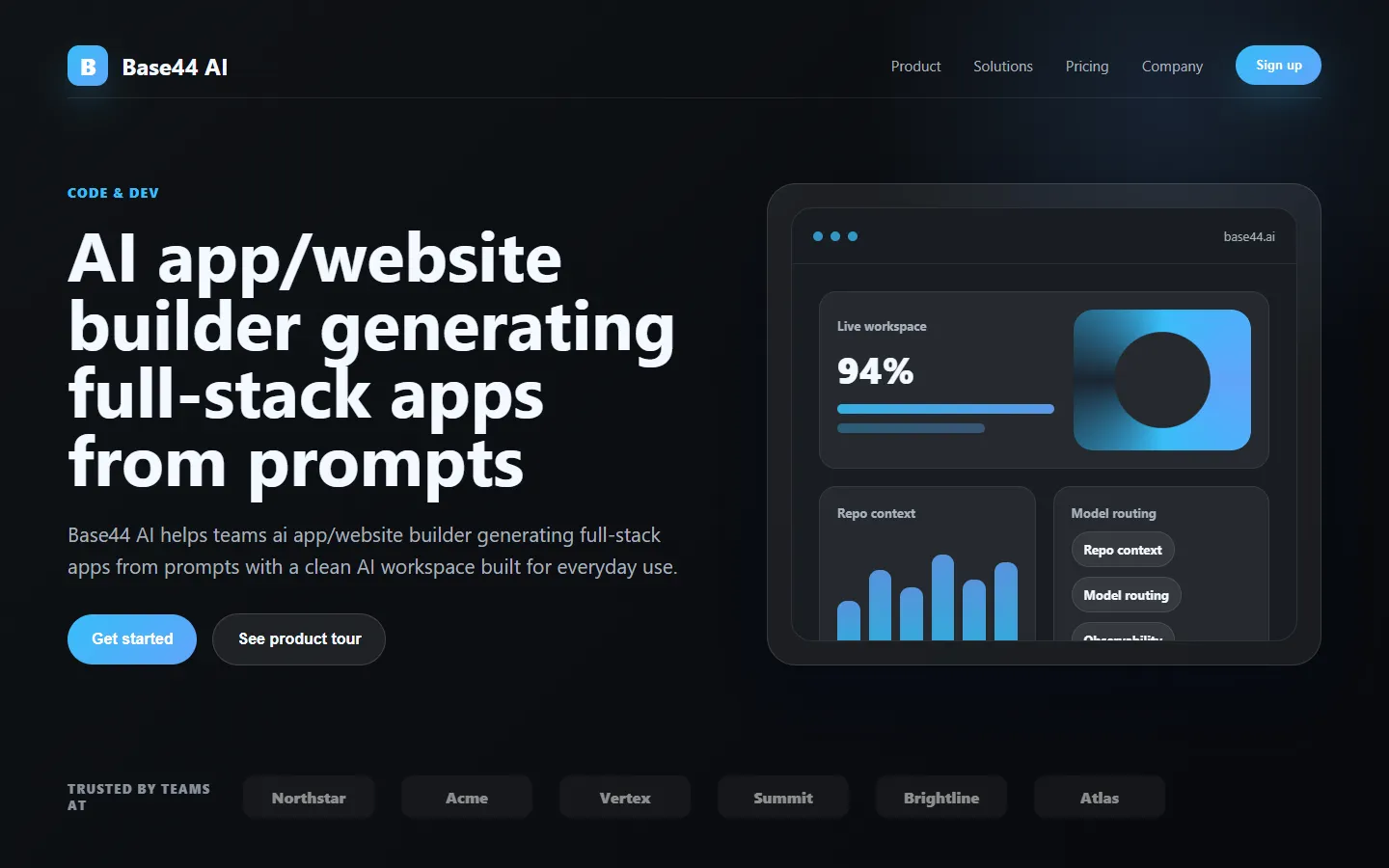
Base44 AI is an AI app builder and website builder that generates full-stack web applications from natural language descriptions with backend, database, and UI included.
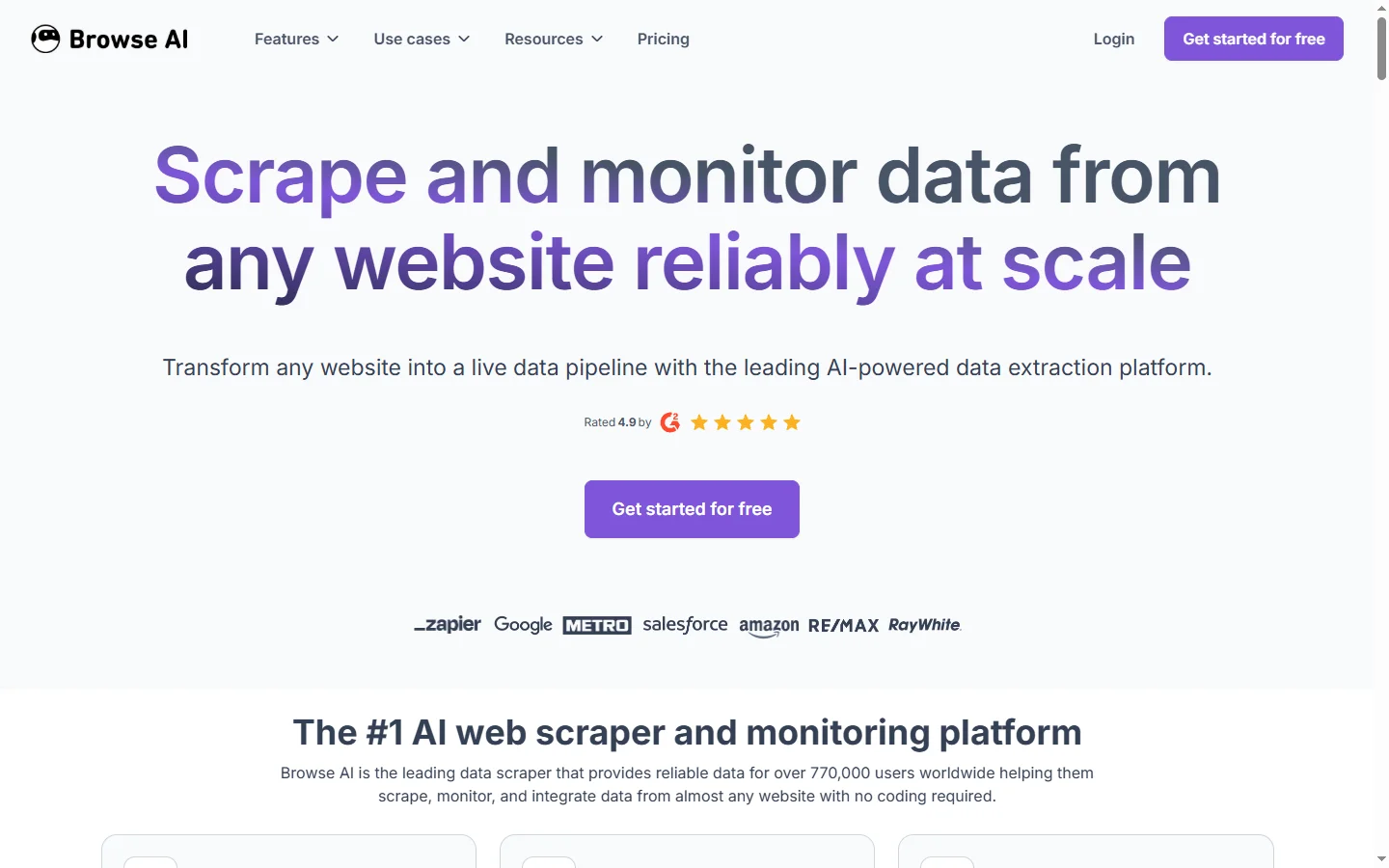

Browse AI
Browse AI is a no-code web scraping and monitoring tool that extracts structured data from any website and tracks changes over time without writing code.
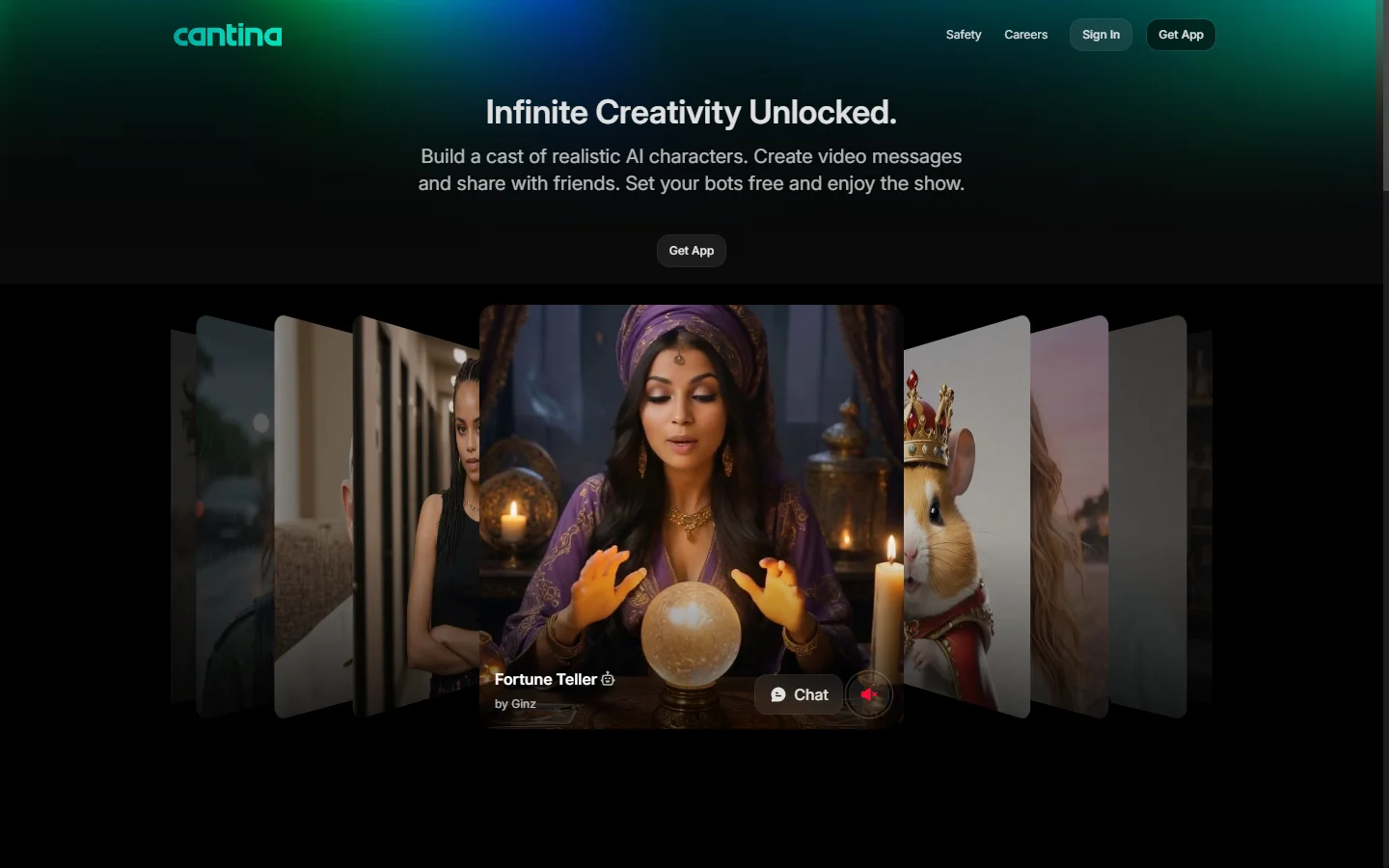

Cantina AI
Cantina AI is a freemium platform for building and deploying full-stack web applications using AI-assisted development with live preview and one-click deployment.
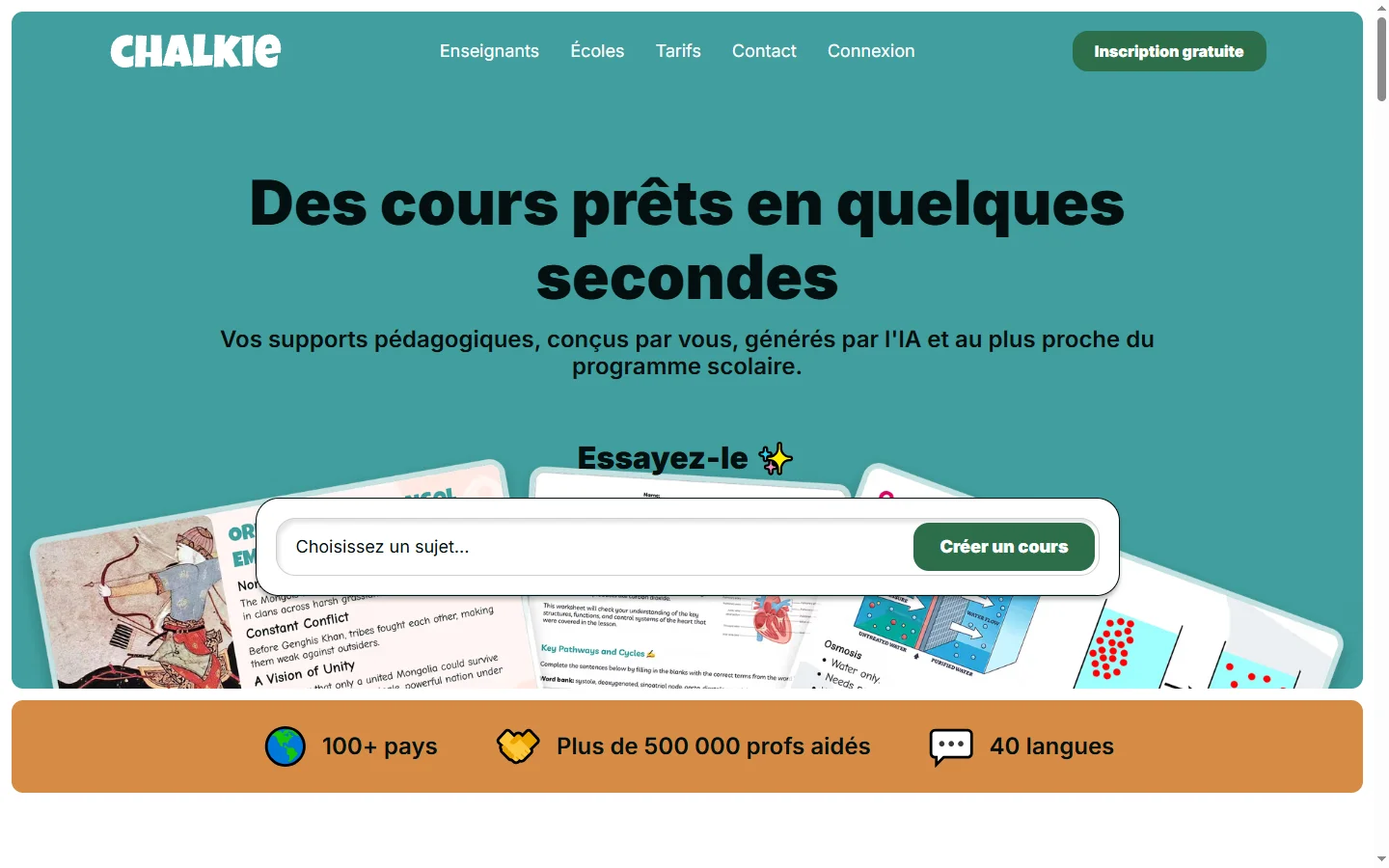

Chalkie AI
Chalkie AI creates lesson plans, worksheets, quizzes, and differentiated materials mapped to curriculum standards for teachers and tutors.