
Typeface AI
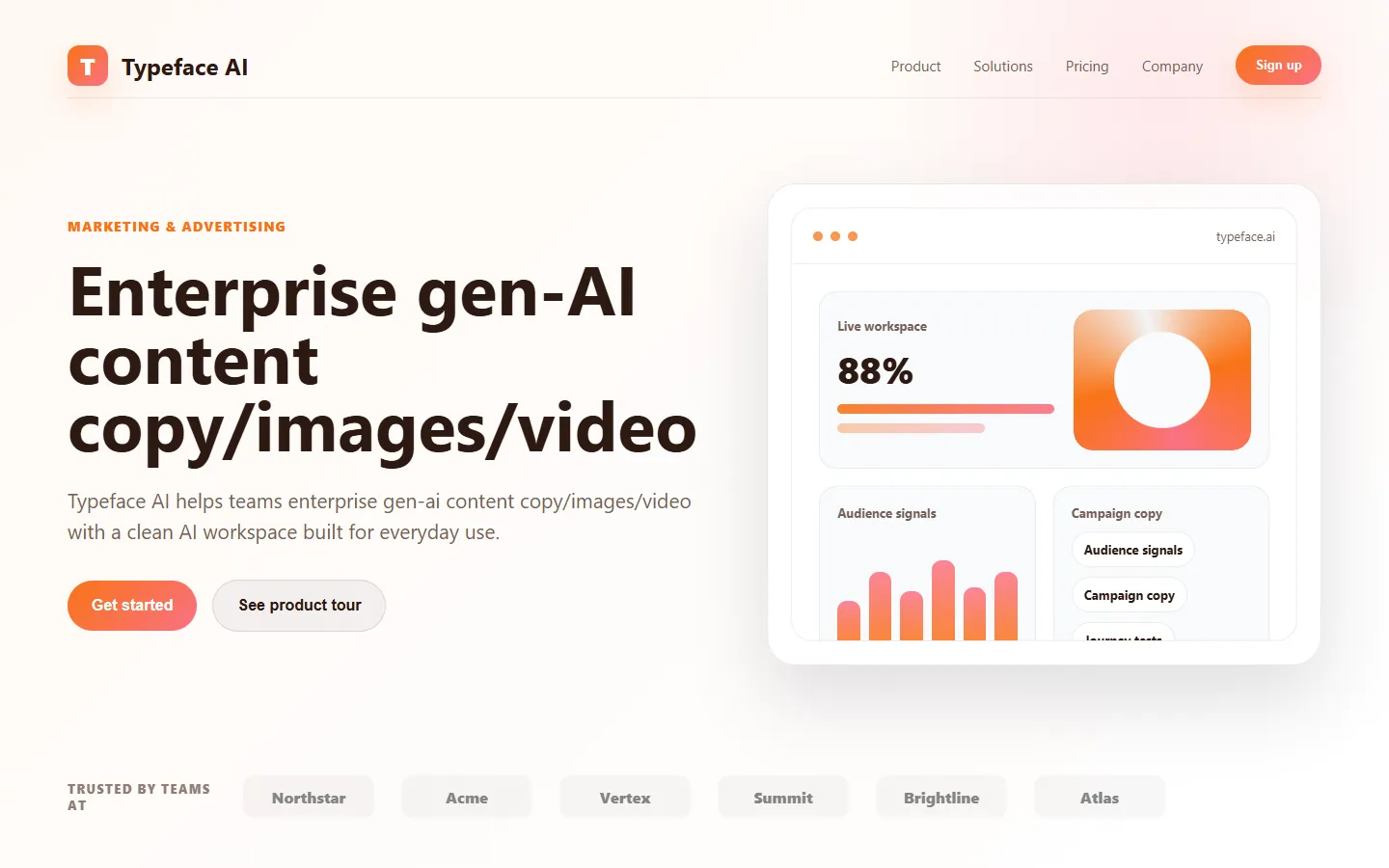
Paid ✓ Verified 🔥 TrendingTypeface AI is an enterprise generative AI platform that produces on-brand content — copy, images, video — at scale across marketing channels.
📋 About Typeface AI
Typeface AI is an enterprise generative AI content platform that helps marketing and brand teams produce on-brand copy, images, and video at scale across every channel. Founded by former Adobe CPO Abhay Parasnis, Typeface combines a company-specific Brand Hub — trained on the organization's voice, assets, and guidelines — with generative models for text and imagery, plus workflow automation that plugs into marketing ops stacks. The typeface ai platform is used by enterprises like Microsoft, Paramount, Sports Illustrated, and major consumer brands to ship more content with fewer cycles while maintaining brand consistency across markets.
Typeface's Brand Hub is the platform's core differentiator. Teams upload logos, fonts, approved imagery, and tone-of-voice guidelines, and Typeface learns the brand's visual and verbal identity. From there, its AI Agents generate campaign copy, social posts, landing pages, product descriptions, and matching images that feel native to the brand rather than generic AI output. Enterprise governance features include approval workflows, permissioning, and integrations with DAMs, CMSes, and marketing platforms like Adobe Experience Manager, Salesforce, HubSpot, and Microsoft 365. Generative AI copilots accelerate specific workflows such as multilingual campaign localization and product launch kits.
Typeface AI is most valuable for enterprise marketing organizations running many channels and campaigns under strict brand guidelines, consumer brands needing constant fresh content across regions, and agencies serving enterprise clients who need consistent output at agency speed. It competes with Jasper, Writer, and Adobe Firefly Services but differentiates on deeper brand modeling, enterprise workflow integration, and a unified text-plus-image generation experience. Pricing is enterprise-only and scoped per-customer with SOC 2 Type II compliance, SSO, and dedicated customer success support.
⚡ Key Features of Typeface AI
Brand Hub Personalization
Typeface AI's Brand Hub ingests an organization's tone, visual style, imagery, logos, and guidelines to produce content that feels native to the brand rather than generic AI output. Marketing teams upload approved materials once, and every subsequent generation inherits that brand DNA. This is the biggest differentiator from general-purpose copy and image tools. The typeface ai Brand Hub is a core asset in enterprise deployments.
Unified Text and Image Generation
Unlike tools that specialize only in copy or only in images, Typeface generates matching text and imagery together so campaigns ship as complete units. A single prompt can produce a headline, body, social caption, and matching hero image that all align in tone and look. This integration is what makes Typeface a marketing-grade platform rather than a prompt playground.
AI Agents for Specific Workflows
Typeface offers AI Agents tailored to concrete marketing jobs — campaign kits, product launches, multilingual localization, social calendars. Each Agent knows the structure of the deliverable and executes the multi-step workflow, not just single prompts. Teams ship much faster when the tool understands the task shape.
Enterprise Workflow Integrations
Native integrations with Adobe Experience Manager, Salesforce Marketing Cloud, HubSpot, Microsoft 365, and major DAMs let typeface ai plug into existing marketing operations without replatforming. Generated content flows into CMSes, email tools, and ad systems through approval workflows rather than copy-paste. This reduces the integration overhead that kills enterprise AI adoption.
Governance and Approval Workflows
Permissioning, audit trails, approval gates, and role-based access control keep brand, legal, and compliance in the loop while teams scale content volume. Enterprises can let many contributors generate while routing everything through the right reviewers. SOC 2 Type II and data controls make the platform suitable for regulated industries.
Multilingual and Localization Support
Global brands use Typeface to adapt campaigns across languages and regions while keeping brand voice consistent. The platform handles translation, local cultural adaptation, and imagery variants through localization agents, reducing the reliance on expensive per-market creative teams.
🎯 Use Cases for Typeface AI
⚖️ Typeface AI Pros & Cons
Advantages
- ✓Brand Hub produces genuinely on-brand content
- ✓Unified text and image generation for complete campaigns
- ✓Deep enterprise integrations avoid stack disruption
- ✓Strong governance and approval workflows
- ✓SOC 2 Type II and enterprise security posture
Drawbacks
- ✗Enterprise-only — not accessible to individuals or small teams
- ✗Requires upfront brand training to get best output
- ✗Custom pricing not published publicly
- ✗Onboarding cycle longer than consumer AI tools
📖 How to Use Typeface AI
Visit typeface.ai and request an enterprise demo with your marketing leadership.
Onboard by uploading brand guidelines, approved imagery, tone references, and past campaign examples.
Configure integrations with your CMS, DAM, CRM, and marketing platforms.
Use AI Agents to generate campaign kits, product launches, or multilingual localizations.
Route generated content through approval workflows aligned with brand and legal review.
Publish directly to marketing channels and track performance alongside manually-produced content.
❓ Typeface AI FAQ
Typeface AI is an enterprise generative AI content platform that produces on-brand copy, images, and video at scale, anchored by a Brand Hub trained on each organization's voice and visual identity.
Enterprise marketing, brand, and communications teams at companies like Microsoft, Paramount, Sports Illustrated, and major consumer brands use the typeface ai platform for on-brand content at scale.
Jasper and Writer focus primarily on copy generation with brand voice controls. Typeface adds unified image generation, deeper brand modeling through its Brand Hub, and AI Agents for multi-step enterprise workflows.
Yes. Typeface is SOC 2 Type II compliant with SSO, role-based access, audit logging, and data controls suitable for regulated enterprise deployments.
Typeface uses custom enterprise pricing scoped per customer based on usage, seats, and integrations. Pricing is not listed publicly and is provided during sales conversations.
Related to Typeface AI

Actively AI
Actively AI is an AI sales prospecting platform that researches accounts, identifies buyer signals, and writes personalized outbound at pipeline scale.

Alayna AI
Alayna AI is an all-in-one AI teaching assistant that helps K-12 educators plan lessons, differentiate activities, and give personalized feedback.

Alex AI
Alex AI is a macOS AI assistant that lives in your menu bar, offering instant writing help, code assistance, and context-aware productivity features.

Amplify AI
Amplify AI is an employee advocacy and social selling platform that uses AI to create, personalize, and measure content for sharing at scale.

Attentive AI
Attentive AI powers the Attentive SMS and email marketing platform with AI-generated copy, audience targeting, and journey optimization for e-commerce brands.

Unify AI
Unify AI is a go-to-market platform that combines B2B account intelligence with AI-generated research and outbound workflows for sales teams.
Featured on WhatIf.ai
Add this badge to your website to show you're listed on WhatIf AI
Alternatives to Typeface AI

Aragon AI
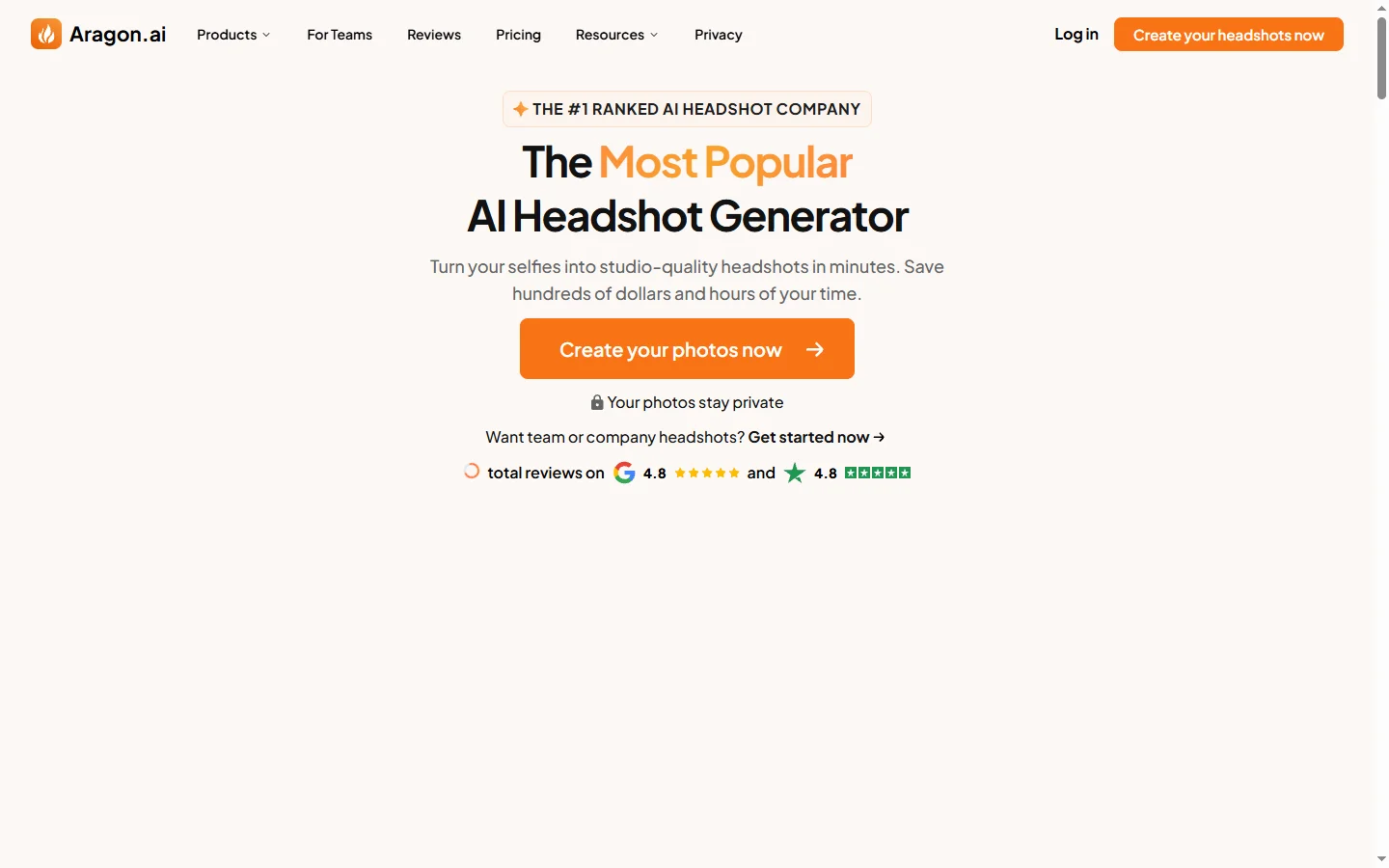
Aragon AI professional headshot generator that creates studio-quality portrait photos from uploaded selfies using a personalized AI model.

Arcads AI
Arcads AI generates UGC-style video ads using AI actors from scripts, enabling performance marketers to produce ad creative variations at scale.


ArtGuru AI
ArtGuru AI generates images from text prompts in a wide range of artistic styles, with additional tools for face enhancement, background removal, and image upscaling.

Backyard AI
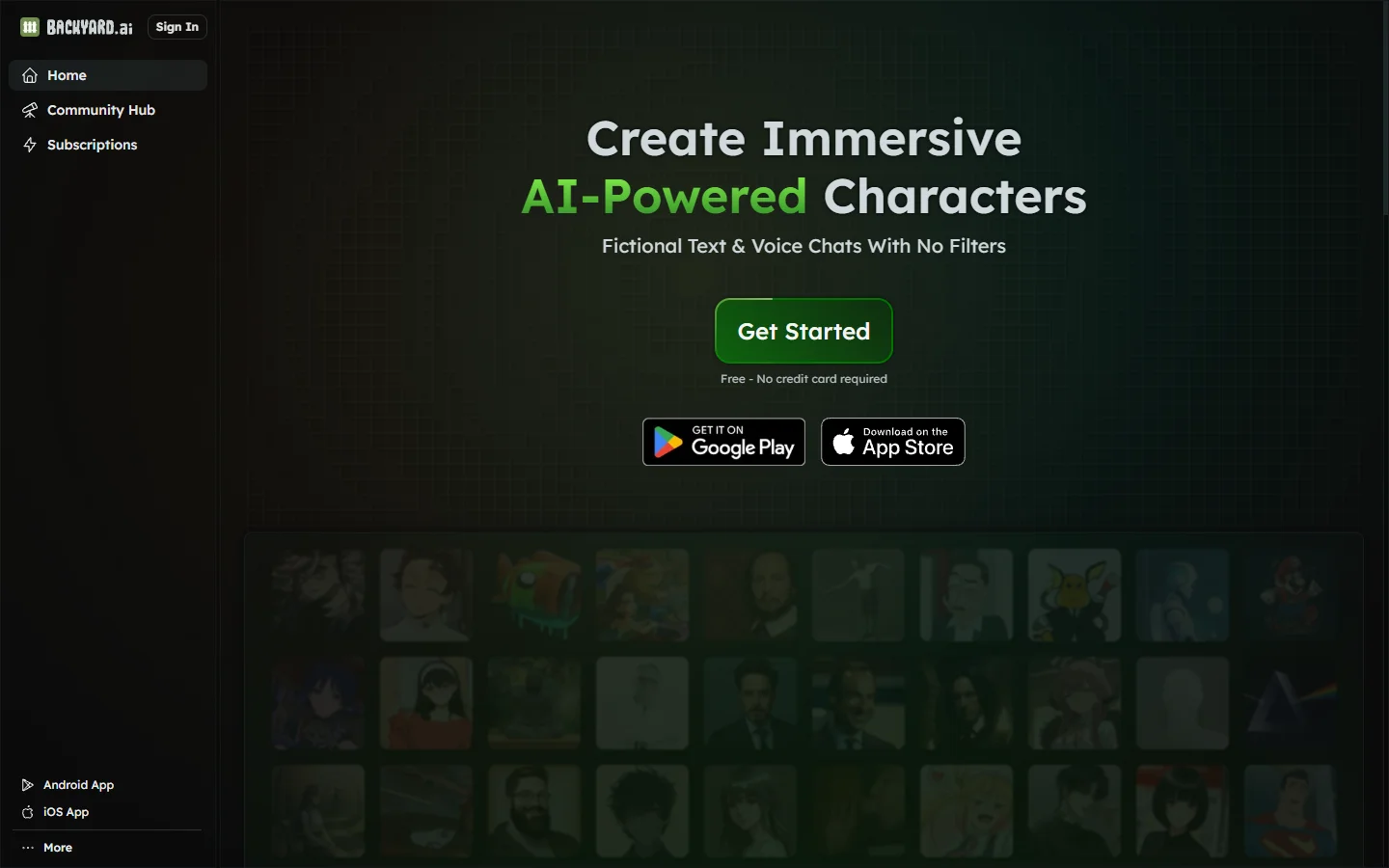
Backyard AI is a free desktop application for running local AI character chat with custom personas, private conversations, and full offline operation.