
Thoughtful AI
PaidThoughtful AI builds autonomous AI agents for healthcare revenue cycle management, automating eligibility, claims, and payment posting.
📋 About Thoughtful AI
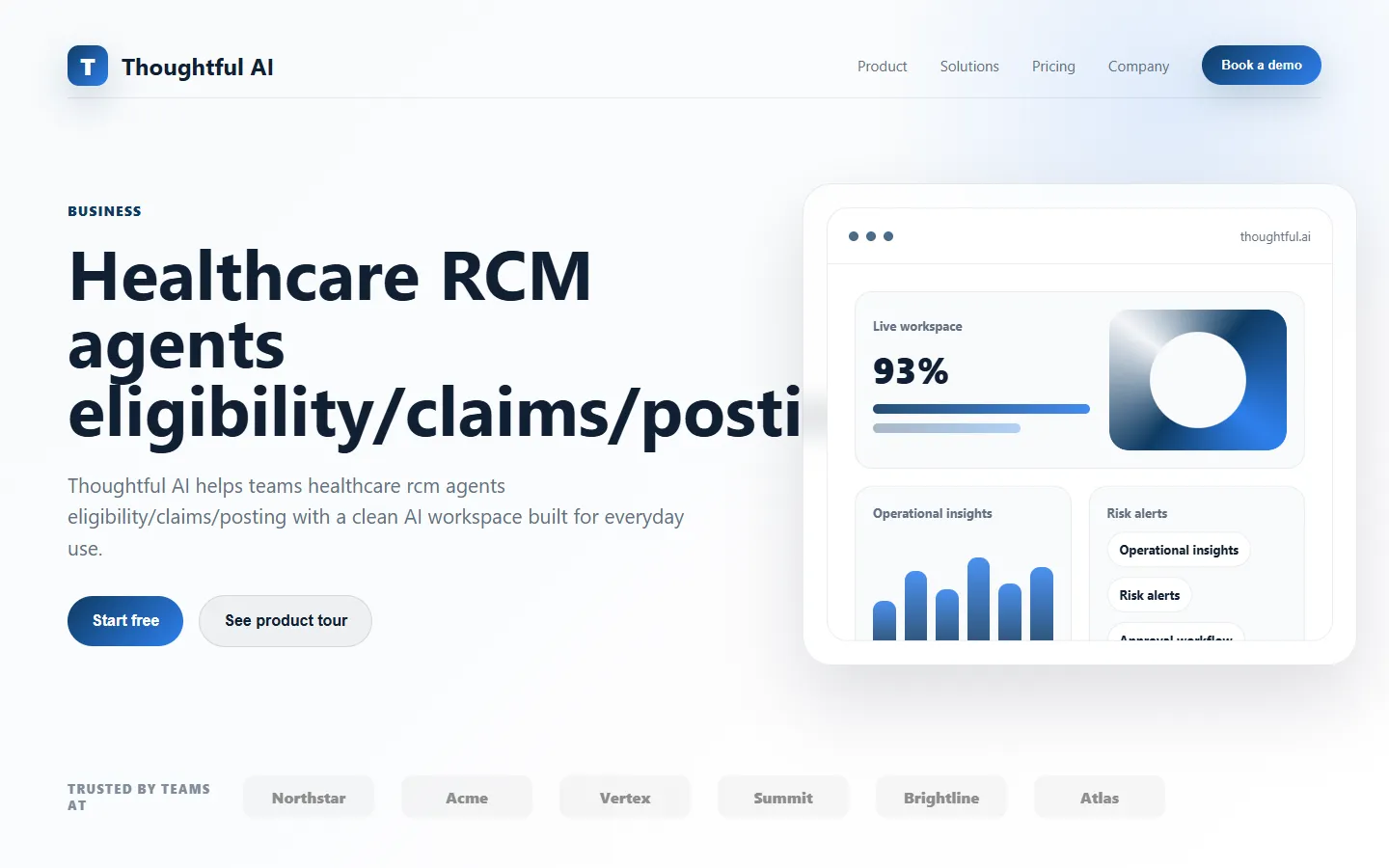
Thoughtful AI builds AI agents that handle repetitive back-office work in healthcare revenue cycle management. Instead of selling generic automation software, Thoughtful deploys named agents such as EVA for eligibility verification, CAM for claims processing, and PHIL for payment posting, each specialized for a specific revenue cycle function. These agents work across existing electronic health record and practice management systems without requiring expensive integrations or system replacements.
Each agent mimics the steps a human biller or coordinator takes, logging into payer portals, reading responses, and updating the practice's systems with the results. The platform uses a combination of large language models, computer vision, and workflow automation to navigate the fragmented web of payer and clearinghouse interfaces. Customers typically see agents running around the clock, processing volumes a human team could not match while cutting per-transaction costs substantially. Human operators oversee the agents and handle exceptions that fall outside the trained workflows.
Thoughtful AI serves healthcare provider organizations, from large health systems to behavioral health groups and specialty clinics, that struggle with billing staff shortages and rising labor costs. The company sells outcomes rather than software, offering guarantees tied to accuracy and cost savings. Deployments are managed by Thoughtful's team and typically include custom training of each agent on the customer's payer mix, fee schedules, and workflows. Pricing is negotiated per engagement based on volume and agents deployed.
⚡ Key Features of Thoughtful AI
Named AI Agents for Specific Functions
Rather than generic automation, Thoughtful AI offers pre-built agents like EVA, CAM, and PHIL that each handle a defined revenue cycle task such as eligibility verification, claims submission, or payment posting. Each agent comes with a track record of performance and can be deployed quickly against a new practice's systems. This packaged approach reduces the discovery and scoping work required in traditional RPA projects. Customers can deploy one agent or the full suite depending on their pain points.
Works Across Existing Systems
Thoughtful agents operate on top of the customer's existing EHR and practice management systems through UI automation and API calls, avoiding the cost and disruption of replacing those systems. Agents can log into payer portals, download ERAs, navigate clearinghouses, and update the practice's source of truth. This lets providers capture automation benefits without a multi-year platform migration. The approach works with common systems like Epic, Athena, NextGen, and dozens of specialty-specific platforms.
24/7 Autonomous Operation
Agents run continuously, processing eligibility checks overnight, submitting claims immediately after visits, and posting payments as soon as ERAs arrive. This compresses the revenue cycle and improves cash flow for customers. Human teams review exception queues during normal hours while the agents handle the volume. The round-the-clock throughput is difficult to match with human staff alone.
Exception Management Console
When an agent encounters a situation it cannot resolve, the task is routed to a human queue with full context, including screenshots and the agent's reasoning. This lets human operators resolve edge cases efficiently and feed learnings back into the agent. The console provides dashboards showing agent performance, throughput, and exception trends. Managers can track the ROI of each deployed agent in real time.
Outcome-Based Engagements
Thoughtful structures deals around measurable business outcomes like claims per hour, denial rates, or days in accounts receivable rather than software seats or transaction fees. This aligns the vendor's incentives with the customer's and gives finance leaders a clear ROI story. Contracts typically include performance guarantees and monthly business reviews. The outcome focus is unusual in healthcare automation and has been a significant differentiator.
Custom Agent Training
Each deployment includes custom training of the agents on the customer's specific payer mix, fee schedules, workflow quirks, and documentation conventions. This tailoring is critical because healthcare billing workflows vary widely across specialties and payers. Thoughtful's implementation team handles the training process with input from the customer's billing leadership. Retraining happens as payer rules and workflows evolve.
🎯 Use Cases for Thoughtful AI
⚖️ Thoughtful AI Pros & Cons
Advantages
- ✓Purpose-built for healthcare revenue cycle workflows
- ✓Pre-trained named agents reduce time to value
- ✓Works with existing EHR and PM systems without replacement
- ✓Outcome-based pricing aligns vendor and customer incentives
- ✓Strong fit for staff-constrained billing teams
Drawbacks
- ✗Enterprise engagement model not suitable for small independent practices
- ✗Custom training and implementation require time and customer input
- ✗Dependence on fragile payer and clearinghouse interfaces
- ✗Exception queues still require skilled human operators
📖 How to Use Thoughtful AI
Contact Thoughtful AI sales for a discovery call to assess your revenue cycle pain points.
Share sample volumes, payer mix, and current process metrics so Thoughtful can scope agents and outcomes.
Sign an outcome-based engagement agreement with measurable performance targets.
Work with the implementation team to grant agent access to your systems and train on your workflows.
Run a pilot on a defined scope and track agent accuracy, throughput, and exception rates.
Expand to additional agents and functions as early deployments meet performance targets.
❓ Thoughtful AI FAQ
Thoughtful AI builds autonomous AI agents for healthcare revenue cycle management, including eligibility verification, claims processing, and payment posting. The agents work across the customer's existing EHR and practice management systems.
Thoughtful agents handle the repetitive high-volume parts of billing work, while human operators focus on exceptions, complex appeals, and patient interactions. Most customers redirect staff to higher-value work rather than reducing headcount.
Thoughtful typically sells outcome-based engagements tied to measurable metrics like claims per hour or denial rates, rather than per-seat software licenses. Pricing is negotiated per engagement based on volume and agents deployed.
Yes. Thoughtful operates in a HIPAA-compliant environment and signs Business Associate Agreements with provider customers. Security and privacy controls are reviewed as part of every deployment.
Thoughtful agents work with most common EHR and practice management systems including Epic, Athena, NextGen, eClinicalWorks, and many specialty-specific platforms. The UI-based automation approach means no custom integrations are required.
Related to Thoughtful AI

15.ai
15.ai is a free AI voice cloning tool famous for generating realistic speech from cartoon, video game, and animated show characters using as little as 15 seconds of source audio.

A2E AI
A2E AI productivity platform converts audio and video recordings into transcripts, summaries, and action items with speaker identification.

Abby AI
Abby AI is an AI therapy and mental wellness chatbot that offers CBT-informed conversations, mood tracking, and self-guided coping tools.

Abnormal AI
Abnormal AI uses behavioral AI to detect business email compromise, account takeover, and socially engineered phishing that bypasses secure email gateways.

Abridge AI
Abridge AI medical documentation platform that records and summarizes clinical conversations into structured physician notes in real time.

Accrete AI
Accrete AI builds autonomous enterprise AI agents for defense, government, and commercial intelligence workflows.
Featured on WhatIf.ai
Add this badge to your website to show you're listed on WhatIf AI
Alternatives to Thoughtful AI

A2E AI
A2E AI productivity platform converts audio and video recordings into transcripts, summaries, and action items with speaker identification.

Abnormal AI
Abnormal AI uses behavioral AI to detect business email compromise, account takeover, and socially engineered phishing that bypasses secure email gateways.
Abridge AI
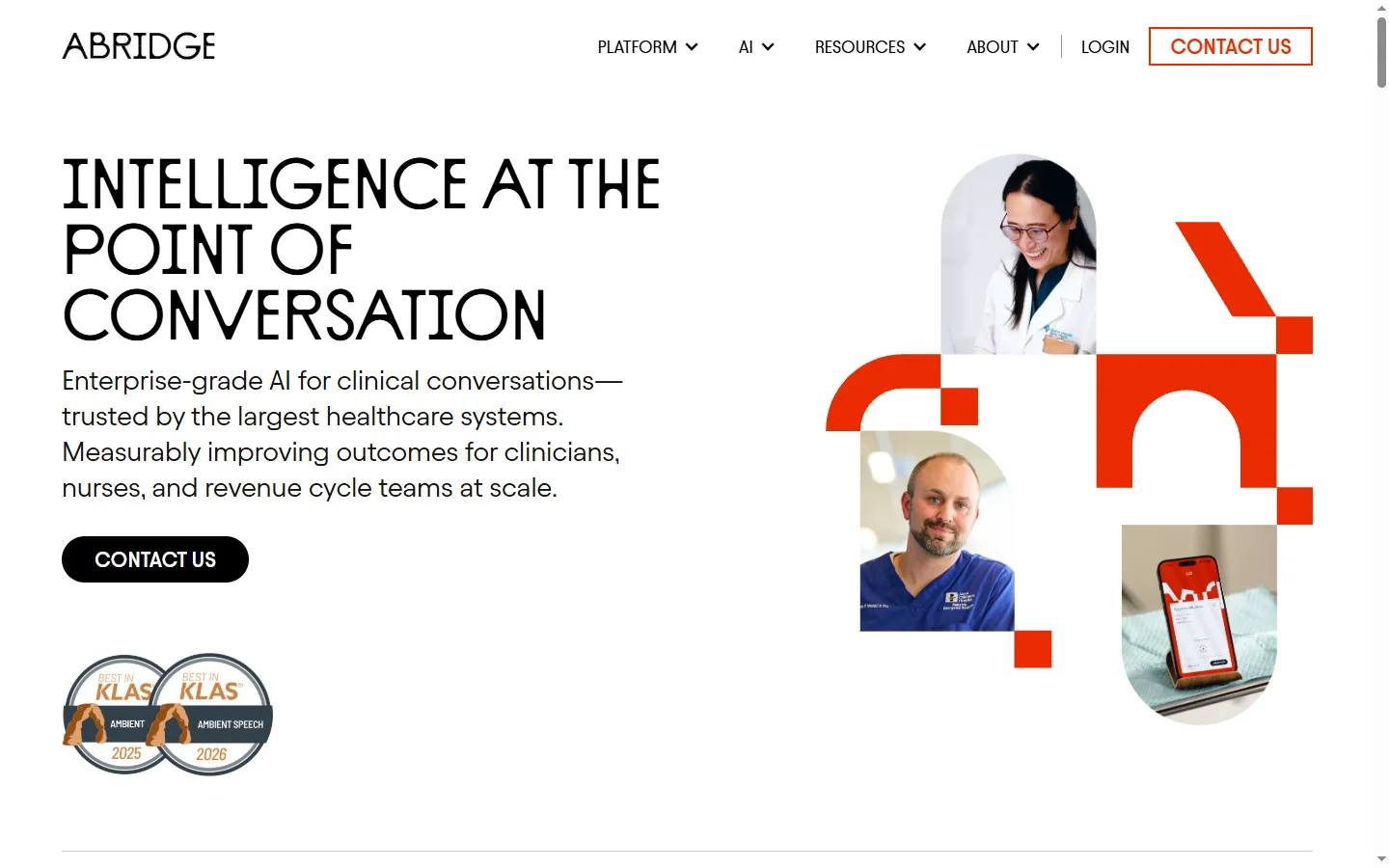
Abridge AI medical documentation platform that records and summarizes clinical conversations into structured physician notes in real time.

Air AI
Air AI conducts autonomous full-length AI phone calls for sales prospecting, appointment setting, and customer service without human agents.