
SiMa AI
Paid ✓ VerifiedSiMa AI delivers machine learning system-on-chip hardware and software for efficient AI inference at the embedded edge.

📋 About SiMa AI
SiMa AI is a semiconductor and software company focused on high-performance, power-efficient AI inference at the embedded edge. Its flagship MLSoC (Machine Learning System-on-Chip) combines purpose-built machine learning accelerators, general-purpose compute, and integrated vision processing on a single chip — enabling industrial, automotive, robotics, and aerospace customers to run demanding neural networks inside devices instead of relying on cloud compute.
The SiMa AI platform pairs the MLSoC with Palette, a software stack that compiles popular frameworks like PyTorch and TensorFlow onto the chip with minimal manual tuning. This lets ML engineers port models trained in the cloud to edge devices without rewriting them in low-level kernels. SiMa AI emphasizes frames-per-second-per-watt leadership, which is the key constraint for battery-powered drones, on-vehicle perception, and rugged industrial cameras.
SiMa AI serves OEMs building edge AI products in sectors where size, weight, power, and latency matter more than raw cloud throughput. Customers use the MLSoC for industrial inspection, autonomous robotics, defense and aerospace systems, smart cities, and medical devices. The company's focus on production-ready silicon and a clean developer experience separates it from pure research platforms and cloud-accelerator vendors.
⚡ Key Features of SiMa AI
MLSoC Embedded Accelerator
SiMa AI's MLSoC combines machine learning accelerators, general-purpose compute, and vision processing on a single chip optimized for embedded workloads. Integration reduces board complexity, cost, and power consumption for OEMs. A single chip can handle perception, planning, and control stages in demanding edge devices.
Industry-Leading Frames-Per-Second-Per-Watt
The chip is designed to deliver leading inference throughput per watt consumed, the metric that actually matters for battery-powered or thermally-constrained devices. This enables longer drone missions, lower-cost industrial cameras, and fanless rugged devices that would otherwise need heatsinks or active cooling.
Palette Developer Software
Palette compiles models from PyTorch, TensorFlow, and ONNX onto the MLSoC with little manual tuning. ML engineers train in the cloud and deploy to the edge without rewriting models in low-level code. This closes the gap that traditionally slows edge AI programs by months.
Support for Modern Model Architectures
SiMa AI supports transformers, CNNs, segmentation, object detection, and classic computer vision kernels, so customers are not forced to stick with outdated model families. This is critical as state-of-the-art models continue to evolve toward transformer-based architectures even at the edge.
Pre-Integrated Reference Designs
Reference designs for industrial cameras, drones, vehicles, and medical devices speed OEM development by providing known-good hardware and software starting points. Customers can go from evaluation to field trials in weeks instead of quarters.
Security and Long-Lifecycle Support
The chip includes hardware security features and a long product lifecycle commitment that suits industrial, defense, and medical customers who cannot requalify hardware frequently. Security features include secure boot, encrypted memory, and supply-chain attestations.
Model Zoo and Optimization Tools
SiMa AI ships a model zoo of pre-optimized models and profiling tools that help developers hit target latency and accuracy budgets without custom kernel engineering. Engineers see latency, accuracy, and power trade-offs directly during development.
🎯 Use Cases for SiMa AI
⚖️ SiMa AI Pros & Cons
Advantages
- ✓Leading frames-per-second-per-watt for edge inference
- ✓Palette compiler reduces edge deployment friction
- ✓Supports transformer and CNN model families
- ✓Reference designs accelerate OEM development
- ✓Long-lifecycle support for industrial and defense customers
Drawbacks
- ✗Not applicable to cloud or data-center workloads
- ✗Hardware evaluation requires dev kit procurement
- ✗Ecosystem smaller than leading GPU vendors
- ✗Enterprise engagements not suited to hobbyist projects
📖 How to Use SiMa AI
Request an evaluation at sima.ai and engage with the applications engineering team.
Acquire a development kit and install the Palette software stack.
Import your PyTorch, TensorFlow, or ONNX model and compile it for the MLSoC.
Profile the compiled model on the dev kit against your latency, accuracy, and power targets.
Integrate with your product hardware using a reference design or custom board.
Graduate to production silicon with long-lifecycle supply commitments.
❓ SiMa AI FAQ
SiMa AI is a semiconductor company that builds MLSoC chips and a developer software stack for high-performance, power-efficient AI inference at the embedded edge.
Industrial, automotive, robotics, defense, aerospace, smart city, and medical device OEMs use SiMa AI for embedded AI workloads where size, weight, power, and latency matter.
Palette supports compiling models from PyTorch, TensorFlow, and ONNX. Supported architectures include transformers, CNNs, and classical computer vision kernels.
SiMa AI is built for embedded edge inference rather than cloud training or large-batch serving. Its strength is power-efficient inference inside devices, not raw cloud throughput.
Customers request a dev kit through sima.ai and work with applications engineers to port models, profile performance, and design reference systems.
Related to SiMa AI

15.ai
15.ai is a free AI voice cloning tool famous for generating realistic speech from cartoon, video game, and animated show characters using as little as 15 seconds of source audio.

Abby AI
Abby AI is an AI therapy and mental wellness chatbot that offers CBT-informed conversations, mood tracking, and self-guided coping tools.

Accrete AI
Accrete AI builds autonomous enterprise AI agents for defense, government, and commercial intelligence workflows.

Ace AI
Ace AI is an AI-powered interview and career coach that helps job seekers prepare with mock interviews, resume feedback, and personalized career guidance.

ChatGPT
ChatGPT AI assistant by OpenAI for writing, coding, research, image analysis, and everyday problem-solving.

Claude
Claude AI assistant by Anthropic with a 200K context window, strong reasoning, and safety-focused design for writing, coding, and analysis.
Featured on WhatIf.ai
Add this badge to your website to show you're listed on WhatIf AI
Alternatives to SiMa AI

Base44 AI
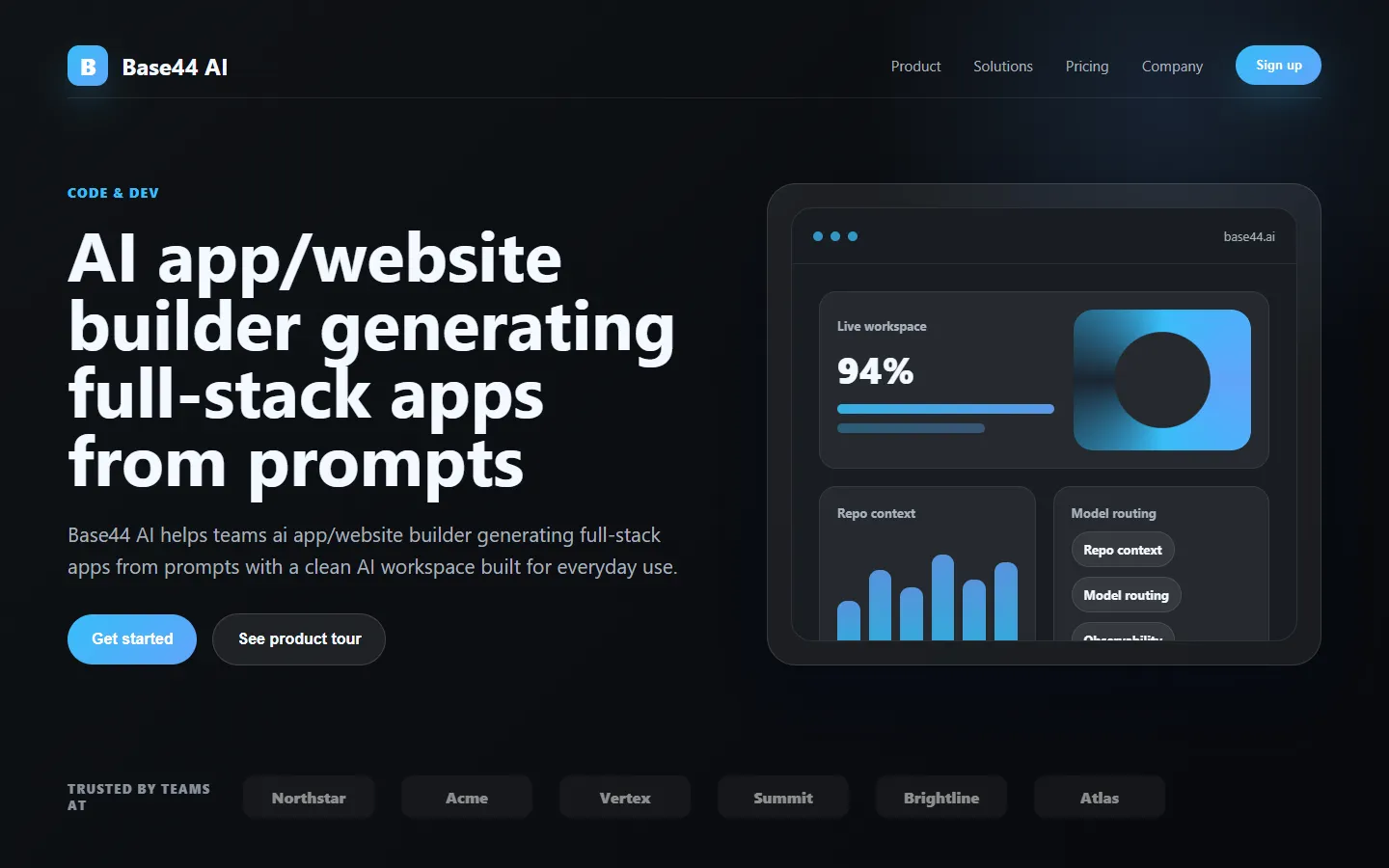
Base44 AI is an AI app builder and website builder that generates full-stack web applications from natural language descriptions with backend, database, and UI included.


Browse AI
Browse AI is a no-code web scraping and monitoring tool that extracts structured data from any website and tracks changes over time without writing code.


Cantina AI
Cantina AI is a freemium platform for building and deploying full-stack web applications using AI-assisted development with live preview and one-click deployment.
ChatGPT
ChatGPT AI assistant by OpenAI for writing, coding, research, image analysis, and everyday problem-solving.