Project Read AI
PaidAI-powered construction plan reading platform that extracts takeoffs, measurements, and specifications from blueprints and project drawings.
📋 About Project Read AI
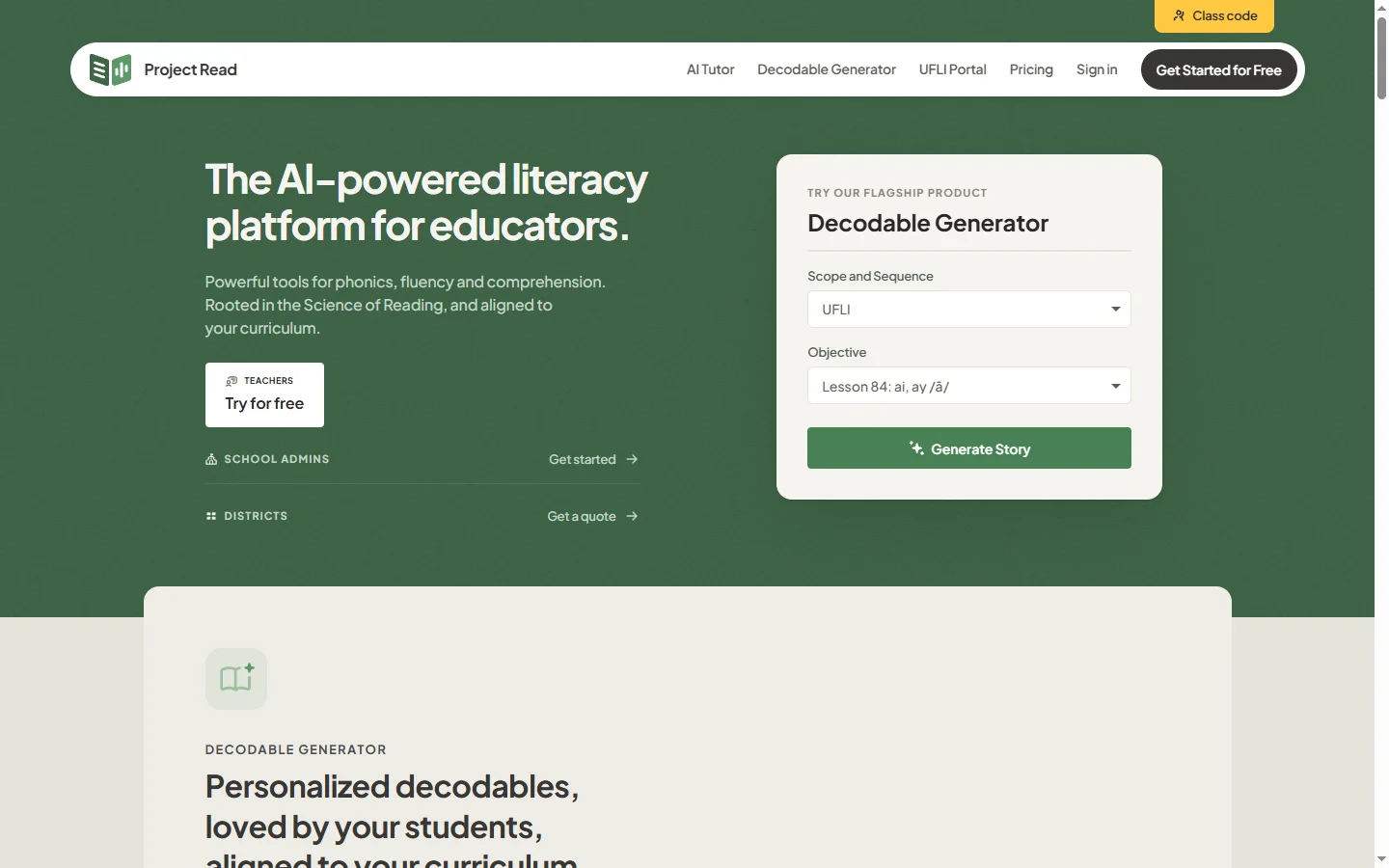
Project Read AI is an AI-powered construction technology platform designed to automate the reading and interpretation of construction plans, blueprints, and project drawings. The platform uses computer vision and machine learning models trained on millions of construction documents to extract measurements, identify building components, and generate accurate quantity takeoffs in a fraction of the time that manual plan review requires. Estimators, general contractors, and subcontractors use Project Read AI to shorten bid preparation cycles and improve accuracy on competitive bids.
The platform ingests PDF plan sets and output from CAD systems, then automatically detects walls, doors, windows, fixtures, dimensions, and schedules across multi-sheet drawing packages. Its AI models cross-reference symbols with legends and specifications, surfacing discrepancies between sheets and flagging potential issues before they become change orders during construction. Users can review and edit extracted data inside an interactive viewer, export results to estimating software, or generate bid-ready reports with clickable links back to plan locations.
Project Read AI serves construction estimating firms, general contractors, and specialty trades that prepare large volumes of competitive bids under tight deadlines. Teams typically report cutting takeoff time by 50 to 80 percent compared to traditional manual plan reading, with fewer missed scope items on final bids. The platform integrates with popular estimating tools and supports collaborative review workflows so multiple estimators can work on the same project simultaneously.
⚡ Key Features of Project Read AI
Automated Takeoff Generation
Project Read AI automatically detects and counts components such as doors, windows, fixtures, outlets, and structural elements across every sheet in a plan set. The system cross-references symbols with the legend to apply consistent classifications, reducing the tedious manual counting that takes estimators hours per project. Users can review detected items inside an interactive viewer and correct any misidentifications with a click.
Dimension and Measurement Extraction
The platform reads dimension strings, scale bars, and labeled measurements directly from drawings, converting them into structured data usable in estimating software. It handles both imperial and metric units, and can recalculate scaled measurements when dimension labels are missing. This removes the need for manual digitizer work that is slow and error-prone on complex architectural sheets.
Cross-Sheet Discrepancy Detection
Large plan sets routinely contain contradictions between architectural, structural, and MEP sheets — mismatched door counts, inconsistent wall assemblies, or conflicting dimensions. Project Read AI flags these discrepancies automatically so estimators can raise RFIs before submitting their bid rather than discovering issues during construction. This catches scope gaps that lead to change orders and disputes.
Specification and Schedule Parsing
Beyond graphical extraction, the AI parses door schedules, finish schedules, equipment lists, and specification documents, linking items back to their locations on the drawings. This creates a complete traceable record from specification to placement that can be exported for procurement and verification. Users gain a single source of truth instead of reconciling multiple documents manually.
Estimating Software Integrations
Exports connect directly to major estimating tools including PlanSwift, Bluebeam, and spreadsheet-based systems so extracted quantities flow into existing bid workflows without re-entry. Teams can keep their current pricing databases and processes while accelerating the upstream takeoff phase. API access is also available for firms with custom internal tools.
Collaborative Review Interface
Multiple estimators can work on the same project simultaneously, assigning sheets or scopes to different reviewers while tracking progress centrally. Comments, corrections, and version history are preserved so senior estimators can audit junior work and maintain quality standards. This is especially valuable for firms preparing many bids in parallel with limited staff.
🎯 Use Cases for Project Read AI
⚖️ Project Read AI Pros & Cons
Advantages
- ✓Dramatically reduces manual takeoff time on large plan sets
- ✓Catches cross-sheet discrepancies that humans routinely miss
- ✓Integrates with mainstream estimating and PDF markup tools
- ✓Collaborative review supports multi-estimator workflows
Drawbacks
- ✗Requires clean, well-structured plan sets for best accuracy
- ✗Enterprise pricing not suited to very small contractors
- ✗Initial setup and training needed to calibrate detection rules
📖 How to Use Project Read AI
Visit projectread.ai and request a demo or start an enterprise trial.
Upload a PDF plan set to a new project inside the platform.
Let the AI process the documents and generate an initial takeoff, then review detected items in the interactive viewer.
Correct any misclassifications and add scope-specific rules to improve future detections.
Export results to your estimating software or generate a bid-ready report for stakeholders.
❓ Project Read AI FAQ
The platform primarily accepts PDF plan sets, which are the industry standard for construction drawings, and can also handle exports from major CAD systems.
Accuracy depends on drawing quality, but teams typically see 85 to 95 percent first-pass accuracy on well-structured plan sets, with human review finishing the remaining items.
Project Read AI supports architectural, structural, mechanical, electrical, and plumbing scopes, with specialty detection rules configurable per trade.
Yes. Exports are available for major estimating platforms and as structured data that can be imported into spreadsheets or custom tools.
Related to Project Read AI

15.ai
15.ai is a free AI voice cloning tool famous for generating realistic speech from cartoon, video game, and animated show characters using as little as 15 seconds of source audio.

A2E AI
A2E AI productivity platform converts audio and video recordings into transcripts, summaries, and action items with speaker identification.

Abby AI
Abby AI is an AI therapy and mental wellness chatbot that offers CBT-informed conversations, mood tracking, and self-guided coping tools.

Abnormal AI
Abnormal AI uses behavioral AI to detect business email compromise, account takeover, and socially engineered phishing that bypasses secure email gateways.

Abridge AI
Abridge AI medical documentation platform that records and summarizes clinical conversations into structured physician notes in real time.

Accrete AI
Accrete AI builds autonomous enterprise AI agents for defense, government, and commercial intelligence workflows.
Featured on WhatIf.ai
Add this badge to your website to show you're listed on WhatIf AI
Alternatives to Project Read AI

A2E AI
A2E AI productivity platform converts audio and video recordings into transcripts, summaries, and action items with speaker identification.

Abnormal AI
Abnormal AI uses behavioral AI to detect business email compromise, account takeover, and socially engineered phishing that bypasses secure email gateways.
Abridge AI
Abridge AI medical documentation platform that records and summarizes clinical conversations into structured physician notes in real time.

Air AI
Air AI conducts autonomous full-length AI phone calls for sales prospecting, appointment setting, and customer service without human agents.