
Phantom AI
Paid ✓ VerifiedPhantom AI develops advanced driver assistance and autonomous driving perception software that helps automakers deploy production-ready ADAS features.
📋 About Phantom AI
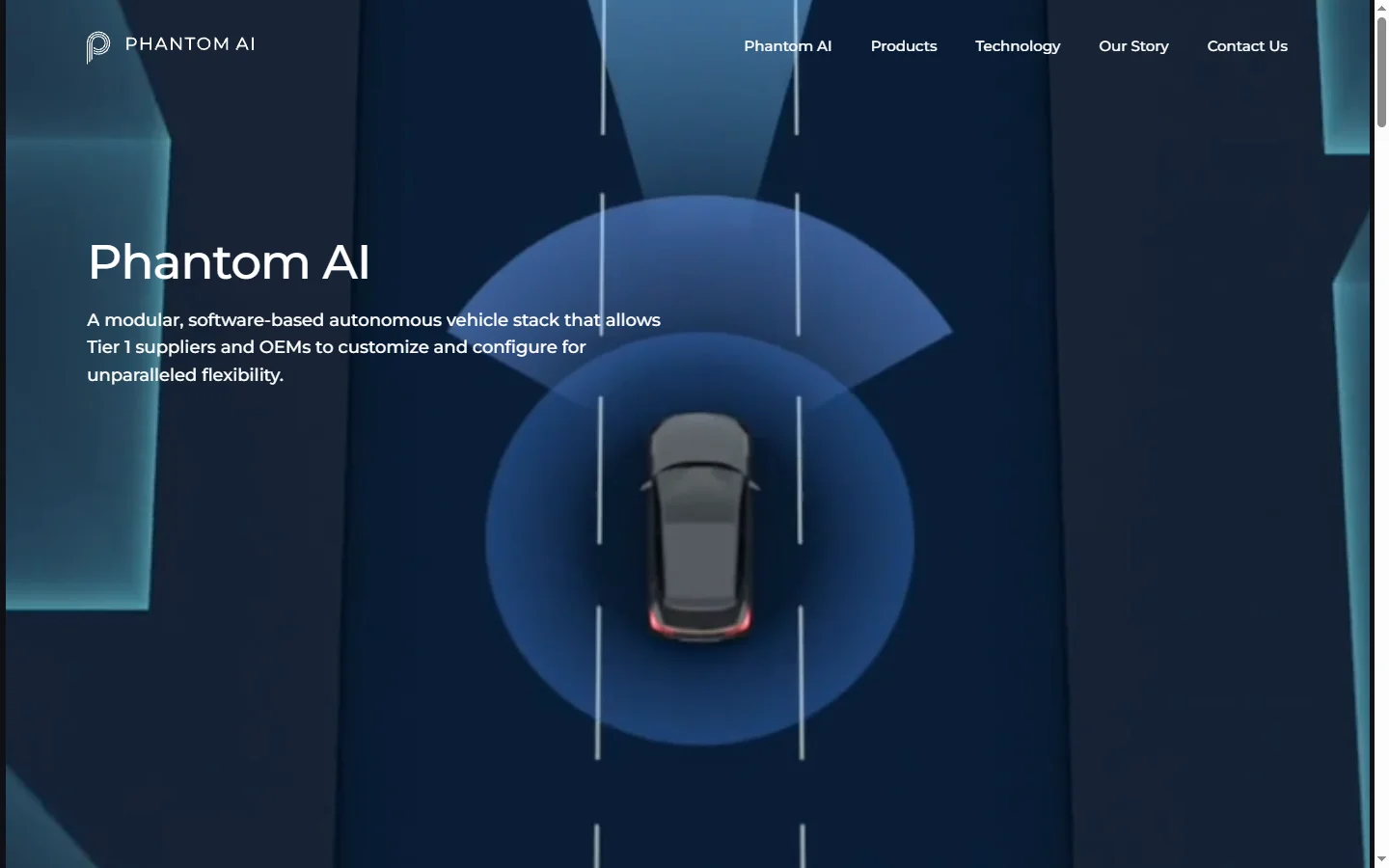
Phantom AI is an automotive software company that develops advanced driver assistance systems (ADAS) and autonomous driving perception software licensed to automakers and Tier 1 suppliers. Founded by former Tesla Autopilot engineers, Phantom AI specializes in vision-based perception stacks that turn raw camera data into actionable outputs like object detection, lane tracking, free-space estimation, and driver monitoring. Its focus is on production-quality software that can be integrated into real vehicle programs at scale rather than demo-level research code.
The company's flagship products include PhantomNet for perception, PhantomVision for multi-camera surround sensing, and solutions for driver monitoring and in-cabin sensing required by new safety regulations. These components are designed to run on automotive-grade chips including NVIDIA Orin, Qualcomm Snapdragon Ride, and Mobileye alternatives, and they are tuned for the safety, latency, and thermal constraints of production vehicles. Phantom AI works directly with OEMs on multi-year programs that include system integration, validation, and ongoing over-the-air updates.
Phantom AI is not a consumer-facing product — it is infrastructure that ends up inside vehicles consumers drive. Its competitors include Mobileye, Nvidia DRIVE, Motional, and in-house teams at major automakers. The company differentiates through its production focus, flexible hardware support, and the ability to be integrated into an OEM's own platform rather than sold as a closed black-box system.
⚡ Key Features of Phantom AI
PhantomNet Perception Stack
A production-grade perception stack that processes raw camera input to detect vehicles, pedestrians, cyclists, lane lines, road signs, and drivable space in real time. The stack is optimized for low-latency inference on automotive-grade chips and is validated across diverse driving conditions including night, rain, and varied road types.
Multi-Camera Surround Sensing
PhantomVision fuses data from multiple cameras around the vehicle to produce a 360-degree view, supporting features like automated parking, blind spot detection, and highway lane change automation. Multi-camera fusion improves performance over single-camera setups, especially in complex urban environments.
Driver and Occupant Monitoring
In-cabin sensing detects driver attention, drowsiness, and distraction and supports compliance with regulations like the EU's General Safety Regulation. The same systems can support occupant counting, child presence detection, and personalization features that tune the vehicle to the identified driver.
Hardware-Agnostic Deployment
Phantom AI's software runs on a range of automotive compute platforms including NVIDIA Orin and Qualcomm Snapdragon Ride. This flexibility lets OEMs choose their preferred silicon partner and avoid vendor lock-in to a single chipmaker's perception software.
Validation and Simulation Tools
The company provides tooling to validate its perception stack across massive simulation scenarios and curated real-world datasets. Validation data from customer vehicle fleets feeds back into model improvements through the lifecycle of the program, supporting over-the-air updates post-launch.
Production Integration Services
Beyond software licenses, Phantom AI provides integration services, calibration support, and ongoing engineering collaboration to help OEMs and Tier 1s ship vehicle programs on schedule. These services make the technology usable by automakers that do not have massive in-house perception teams.
🎯 Use Cases for Phantom AI
⚖️ Phantom AI Pros & Cons
Advantages
- ✓Production-focused rather than research-demo quality
- ✓Hardware-agnostic deployment across major automotive chips
- ✓Strong pedigree from former Tesla Autopilot engineers
- ✓Combined perception, surround, and driver monitoring portfolio
- ✓Integration services accelerate OEM program timelines
Drawbacks
- ✗Not available to consumers or small fleets
- ✗Multi-year engagements with long sales cycles
- ✗Product value depends heavily on OEM integration quality
📖 How to Use Phantom AI
Contact Phantom AI through phantom.ai to discuss a vehicle program and compute platform requirements.
Work with Phantom AI engineers on system architecture and calibration for your specific sensor layout.
Integrate PhantomNet, PhantomVision, and driver monitoring modules into your ADAS domain controller.
Validate performance against your safety requirements through Phantom AI's simulation and real-world tooling.
Deploy the stack into production vehicles with ongoing engineering support and OTA updates.
Iterate on perception quality using fleet-scale validation data to improve future releases.
❓ Phantom AI FAQ
No. Phantom AI licenses software to automakers and Tier 1 suppliers who integrate it into production vehicles. End drivers experience it indirectly through features like lane keep assist or driver monitoring in their cars.
Phantom AI's software is hardware-agnostic and runs on a range of automotive compute platforms including NVIDIA Orin and Qualcomm Snapdragon Ride, among others.
Phantom AI competes with Mobileye in the perception software space but differentiates through flexible hardware support and its willingness to integrate into the OEM's platform rather than sell a closed system.
Yes. Phantom AI offers driver and occupant monitoring products designed to meet regulatory requirements such as the EU General Safety Regulation.
Related to Phantom AI

15.ai
15.ai is a free AI voice cloning tool famous for generating realistic speech from cartoon, video game, and animated show characters using as little as 15 seconds of source audio.

Abby AI
Abby AI is an AI therapy and mental wellness chatbot that offers CBT-informed conversations, mood tracking, and self-guided coping tools.

Accrete AI
Accrete AI builds autonomous enterprise AI agents for defense, government, and commercial intelligence workflows.

Ace AI
Ace AI is an AI-powered interview and career coach that helps job seekers prepare with mock interviews, resume feedback, and personalized career guidance.
Featured on WhatIf.ai
Add this badge to your website to show you're listed on WhatIf AI
Alternatives to Phantom AI


Chalkie AI
Chalkie AI creates lesson plans, worksheets, quizzes, and differentiated materials mapped to curriculum standards for teachers and tutors.

ChatGPT
ChatGPT AI assistant by OpenAI for writing, coding, research, image analysis, and everyday problem-solving.


Cheater Buster AI
Cheater buster ai tool that searches dating apps by name and location to find matching profiles discreetly.

Claude
Claude AI assistant by Anthropic with a 200K context window, strong reasoning, and safety-focused design for writing, coding, and analysis.