
Pano AI
Paid ✓ VerifiedPano AI is an AI-powered wildfire detection and early-warning platform that uses a network of panoramic cameras and computer vision to spot fires within minutes of ignition.
📋 About Pano AI
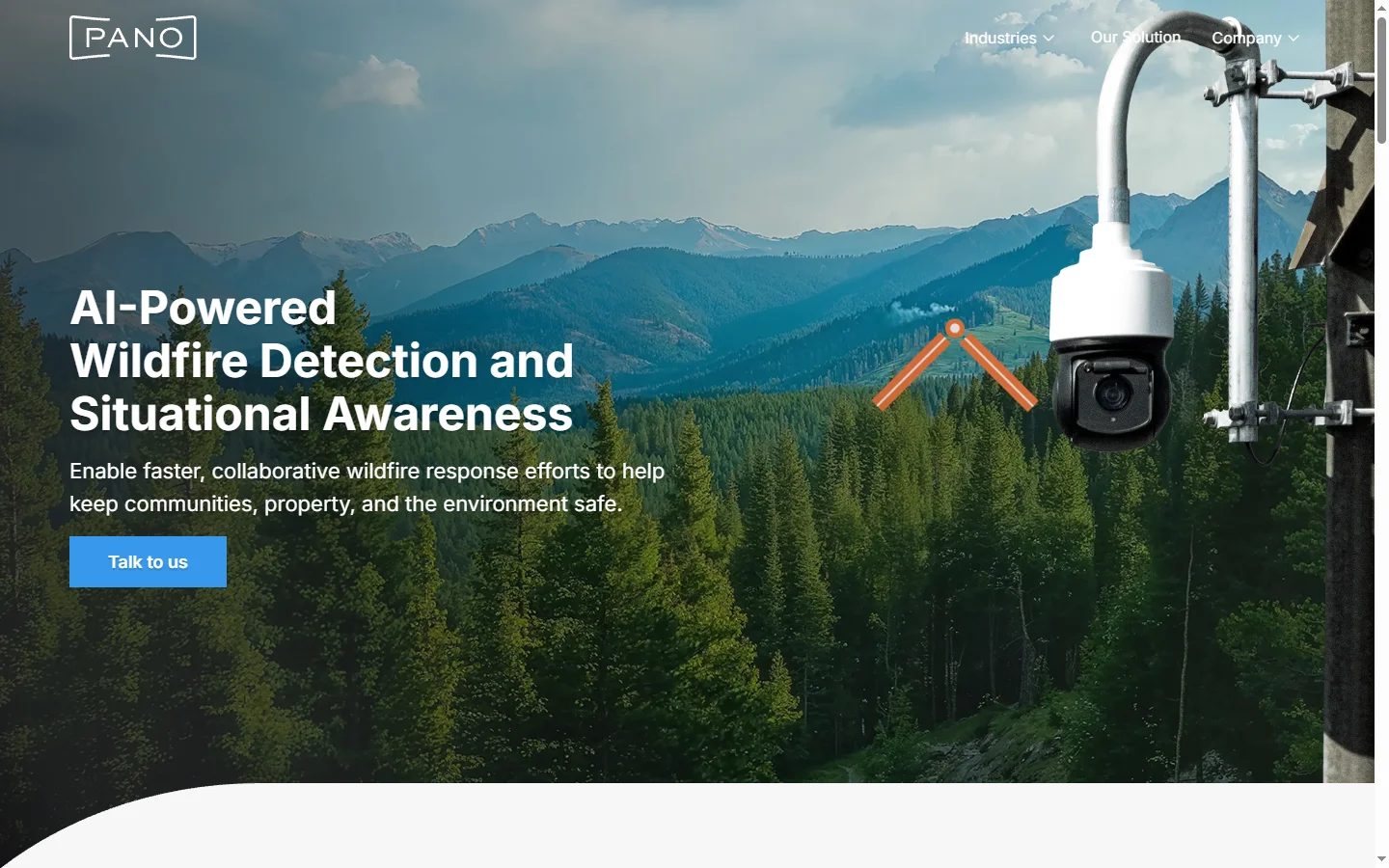
Pano AI is a wildfire detection and situational-awareness platform that combines a network of high-resolution panoramic cameras mounted on mountaintops, towers, and utility infrastructure with deep-learning computer vision to spot wildfires within minutes of ignition. Traditional wildfire detection relies on 911 calls, aerial patrols, and human lookouts — methods that often miss critical early minutes when a fire is still small and containable. The pano-ai platform addresses this by scanning panoramic imagery 24/7 and flagging smoke plumes for human confirmation and rapid dispatch.
The system is used by state and provincial fire agencies, electric utilities, timberland owners, and private landowners across wildfire-prone regions in the western United States, Canada, and Australia. Pano AI cameras capture 360-degree HD imagery around the clock, and the AI model is trained specifically to distinguish smoke from clouds, dust, haze, and other false-positive sources. A central operations dashboard shows active detections, camera feeds, weather overlays, and historical context, and a 24/7 human team at Pano verifies detections before alerting customers to reduce alert fatigue.
Customers deploy Pano AI to protect communities, critical infrastructure, and valuable land from wildfire losses that have grown more severe with climate change. Utilities use the system to monitor transmission corridors where equipment can start fires, and state agencies use it as an extra detection layer for high-risk fire weather days. The combination of hardware, AI, and human triage gives responders more minutes of lead time, which can be the difference between a contained brush fire and a community-scale disaster.
⚡ Key Features of Pano AI
Panoramic HD Camera Network
Pano AI deploys ruggedized 360-degree cameras on mountaintops, towers, and utility infrastructure to give wide-area coverage of high-risk landscapes. Each camera captures high-resolution panoramic imagery that is continuously streamed to the cloud for analysis. The network architecture means a single camera can cover many square miles, making deployment economical for state-scale programs. Sites are chosen carefully to balance line-of-sight, solar and connectivity availability, and fire risk.
AI Smoke Detection
A computer-vision model trained specifically on wildfire smoke scans every frame from every camera in near real time. The pano-ai model is tuned to distinguish smoke plumes from clouds, dust, fog, vehicle exhaust, and industrial emissions that cause false positives on general-purpose detectors. When smoke is detected, the system geolocates the plume using camera orientation and triangulation across multiple cameras. This is the core capability that lets Pano beat traditional 911 and patrol-based detection.
24/7 Human Verification
Every AI-detected smoke plume is reviewed by a trained human operator at Pano's Intelligence Center before customers are alerted. This reduces false alarms that would otherwise cause alert fatigue and erode trust in the system. The combination of AI-first detection and human-in-the-loop verification is what makes the platform operationally usable for fire agencies.
Operations Dashboard
A web-based dashboard shows live camera feeds, active detections, weather data, terrain overlays, and historical fire context for every site. Dispatchers can pan and zoom each camera on demand to get eyes on the fire before and during response. Weather overlays like wind speed, direction, and humidity help responders anticipate fire behavior. The dashboard is the daily operational surface for customer fire managers.
Geolocation and Dispatch Integration
When a fire is confirmed, Pano provides precise latitude-longitude coordinates, a recommended access route, and context imagery that helps responders find the fire on the ground. Integrations with CAD and dispatch systems push that information directly into existing response workflows. Faster, more accurate dispatch information translates to minutes saved on initial attack.
Historical Playback and Analytics
Every camera's footage is archived so agencies can review fire behavior after the fact, document events for regulatory reporting, and train their personnel on observed patterns. Analytics dashboards summarize detections, response times, and coverage across a region. This is valuable for utilities defending PSPS decisions and for agencies evaluating detection improvements year over year.
🎯 Use Cases for Pano AI
⚖️ Pano AI Pros & Cons
Advantages
- ✓Cuts wildfire detection time from hours to minutes in equipped regions
- ✓Human-verified alerts greatly reduce false positives that plague raw AI systems
- ✓Panoramic HD cameras cover wide areas with a single deployment
- ✓Operational dashboard integrates with existing dispatch workflows
- ✓Proven deployments with state agencies and major utilities
Drawbacks
- ✗Requires physical camera deployment, so coverage is limited to installed sites
- ✗Enterprise pricing is out of reach for small landowners without grant support
- ✗Effective only for line-of-sight detection from camera towers
- ✗Performance depends on connectivity and power at remote sites
📖 How to Use Pano AI
Contact Pano AI through pano.ai to discuss your coverage area, risk profile, and integration needs.
Work with the Pano team to site cameras on appropriate mountaintops, towers, or utility infrastructure.
Connect your dispatch and GIS systems to the Pano platform so alerts flow into your existing workflow.
Train dispatchers and fire managers on the operations dashboard and alert-handling protocols.
Monitor live feeds, detections, and weather overlays during high-risk fire weather days.
Review historical playback and analytics after events to improve response plans and reporting.
❓ Pano AI FAQ
Pano AI commonly detects smoke within minutes of ignition when a fire is visible from its camera network, which is significantly faster than the historical norm of reported detection times for traditional methods. Exact performance depends on camera siting, weather, and line-of-sight conditions.
Detections from the AI model are reviewed by trained human operators in Pano's 24/7 Intelligence Center before customers are alerted. This hybrid approach filters out clouds, dust, and other smoke look-alikes that would otherwise cause alert fatigue.
Customers include state and provincial wildland fire agencies, electric and gas utilities, timberland owners, and private communities in wildfire-prone regions of the US, Canada, and Australia.
Pano AI is primarily focused on early detection and situational awareness. It does not replace firefighting resources, but it shortens the gap between ignition and response and gives responders high-quality imagery and coordinates to work with.
Pricing is tailored to each deployment based on coverage area, number of cameras, and integration scope. It is an enterprise-tier subscription model aimed at agencies, utilities, and large landowners rather than individuals.
Related to Pano AI

15.ai
15.ai is a free AI voice cloning tool famous for generating realistic speech from cartoon, video game, and animated show characters using as little as 15 seconds of source audio.

Abby AI
Abby AI is an AI therapy and mental wellness chatbot that offers CBT-informed conversations, mood tracking, and self-guided coping tools.

Accrete AI
Accrete AI builds autonomous enterprise AI agents for defense, government, and commercial intelligence workflows.

Ace AI
Ace AI is an AI-powered interview and career coach that helps job seekers prepare with mock interviews, resume feedback, and personalized career guidance.

Actively AI
Actively AI is an AI sales prospecting platform that researches accounts, identifies buyer signals, and writes personalized outbound at pipeline scale.

Hayden AI
Hayden AI is an AI-powered traffic enforcement and mobility platform that uses vehicle-mounted cameras to automatically detect bus-lane, bike-lane, and parking violations in real time.
Featured on WhatIf.ai
Add this badge to your website to show you're listed on WhatIf AI
Alternatives to Pano AI

15.ai
15.ai is a free AI voice cloning tool famous for generating realistic speech from cartoon, video game, and animated show characters using as little as 15 seconds of source audio.

Abby AI
Abby AI is an AI therapy and mental wellness chatbot that offers CBT-informed conversations, mood tracking, and self-guided coping tools.

Accrete AI
Accrete AI builds autonomous enterprise AI agents for defense, government, and commercial intelligence workflows.

Ace AI
Ace AI is an AI-powered interview and career coach that helps job seekers prepare with mock interviews, resume feedback, and personalized career guidance.