
Nora AI
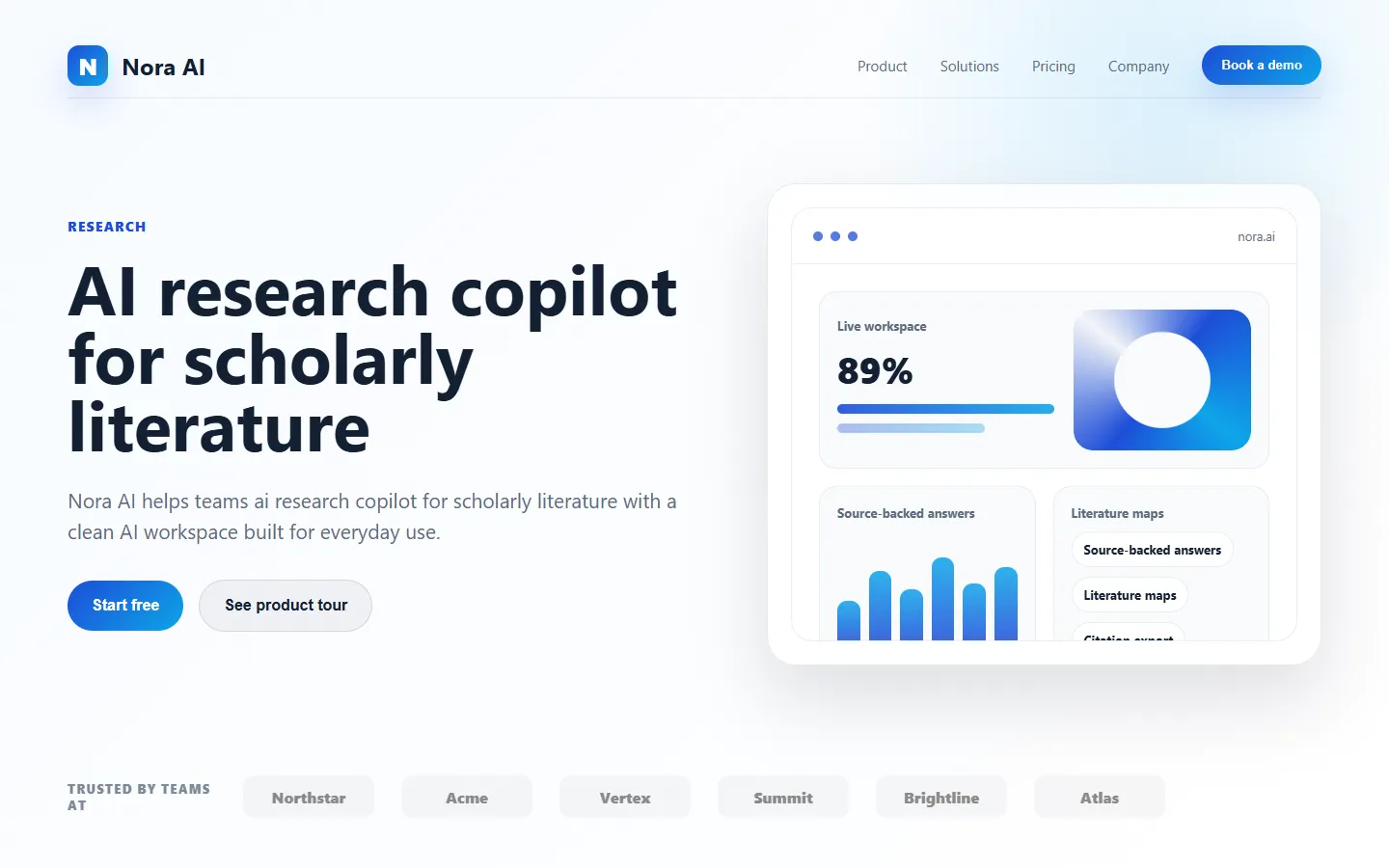
Freemium ✓ Verified 🔥 TrendingNora AI is an AI research copilot for scientists and academics that searches, summarizes, and synthesizes scholarly literature.
📋 About Nora AI
Nora AI is a research copilot built specifically for scientists, graduate students, and academic professionals who need to find, read, and synthesize scholarly literature more efficiently. The nora ai platform indexes tens of millions of peer-reviewed papers, preprints, patents, and clinical trial records, then applies large language models to let researchers ask questions in plain English and receive grounded answers with citations tied to specific passages in the source material. Unlike general chatbots, nora ai refuses to answer when it cannot find supporting evidence, which is essential in contexts where fabricated references are unacceptable.
Beyond search, the nora ai platform helps researchers accelerate every step of the literature workflow. Users can run systematic reviews with automated PICO matching, extract structured data from dozens of papers at once, generate comparison tables across studies, and draft literature review sections grounded in cited sources. The platform supports uploading private PDFs into a personal workspace, where nora ai treats those documents as first-class citizens alongside the public literature. Citations export cleanly to Zotero, EndNote, and BibTeX, fitting smoothly into existing academic workflows.
Nora AI serves medical researchers, life science teams, policy analysts, and graduate programs that need trustworthy literature intelligence. Enterprise features include team workspaces, audit trails, and private knowledge bases that let pharmaceutical and biotech organizations combine public literature with internal research reports. By treating evidence, citations, and uncertainty as central rather than afterthoughts, nora ai positions itself as a serious research tool rather than a general chatbot wearing an academic skin.
⚡ Key Features of Nora AI
Grounded Literature Search
Ask research questions in natural language and nora ai returns answers synthesized from peer-reviewed papers, preprints, and clinical trial records, with every claim tied to a specific passage in a cited source. The system is designed to refuse answering when supporting evidence is weak, which prevents the fabricated citations common in general-purpose chatbots. This makes nora ai a safer foundation for serious scholarly work. Researchers can click any citation to jump directly to the quoted passage in the original document.
Systematic Review Automation
Nora AI accelerates systematic reviews with PICO-based question formulation, automated screening of candidate papers, and structured data extraction across dozens or hundreds of studies. The platform produces PRISMA-compliant flow diagrams and export-ready tables that document inclusion and exclusion decisions. This reduces the weeks of manual screening that typically precede a systematic review to hours of supervised work. Research teams still review every decision, but the nora ai agent handles the mechanical burden of triage and extraction.
Comparison Tables Across Studies
Upload or select a set of papers and nora ai will generate a comparison matrix that extracts sample size, methods, primary outcomes, and limitations into a uniform structure. This feature turns a pile of PDFs into a scannable table that highlights agreements, contradictions, and gaps across the literature. Columns can be customized to extract whatever variables matter for the project, and every cell links back to the source paragraph. Teams use this to build evidence maps for clinical questions or policy debates.
Private Document Workspaces
Users can upload their own PDFs, internal reports, and unpublished manuscripts into a personal or team workspace where nora ai treats them as queryable alongside public literature. This is especially valuable for pharmaceutical R&D teams who want to combine internal study data with published evidence in a single search surface. Access controls ensure that private documents remain within the team and are never used to train models. The workspace also doubles as a reference manager, with tags, folders, and export to common citation tools.
Citation Export and Reference Management
Every answer produced by nora ai exports its citations to BibTeX, RIS, EndNote, and Zotero formats, slotting cleanly into existing academic writing pipelines. Users can also maintain a personal library of favorited papers with notes and annotations. Integration with Google Scholar and DOI resolvers ensures metadata is accurate and up to date. These workflow touches make the platform easy to adopt without rebuilding a researcher's existing toolchain.
Draft Assistance for Literature Reviews
Nora AI can draft literature review paragraphs grounded in a curated set of sources, producing prose that cites specific papers with inline references. Researchers use this as a starting point rather than a final deliverable, editing for voice and argument while trusting that the citations are real and accurate. The nora ai drafts are explicit about what has been cited and where, so reviewers can trace every claim. This saves hours of manual writing without compromising academic integrity.
Medical and Life Sciences Focus
While nora ai covers broad scholarly literature, it offers specialized features for medicine and life sciences including MeSH term support, clinical trial registry integration, and GRADE evidence assessment tooling. This makes it particularly useful for clinical researchers, health technology assessment teams, and pharmaceutical organizations. The platform also surfaces FDA and EMA regulatory documents where relevant, giving users a unified view of evidence across research and regulatory sources. These features differentiate nora ai from generic academic search tools.
🎯 Use Cases for Nora AI
⚖️ Nora AI Pros & Cons
Advantages
- ✓Grounded answers with real citations, not hallucinations
- ✓Automates tedious systematic review steps
- ✓Supports private document workspaces
- ✓Exports citations in standard academic formats
- ✓Specialized tooling for medical and life sciences
Drawbacks
- ✗Limited coverage for non-English literature
- ✗Advanced features require a paid plan
- ✗Not ideal for general-purpose chat or creative tasks
- ✗Some paywalled sources require institutional access
📖 How to Use Nora AI
Create a free account on nora.ai using your academic or professional email.
Enter a research question in natural language or use PICO fields to structure a systematic question.
Review the answer and check citations by clicking through to the highlighted passages in each source.
Upload your own PDFs into a workspace to combine private documents with public literature in searches.
Generate comparison tables or draft review paragraphs for your curated set of sources.
Export citations in BibTeX, RIS, or EndNote format into your preferred reference manager.
❓ Nora AI FAQ
No. The platform is designed to refuse answering when it cannot find supporting evidence in indexed sources, and every citation links back to an actual passage in a real document. This makes it far safer than general chatbots for academic work.
Nora AI indexes tens of millions of peer-reviewed papers, preprints, patents, and clinical trial records drawn from sources like PubMed, arXiv, Europe PMC, and ClinicalTrials.gov, with specialized coverage in medicine and life sciences.
Yes. Paid plans include private workspaces where you can upload PDFs and internal reports. Nora AI treats those documents as queryable alongside public literature without using them to train models.
Yes. The free tier lets individual researchers run a limited number of searches and systematic reviews per month, while paid plans unlock larger workspaces, more extractions, and team features.
All three tools serve academic literature use cases. Nora AI distinguishes itself with deeper systematic review automation, stronger coverage in medical and life sciences, and enterprise features for pharmaceutical and biotech teams.
Related to Nora AI

A2E AI
A2E AI productivity platform converts audio and video recordings into transcripts, summaries, and action items with speaker identification.

Abby AI
Abby AI is an AI therapy and mental wellness chatbot that offers CBT-informed conversations, mood tracking, and self-guided coping tools.

Abnormal AI
Abnormal AI uses behavioral AI to detect business email compromise, account takeover, and socially engineered phishing that bypasses secure email gateways.

Abridge AI
Abridge AI medical documentation platform that records and summarizes clinical conversations into structured physician notes in real time.

PandasAI
PandasAI is a conversational data analysis library that lets you query pandas DataFrames in plain English using large language models.

Tribe AI
AI consulting and talent network that pairs enterprises with vetted machine learning engineers, data scientists, and AI strategists for end-to-end project delivery.
Featured on WhatIf.ai
Add this badge to your website to show you're listed on WhatIf AI
Alternatives to Nora AI
A2E AI
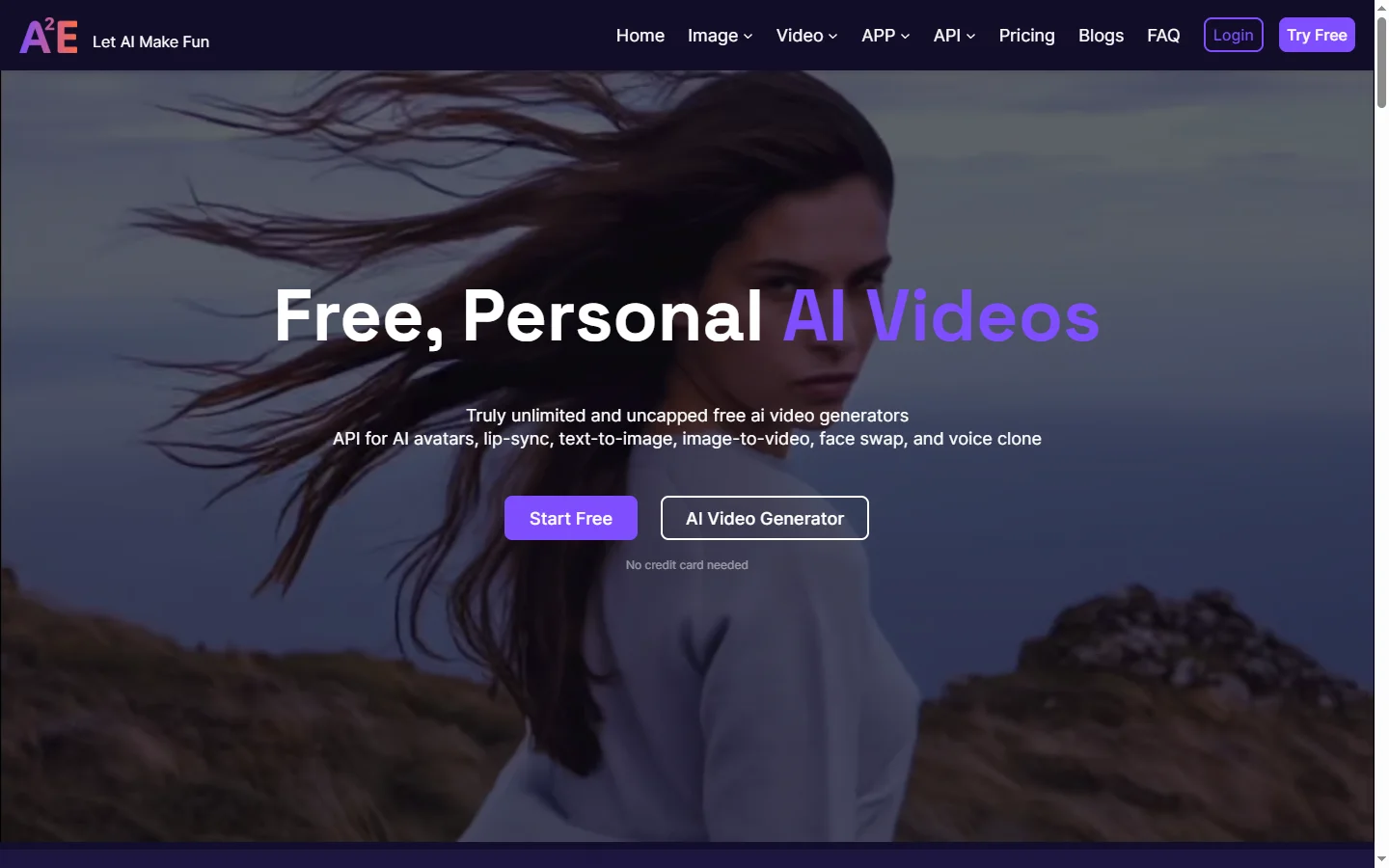
A2E AI productivity platform converts audio and video recordings into transcripts, summaries, and action items with speaker identification.

Abnormal AI
Abnormal AI uses behavioral AI to detect business email compromise, account takeover, and socially engineered phishing that bypasses secure email gateways.
Abridge AI
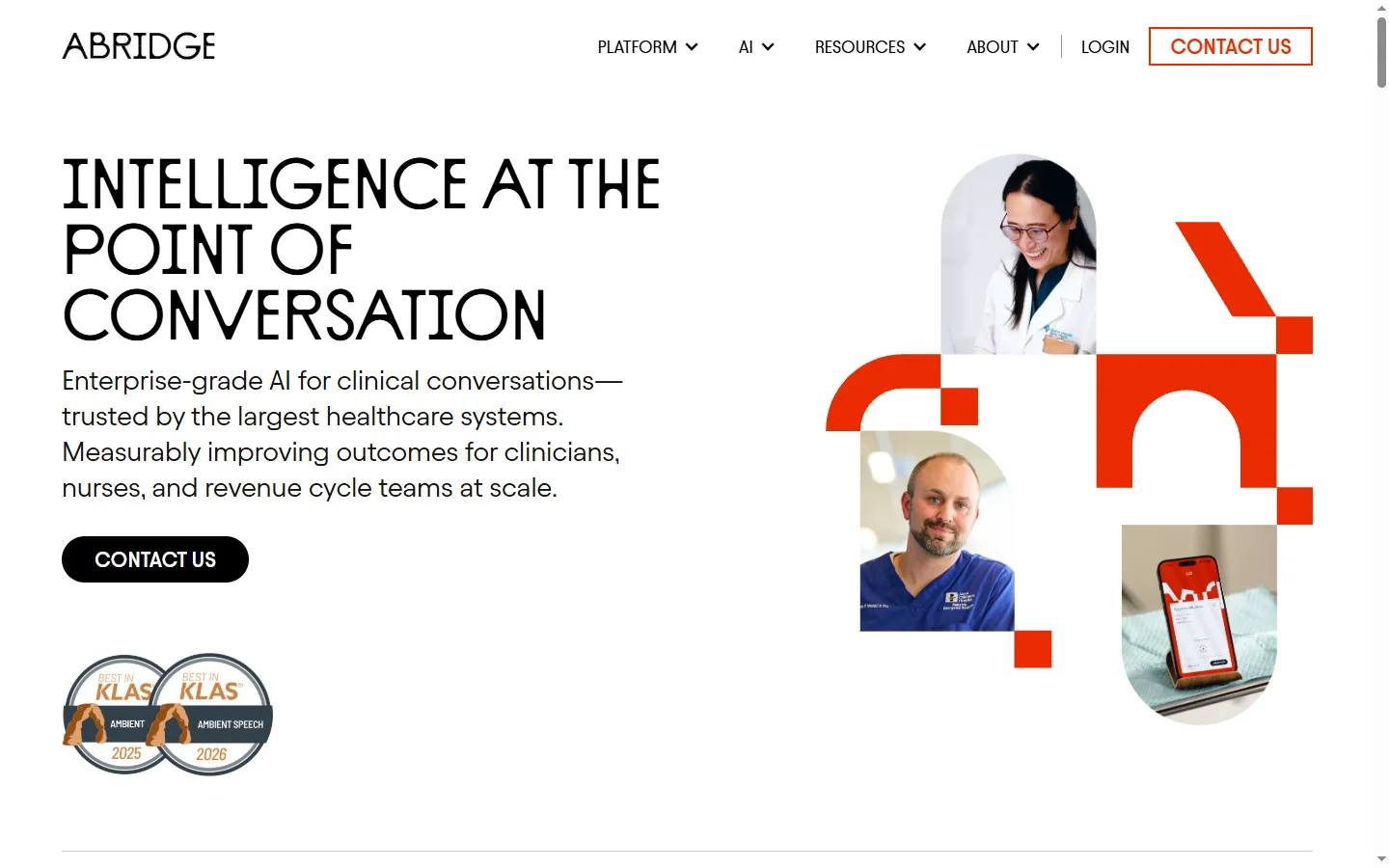
Abridge AI medical documentation platform that records and summarizes clinical conversations into structured physician notes in real time.

Air AI
Air AI conducts autonomous full-length AI phone calls for sales prospecting, appointment setting, and customer service without human agents.