
Frame AI
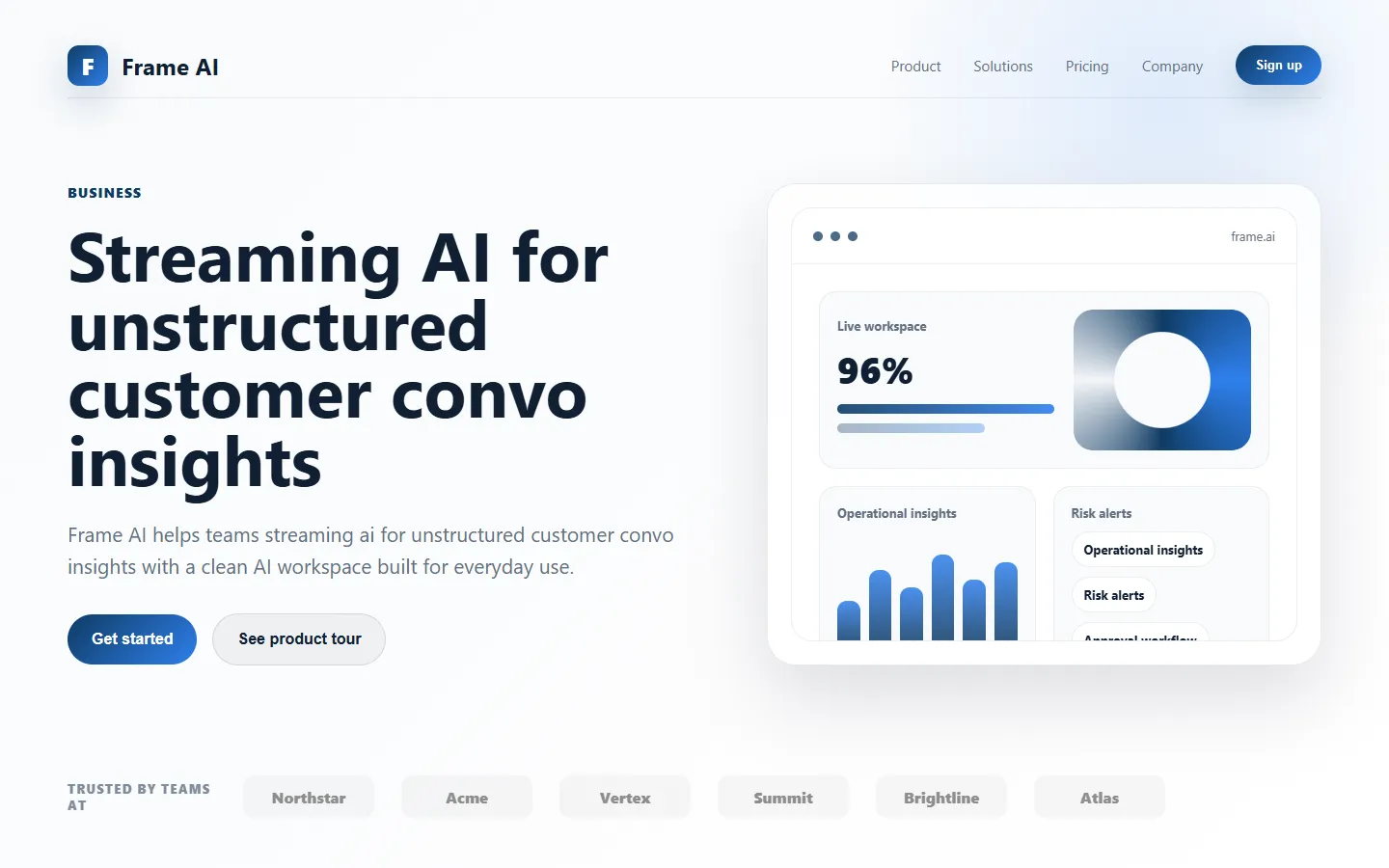
Paid ✓ VerifiedFrame AI is a streaming AI data platform that turns unstructured customer conversations into real-time insights for CX, product, and marketing teams.
📋 About Frame AI
Frame AI is a streaming AI data platform designed to process unstructured conversations — support tickets, chats, calls, surveys, and social messages — into structured, real-time signals that business teams can act on immediately. Unlike traditional text analytics tools that batch-process historical data, Frame AI continuously analyzes conversations as they happen, surfacing emerging issues, customer sentiment shifts, product feedback themes, and revenue risks before they escalate. The platform is used by enterprise customer experience, product, and marketing teams at companies like Mailchimp, HubSpot, and Sotheby's to build a live nervous system for customer voice.
The Frame AI engine combines proprietary language models with configurable taxonomies so each organization can define the signals that matter most to its operation — whether that's churn risk, competitive mentions, feature requests, or agent empathy. Insights are delivered through dashboards, Slack alerts, and webhooks into tools like Salesforce, Zendesk, Intercom, and Snowflake, letting teams close the loop between conversation data and operational systems. Security features include SOC 2 Type II compliance, data residency options, and granular role-based access so regulated industries can adopt the platform confidently.
Frame AI is most valuable for mid-market and enterprise companies processing thousands of customer conversations per week where manual tagging is impossible and generic sentiment scores are too shallow. Teams use it to cut ticket triage time, quantify why customers churn, prioritize product roadmaps from real voice-of-customer data, and measure brand perception in real time. The streaming architecture means insights arrive in seconds rather than weeks, which changes how CX leaders allocate agents and how product teams decide what to build next.
⚡ Key Features of Frame AI
Streaming Conversation Analytics
Frame AI processes customer conversations the moment they happen — not hours or days later — so teams spot emerging churn drivers, product bugs, and marketing resonance while they are still actionable. The streaming engine ingests chat, email, call transcripts, survey responses, and social DMs through a unified pipeline. This gives CX leaders a live pulse on customer sentiment rather than week-old PDF reports. The real-time nature is especially valuable during product launches, outages, or seasonal spikes.
Configurable Signal Taxonomies
Each organization defines its own taxonomy of signals that matter — churn risk, competitor mentions, feature requests, agent empathy, compliance violations, or custom categories unique to the business. Frame AI learns from a small set of labeled examples and then applies the taxonomy consistently across millions of conversations. This configurability is what separates the frame ai platform from generic sentiment tools that only return positive, negative, or neutral scores.
Pre-Built Integrations with CX and Data Stack
Native connectors stream insights into Zendesk, Salesforce, Intercom, Gladly, Snowflake, Redshift, and Slack, so signals land where teams already work. Webhooks and an API allow custom routing to data warehouses, BI dashboards, and internal tools. This eliminates the copy-paste friction that kills adoption of standalone analytics tools. Insights become triggers for automated workflows like ticket escalation or churn-save outreach.
Generative Insight Summaries
Beyond classification, Frame AI uses generative models to produce written summaries explaining why a theme is rising, which customer segments are affected, and what specific phrases customers are using. This saves analysts hours of manual reading and gives executives briefings they can act on without diving into raw tickets. The summaries are grounded in actual customer language rather than generic templates.
Enterprise Security and Compliance
Frame AI is SOC 2 Type II certified with HIPAA-aligned deployment options, data residency controls, PII redaction, and granular role-based access. Regulated industries including healthcare, finance, and insurance deploy the platform to analyze customer conversations without exposing sensitive data to downstream systems. This security posture is why the frame ai platform is trusted by Fortune 500 CX and product organizations.
Voice of Customer Dashboards
Executive-ready dashboards surface trending themes, sentiment over time, segment-level breakdowns, and cohort comparisons without requiring a data analyst. Teams can drill from a high-level metric down to the specific customer conversations driving it, closing the loop between quantitative signals and qualitative evidence. This transparency builds trust in the insights across product, marketing, and support leadership.
🎯 Use Cases for Frame AI
⚖️ Frame AI Pros & Cons
Advantages
- ✓Real-time streaming analytics instead of batch reports
- ✓Highly configurable taxonomies per organization
- ✓Deep integrations with major CX and data platforms
- ✓SOC 2 Type II and regulated-industry ready
- ✓Generative summaries make insights executive-ready
Drawbacks
- ✗Enterprise pricing not suited to small teams
- ✗Requires upfront taxonomy configuration to get best value
- ✗Public pricing is not listed on the website
- ✗Primarily focused on English-heavy conversation data
📖 How to Use Frame AI
Visit frame.ai and request a demo with your customer experience or data team.
Work with the Frame AI onboarding team to connect conversation sources — Zendesk, Intercom, Salesforce, call transcripts, or CSV exports.
Define the signal taxonomy that matters to your business, such as churn risk, competitor mentions, or feature requests.
Configure dashboards and Slack or webhook alerts so insights reach the right teams in real time.
Pipe structured signals into your data warehouse or CRM to power downstream automation and reporting.
Review weekly executive summaries and iterate on the taxonomy as new themes emerge.
❓ Frame AI FAQ
Frame AI is a streaming AI data platform that turns unstructured customer conversations — tickets, chats, calls, surveys, social messages — into real-time structured insights for customer experience, product, and marketing teams.
The frame ai platform processes data as it streams in rather than in batches, supports custom taxonomies rather than generic sentiment scores, and integrates signals back into the operational stack instead of producing static reports.
Yes. Frame AI is SOC 2 Type II certified, supports HIPAA-aligned deployments, offers PII redaction, and provides data residency controls, which is why it is used in healthcare, finance, and insurance.
Zendesk, Salesforce, Intercom, Gladly, Kustomer, call transcript providers, NPS and CSAT survey tools, email, and social DMs through native connectors and a flexible API.
Frame AI uses custom enterprise pricing based on conversation volume and integrations. Pricing is not published publicly — teams request a quote through the website.
Related to Frame AI

A2E AI
A2E AI productivity platform converts audio and video recordings into transcripts, summaries, and action items with speaker identification.

Abnormal AI
Abnormal AI uses behavioral AI to detect business email compromise, account takeover, and socially engineered phishing that bypasses secure email gateways.

Abridge AI
Abridge AI medical documentation platform that records and summarizes clinical conversations into structured physician notes in real time.

Accrete AI
Accrete AI builds autonomous enterprise AI agents for defense, government, and commercial intelligence workflows.

Attentive AI
Attentive AI powers the Attentive SMS and email marketing platform with AI-generated copy, audience targeting, and journey optimization for e-commerce brands.

Circleback AI
Circleback AI is an AI meeting assistant that records, transcribes, and summarizes calls, producing action items and CRM updates automatically.
Featured on WhatIf.ai
Add this badge to your website to show you're listed on WhatIf AI
Alternatives to Frame AI
A2E AI
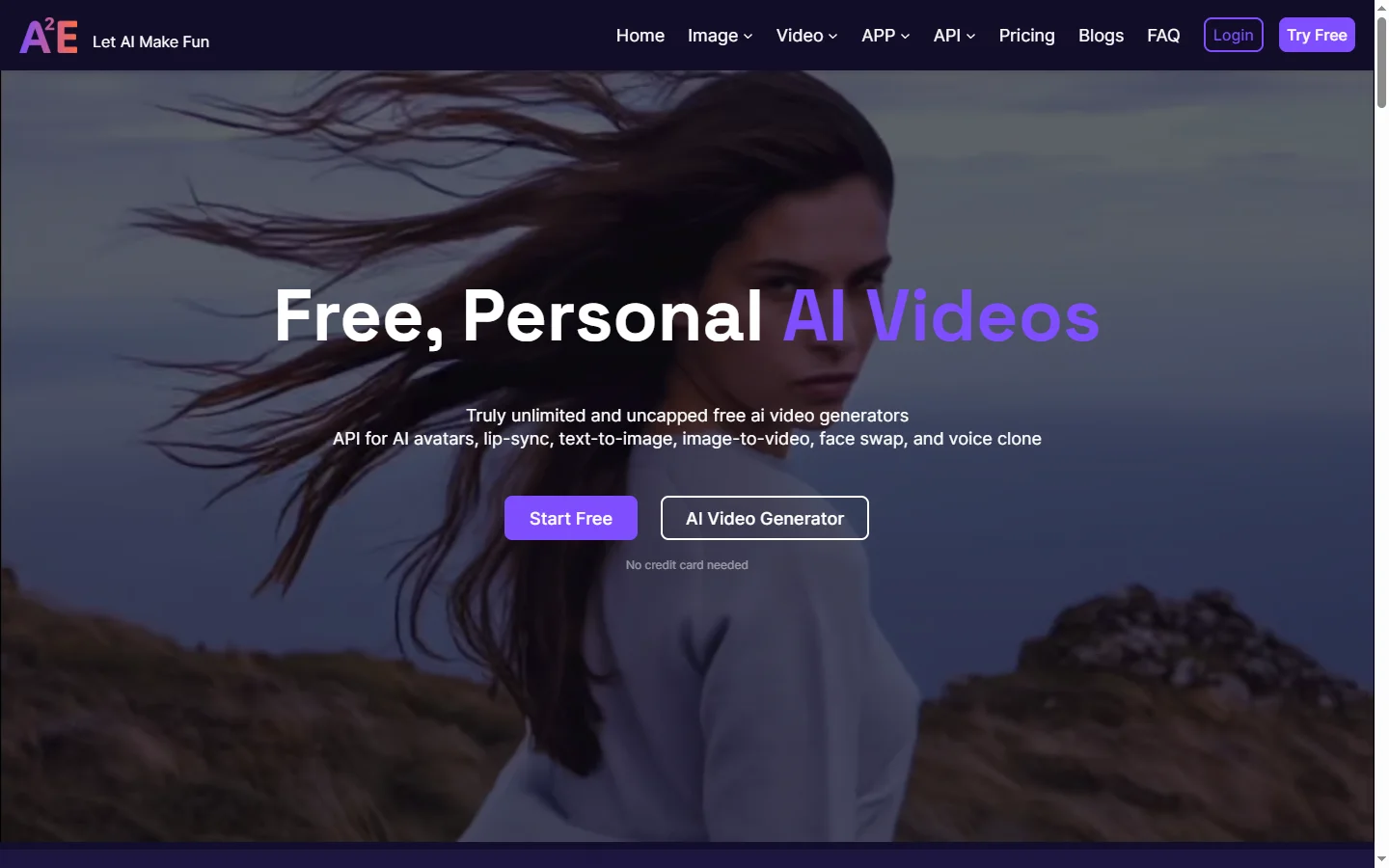
A2E AI productivity platform converts audio and video recordings into transcripts, summaries, and action items with speaker identification.
Abnormal AI
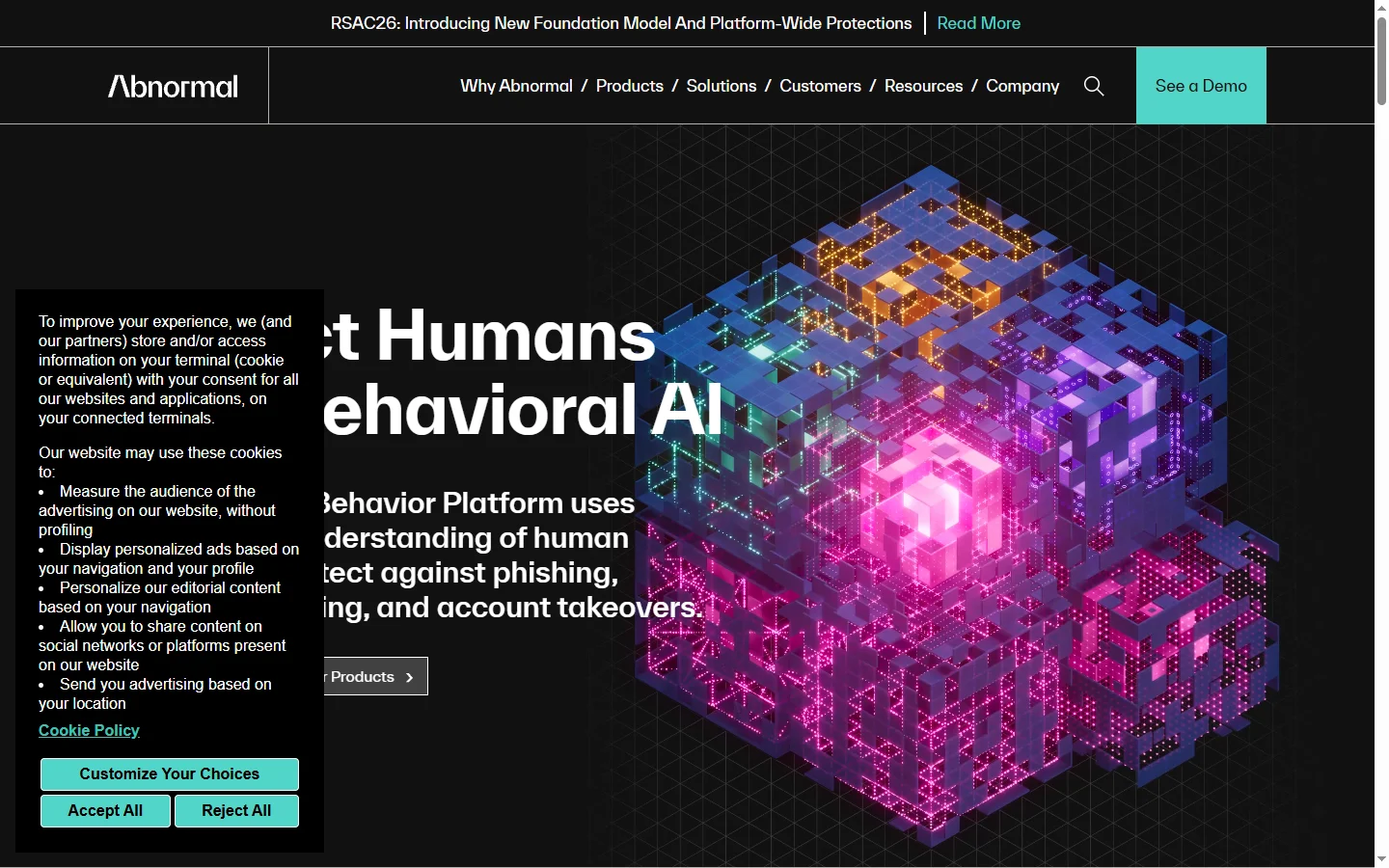
Abnormal AI uses behavioral AI to detect business email compromise, account takeover, and socially engineered phishing that bypasses secure email gateways.
Abridge AI
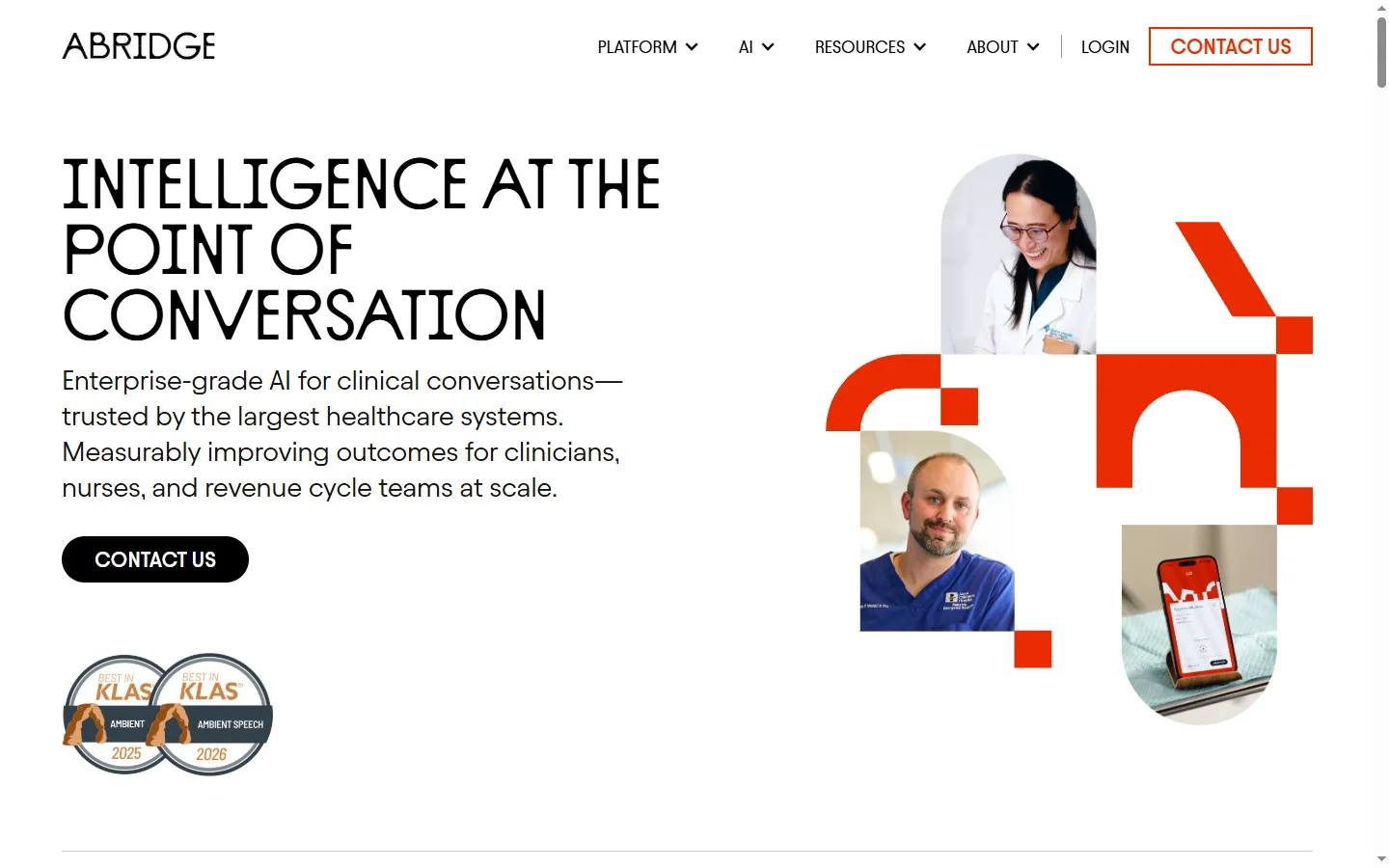
Abridge AI medical documentation platform that records and summarizes clinical conversations into structured physician notes in real time.

Air AI
Air AI conducts autonomous full-length AI phone calls for sales prospecting, appointment setting, and customer service without human agents.