
Fin AI
Paid ✓ Verified 🔥 TrendingFin AI is Intercom's AI customer service agent that autonomously resolves support tickets across chat, email, and help centers.
📋 About Fin AI
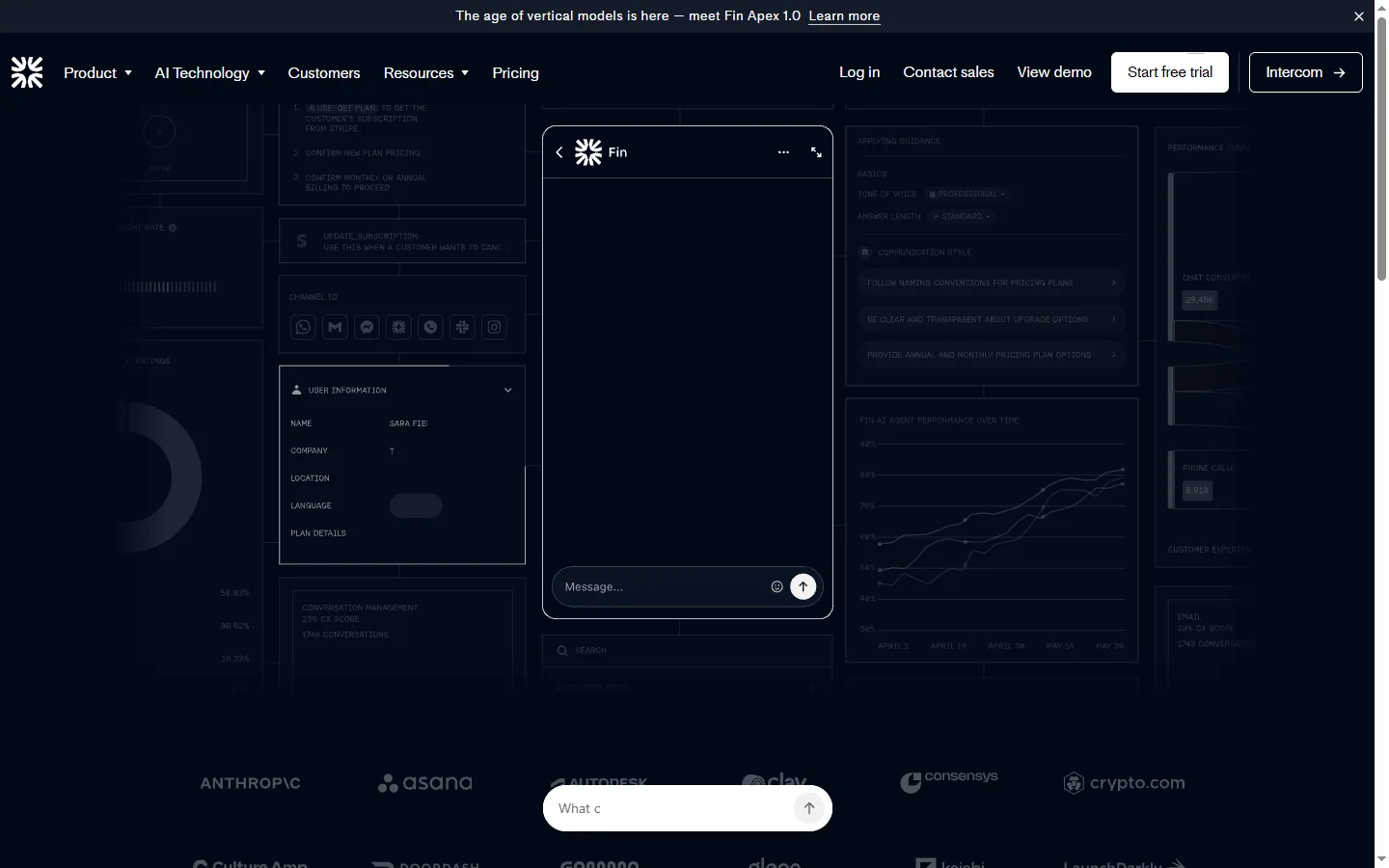
Fin AI is Intercom's production AI customer service agent, built to autonomously resolve a large share of incoming support questions across chat, email, help centers, SMS, and social channels. Unlike scripted chatbots of previous generations, fin ai uses large language models grounded in a company's own help content, product documentation, macros, and policies to produce accurate, on-brand answers. When it cannot resolve a question confidently, the agent hands off cleanly to a human teammate with full conversation context, preserving the customer experience.
Fin AI is notable for its performance-based pricing — customers pay primarily for resolved conversations rather than seats — which aligns the product's incentives with support outcomes. The agent continuously learns from new help center articles, resolved tickets, and human corrections, improving over time without heavy manual training. Fin AI also supports multi-step actions through Fin Tasks, allowing it to look up order status, update subscriptions, cancel bookings, and complete other workflows safely via sanctioned APIs. Brand voice, persona, and tone can all be customized so the agent sounds like a member of the support team.
Typical fin ai customers range from fast-growing SaaS companies to retailers, marketplaces, fintechs, and digital services with high ticket volumes. Support leaders deploy it to deflect repetitive questions, cover off-hours coverage, and let human agents focus on empathy-heavy or complex cases. Because fin ai is embedded in the broader Intercom platform, it inherits the messenger, help center, inbox, and workflow engine that customers may already rely on, which shortens time-to-value compared to standalone AI add-ons.
⚡ Key Features of Fin AI
Grounded Customer Answers
Fin AI answers support questions by drawing exclusively from a customer's own help center, knowledge base, macros, and uploaded documents, rather than relying on an open-ended LLM knowledge cutoff. This grounding keeps answers accurate, on-brand, and aligned with current policies. When the knowledge base is updated, fin ai begins using the new content immediately, avoiding the drift that plagues static scripts. The agent also cites the source behind each answer, letting customers verify and helping support teams audit its behavior.
Multi-Channel Deployment
Fin AI operates across Intercom Messenger, email, SMS, WhatsApp, Facebook Messenger, and Instagram, letting customers receive the same AI-powered support wherever they reach out. The agent shares memory across channels within a single customer conversation so context is not lost when users switch from chat to email. This unified coverage is especially valuable for brands with multichannel support strategies. It also simplifies reporting by consolidating AI performance metrics across channels.
Seamless Handoff to Humans
When fin ai cannot resolve a question confidently, it hands off to a human agent with a full transcript, AI-proposed context, and any relevant customer data. Routing rules send the ticket to the right team based on topic, language, or priority. Human teammates can see everything the AI tried and quickly take over without making the customer repeat themselves. This clean handoff is essential to maintaining trust when deploying an autonomous agent on real tickets.
Fin Tasks for Actions
Beyond answers, fin ai can perform sanctioned tasks via Fin Tasks — reusable workflows that invoke APIs to look up orders, update subscriptions, process cancellations, and more. Tasks are configured with guardrails so the agent can act safely within defined scopes. This moves the platform from a deflection tool into a transactional support assistant, which unlocks a much larger share of resolvable tickets. Teams define which customer attributes and intents trigger each task.
Outcome-Based Pricing
Intercom charges per resolved conversation rather than per seat, which aligns platform incentives with support outcomes. Finance and operations leaders appreciate the predictability and the fact that unused capacity is not billed. This pricing model has set a trend in AI customer service, with many legacy tools scrambling to match. For fin ai, it also reinforces focus on agent quality, since every improvement directly increases the share of billable resolutions.
Brand Persona and Tone
Fin AI can be configured with a brand persona, tone, language support, and style guidelines so responses feel consistent with the rest of the support experience. Teams can provide example conversations and tuning feedback, and the agent will apply those preferences broadly. Multi-language support extends the persona across locales without requiring separate configurations. This control is crucial for brands whose tone is part of their identity.
Analytics and Continuous Improvement
The platform ships with analytics dashboards that surface resolution rate, CSAT, containment by topic, and where the agent currently falls short. Supervisors can audit fin ai conversations, rate answers, and feed improvements back into the knowledge base or persona configuration. AI copilots inside Intercom also assist human agents during live chats, creating a feedback loop where human responses improve future AI performance. Over time, this tightens the gap between AI and human resolution quality.
🎯 Use Cases for Fin AI
⚖️ Fin AI Pros & Cons
Advantages
- ✓Strong grounding on customer content keeps answers accurate
- ✓Works across chat, email, SMS, and social channels
- ✓Outcome-based pricing aligns with support goals
- ✓Clean handoffs to human teammates
- ✓Actions via Fin Tasks move beyond FAQ deflection
Drawbacks
- ✗Requires the Intercom platform to use
- ✗Best results require quality knowledge base content
- ✗Outcome-based pricing can be hard to forecast initially
- ✗Setup and tuning take meaningful effort for complex products
📖 How to Use Fin AI
Sign up for Intercom and enable fin ai in your workspace.
Connect your help center articles, internal knowledge, and macros as content sources.
Configure persona, tone, and language preferences to match your brand.
Define Fin Tasks for any actions the agent should be able to perform via API.
Set routing rules for when fin ai should hand off to human teammates.
Launch on a subset of traffic and iterate using analytics and conversation reviews.
❓ Fin AI FAQ
Fin AI draws exclusively from your own content, so accuracy depends on the quality of your knowledge base. Customers with well-maintained documentation typically see high resolution rates and strong customer satisfaction scores after tuning.
No. Fin AI is designed to handle the repetitive portion of support volume while human agents focus on empathy-heavy, technical, or novel questions. Clean handoffs and supervisor controls ensure humans stay in the loop.
Intercom prices fin ai on an outcome basis — typically per resolved conversation — on top of the base Intercom subscription. Exact pricing depends on volume and plan, so teams should contact sales for a tailored quote.
Yes. Fin Tasks let you configure sanctioned workflows such as refunds, cancellations, and account updates via your APIs, with guardrails defining when and how the agent can act.
Fin AI supports dozens of languages out of the box, with a single configuration that adapts to the customer's language automatically. Specific coverage details are available from Intercom.
Related to Fin AI

Abby AI
Abby AI is an AI therapy and mental wellness chatbot that offers CBT-informed conversations, mood tracking, and self-guided coping tools.

Abnormal AI
Abnormal AI uses behavioral AI to detect business email compromise, account takeover, and socially engineered phishing that bypasses secure email gateways.

Accrete AI
Accrete AI builds autonomous enterprise AI agents for defense, government, and commercial intelligence workflows.

Ace AI
Ace AI is an AI-powered interview and career coach that helps job seekers prepare with mock interviews, resume feedback, and personalized career guidance.

Actively AI
Actively AI is an AI sales prospecting platform that researches accounts, identifies buyer signals, and writes personalized outbound at pipeline scale.

Fellow AI
Fellow AI is an AI meeting assistant that records, transcribes, and summarizes meetings with action items and shareable notes.
Featured on WhatIf.ai
Add this badge to your website to show you're listed on WhatIf AI
Alternatives to Fin AI

Arcads AI
Arcads AI generates UGC-style video ads using AI actors from scripts, enabling performance marketers to produce ad creative variations at scale.


Blaze AI
Blaze AI generates on-brand social media posts, blog articles, email campaigns, and ad copy for marketers and small businesses using configurable brand voice settings.

Instantly AI
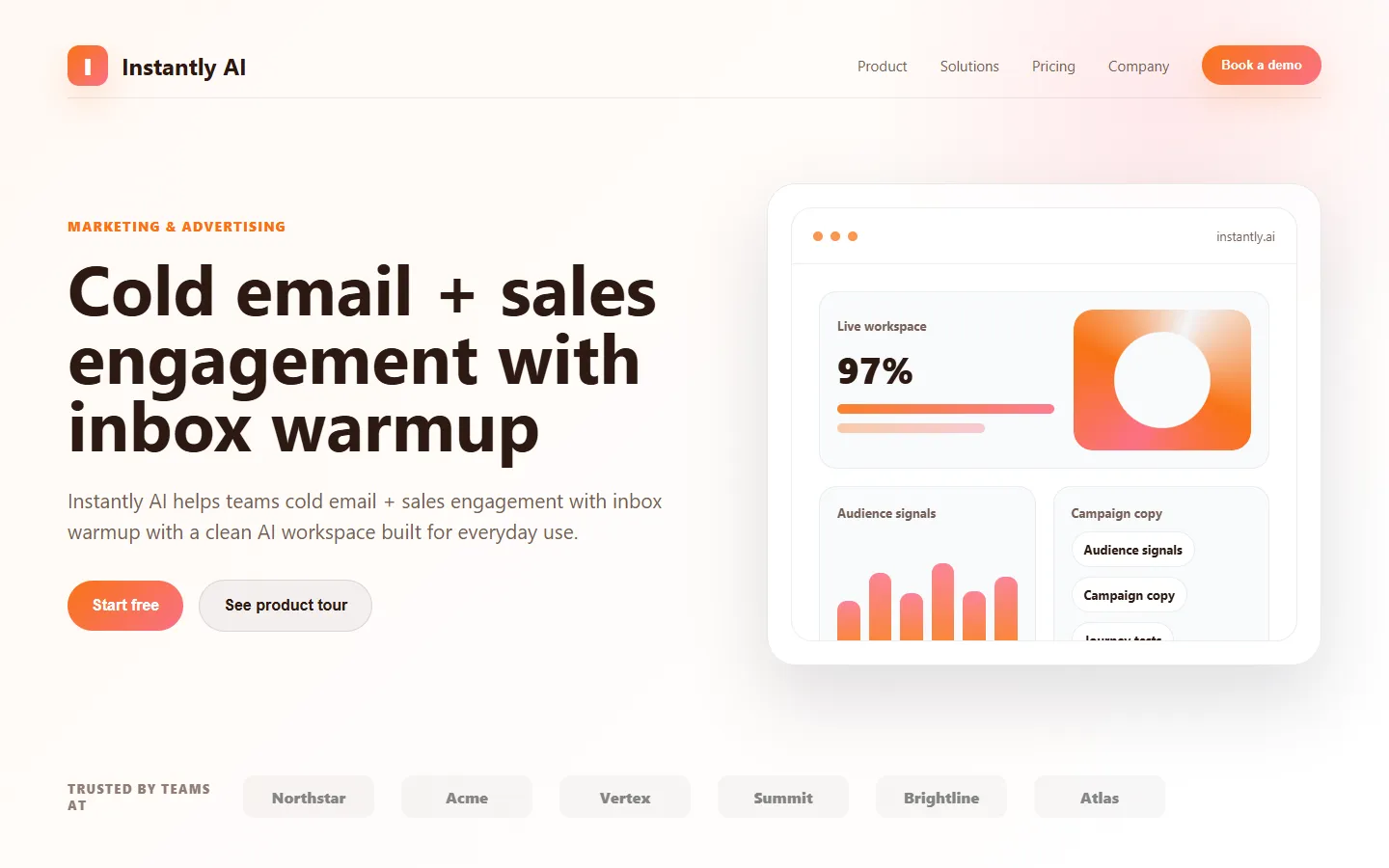
Instantly AI is a cold email and sales engagement platform for sending high-volume outbound campaigns with AI-powered personalization and inbox warmup.

Matador AI
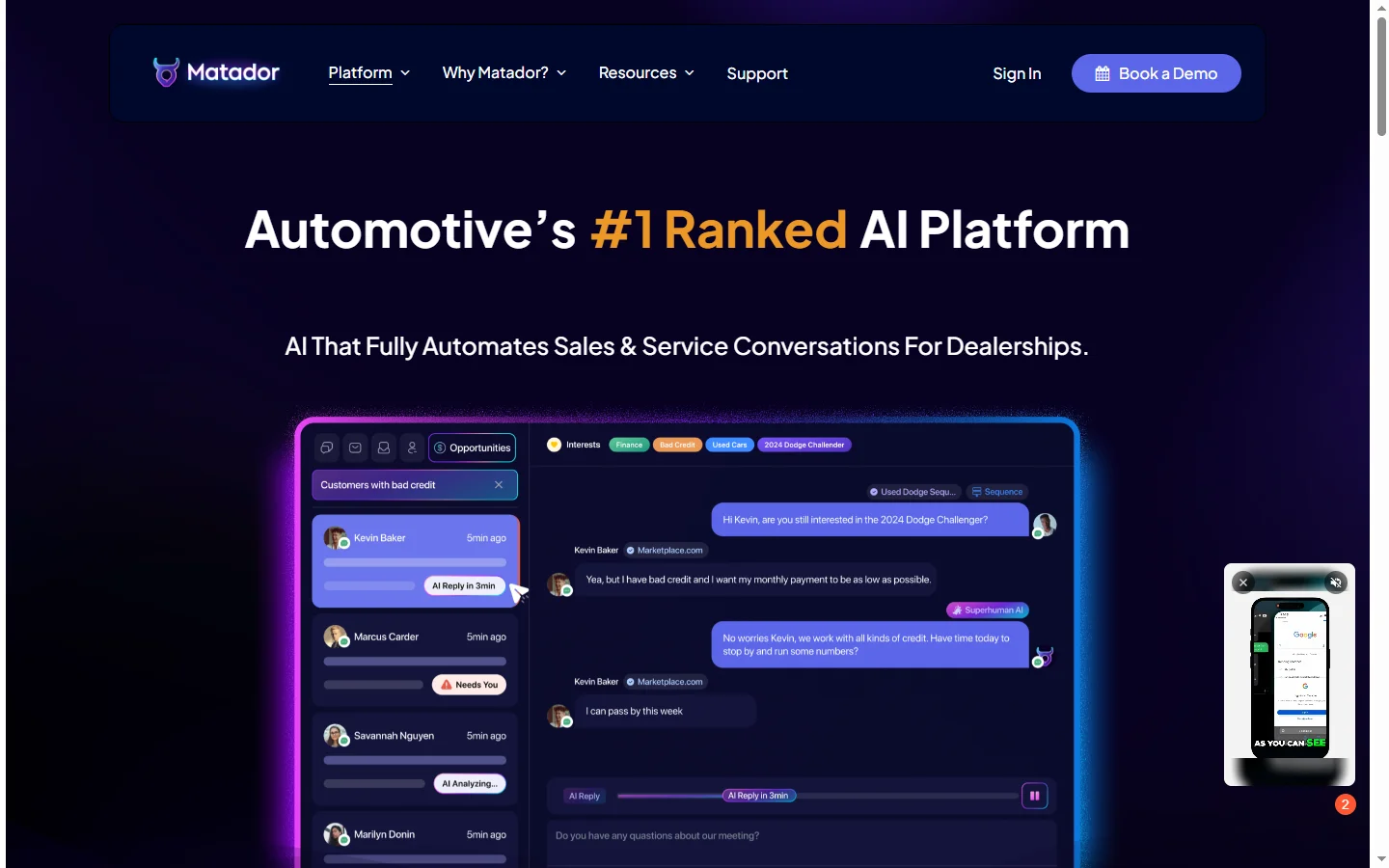
Matador AI automates dealership customer communications via SMS, webchat, and messaging to handle lead qualification, appointment booking, and service follow-ups.