
BrainBox AI
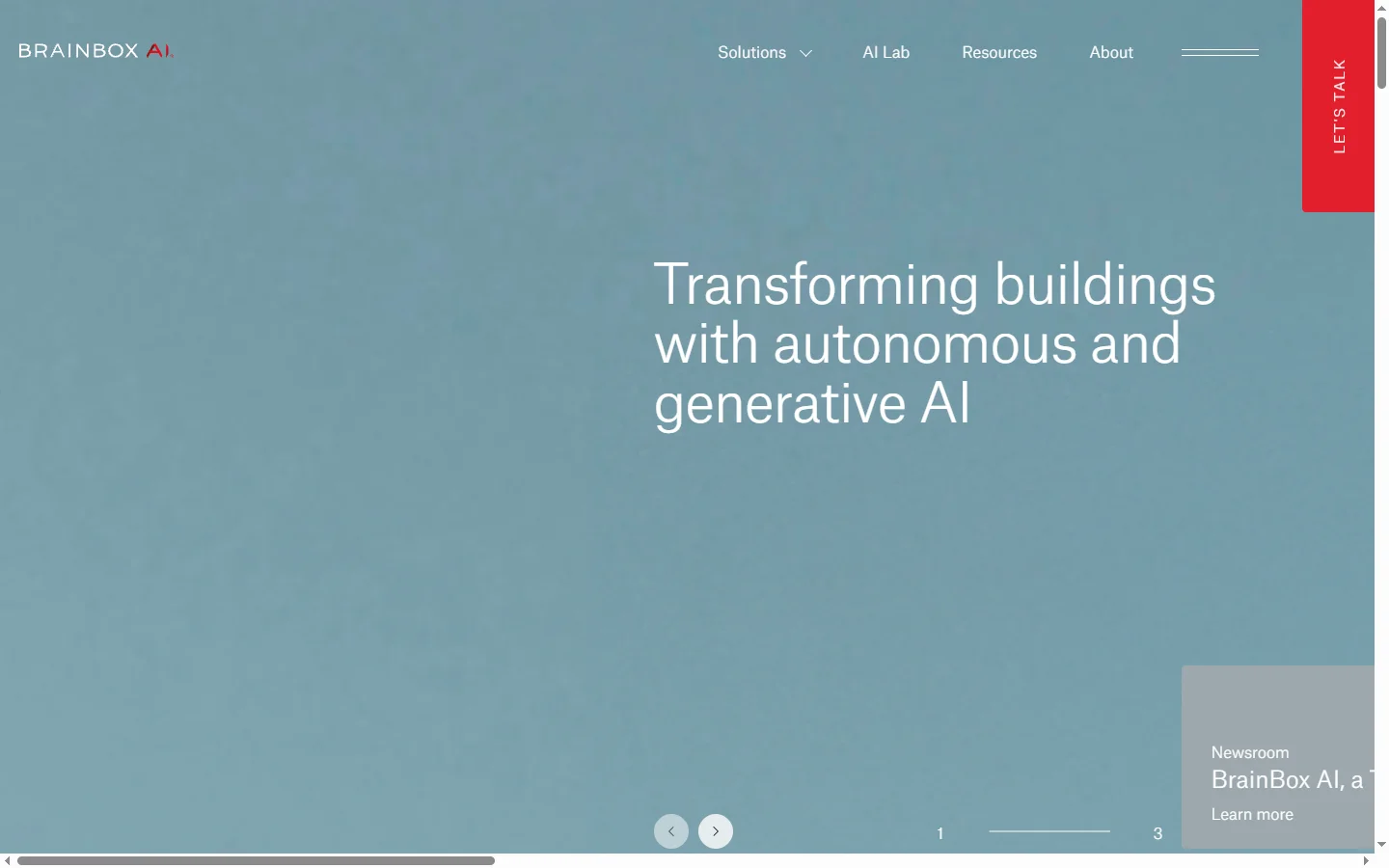
Paid ✓ VerifiedBrainBox AI is an autonomous building technology that uses AI to optimize HVAC systems in real time, reducing energy consumption and carbon emissions.
📋 About BrainBox AI
BrainBox AI is an autonomous building optimization platform that connects to existing HVAC systems and uses AI to continuously adjust heating, ventilation, and air conditioning in real time based on weather, occupancy, building thermal dynamics, and energy pricing. The technology targets the largest addressable source of commercial building emissions — HVAC typically accounts for around 40 percent of commercial building energy use — and delivers energy savings of 25 percent or more without requiring physical retrofits of equipment.
The platform ingests live data from building automation systems, weather forecasts, utility rate schedules, and occupancy sensors, then produces optimized setpoint and schedule commands that HVAC controllers execute autonomously. Proprietary deep-learning models understand each building's unique thermal behavior after a short learning period and continuously refine their predictions as conditions change. A cloud dashboard gives facility managers visibility into savings, comfort outcomes, and equipment performance across portfolios.
BrainBox AI serves owners and operators of commercial real estate, retail chains, grocery, healthcare, and government buildings who need to cut operating costs and meet aggressive decarbonization targets without capital-intensive upgrades. The platform has been deployed across millions of square feet globally and is used by customers to meet sustainability commitments, ESG reporting requirements, and utility incentive program goals. Because it retrofits onto existing BAS systems, implementation is fast compared to traditional energy projects.
⚡ Key Features of BrainBox AI
Autonomous HVAC Optimization
BrainBox AI continuously adjusts setpoints, schedules, and operational parameters of existing HVAC equipment without human intervention. The system predicts thermal loads 6 to 12 hours ahead based on weather, occupancy patterns, and building dynamics, then pre-positions equipment to meet comfort targets with minimum energy use. Facility teams stay in control through override capabilities and customizable guardrails. Autonomous operation means savings accrue 24/7 rather than relying on manual intervention.
Retrofit-Friendly Integration
The platform connects to existing building automation systems over standard protocols like BACnet, Modbus, and LonWorks without replacing controllers or sensors. This keeps implementation timelines weeks rather than months and avoids the capital expense of equipment replacement. Existing IT and OT investments are preserved while gaining intelligent optimization on top. Typical go-live happens within 30 to 90 days of contracting.
Deep-Learning Thermal Models
Custom neural networks learn each building's thermal behavior during a short training period and continuously refine as conditions change over seasons and usage patterns shift. This building-specific modeling outperforms rules-based optimization that cannot adapt to the unique mass, insulation, and occupancy of each facility. Models handle complex multi-zone buildings with dependencies between floors and HVAC units. Performance improves monotonically as more data accumulates.
Weather and Occupancy Integration
Local weather forecasts and real or inferred occupancy signals drive optimization decisions, including pre-cooling before hot afternoons and avoiding unnecessary conditioning of empty zones. Weather data comes from multiple providers for forecast quality, while occupancy can use existing BMS sensors, access control logs, or inferred patterns from historical data. This demand-responsive operation delivers comfort when needed and savings the rest of the time. Occupancy awareness is especially valuable in hybrid-work environments where patterns shifted significantly.
Carbon and Savings Dashboard
A cloud dashboard shows energy savings, avoided emissions, comfort metrics, and equipment performance across every connected building in a portfolio. Reports support ESG disclosures, utility incentive applications, and internal sustainability tracking with auditable data. Drill-down views help facility engineers diagnose underperforming zones or equipment. Custom alerts flag anomalies like failing equipment or comfort complaints before they become business problems.
Demand Response Participation
BrainBox AI can participate in utility demand response programs, automatically reducing load during grid stress events while staying within comfort bounds. This generates additional revenue and helps grid operators balance supply during peaks driven by heat waves or renewable intermittency. Participation is transparent to occupants because the AI modulates equipment gradually rather than crudely cutting conditioning. Revenue from DR is visible alongside savings in the dashboard.
Multi-Site Portfolio Management
Enterprise customers manage hundreds or thousands of buildings from a single console, with benchmarking across similar sites, standardized reporting, and centralized configuration. Regional managers can compare performance across comparable stores or offices to identify operational outliers. Template configurations let new sites onboard quickly using proven setups. This scale-oriented design suits retail chains and corporate real estate portfolios where consistency matters as much as absolute performance.
🎯 Use Cases for BrainBox AI
⚖️ BrainBox AI Pros & Cons
Advantages
- ✓Significant energy savings without equipment retrofits
- ✓Fast deployment through standard BAS protocols
- ✓Continuous AI improvement over time
- ✓Strong alignment with ESG and decarbonization goals
- ✓Portfolio-scale management for multi-site operators
Drawbacks
- ✗Requires a compatible building automation system
- ✗Best suited to commercial rather than residential buildings
- ✗Savings vary by climate and building type
- ✗Subscription-based pricing model requires ongoing commitment
📖 How to Use BrainBox AI
Contact BrainBox AI to assess your building portfolio and confirm HVAC systems are compatible with supported protocols.
Schedule a site assessment where engineers review your building automation system and energy baseline.
Sign a subscription agreement covering the portfolio you want to optimize.
Integrate BrainBox AI with your BAS and let the system learn your buildings' thermal behavior for the initial training period.
Review weekly and monthly reports showing savings, comfort metrics, and equipment performance in the cloud dashboard.
Expand to additional sites as initial buildings demonstrate savings and ROI.
❓ BrainBox AI FAQ
BrainBox AI is an autonomous HVAC optimization platform that uses AI to continuously adjust building heating, ventilation, and air conditioning, typically cutting HVAC energy use 20 to 25 percent without equipment retrofits.
No. BrainBox AI works on top of existing BAS systems, sending optimized commands through standard protocols like BACnet and Modbus. Your existing controllers and sensors remain in place.
Most buildings go live within 30 to 90 days depending on the complexity of the HVAC system and integration effort, significantly faster than traditional energy retrofit projects.
BrainBox AI targets commercial buildings including offices, retail, grocery, healthcare, government, and education facilities. Residential buildings are not the primary use case.
Savings are measured against a baseline calculated from historical consumption adjusted for weather and occupancy. The dashboard reports energy saved, dollars avoided, and carbon emissions reduced with auditable data for ESG reporting.
Related to BrainBox AI

15.ai
15.ai is a free AI voice cloning tool famous for generating realistic speech from cartoon, video game, and animated show characters using as little as 15 seconds of source audio.

Abby AI
Abby AI is an AI therapy and mental wellness chatbot that offers CBT-informed conversations, mood tracking, and self-guided coping tools.

Accrete AI
Accrete AI builds autonomous enterprise AI agents for defense, government, and commercial intelligence workflows.

Ace AI
Ace AI is an AI-powered interview and career coach that helps job seekers prepare with mock interviews, resume feedback, and personalized career guidance.

Stay AI
AI-powered dynamic pricing and revenue management platform for short-term rental hosts and property managers on Airbnb, Vrbo, and Booking.com.

Volt AI
Volt AI is an intelligent video surveillance platform that uses AI to detect safety incidents in real time across enterprise security camera feeds.
Featured on WhatIf.ai
Add this badge to your website to show you're listed on WhatIf AI
Alternatives to BrainBox AI
15.ai
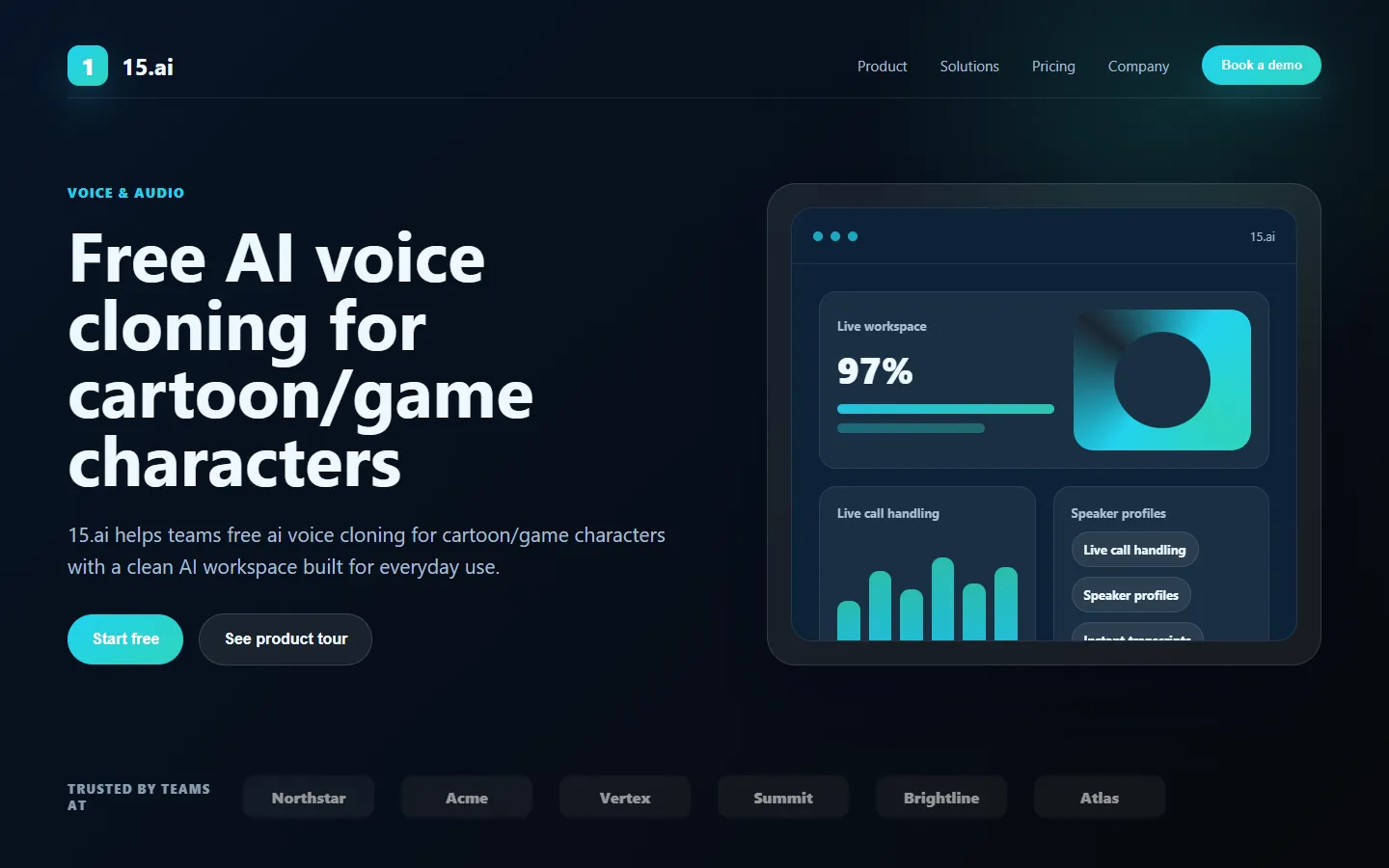
15.ai is a free AI voice cloning tool famous for generating realistic speech from cartoon, video game, and animated show characters using as little as 15 seconds of source audio.
Abby AI
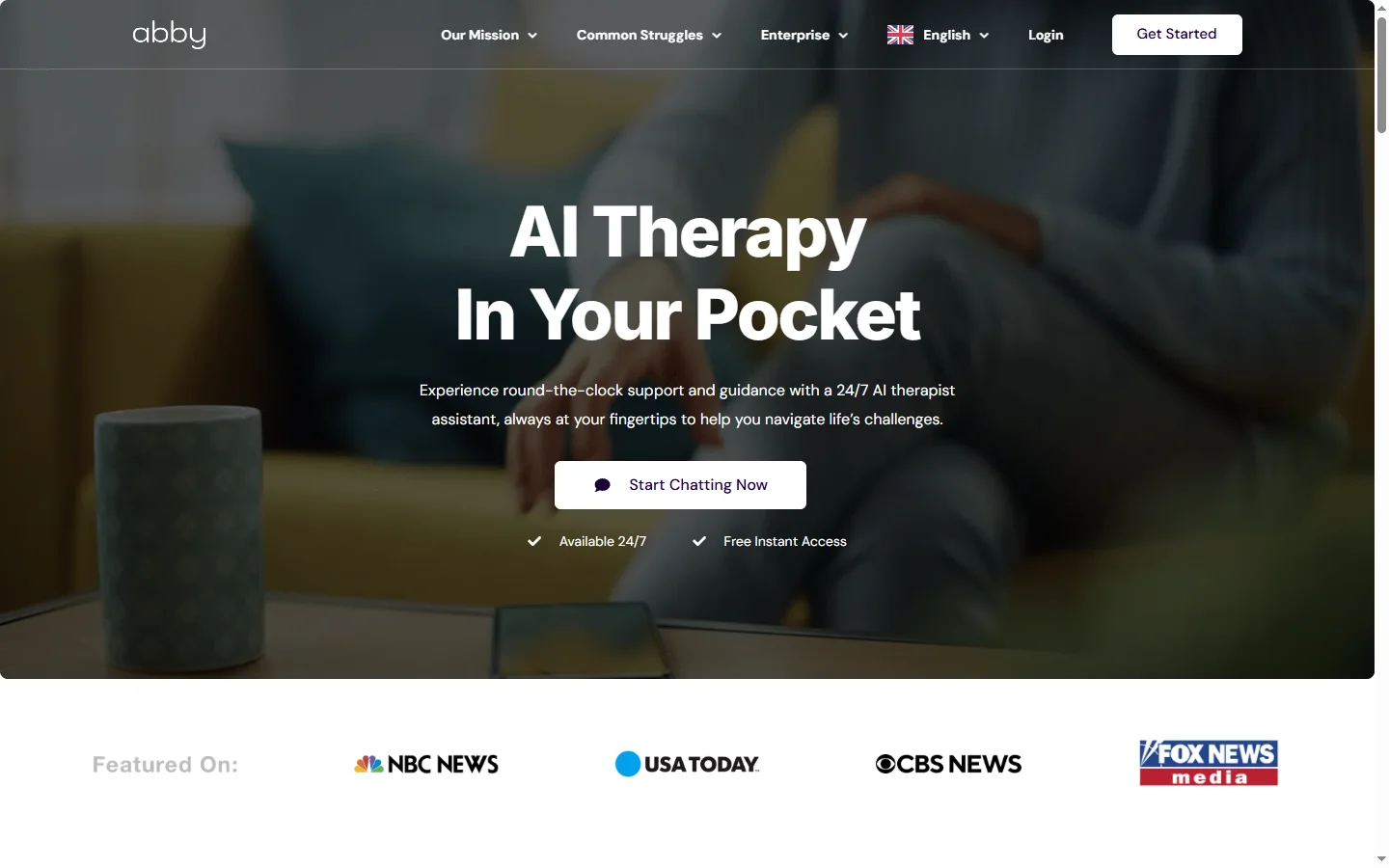
Abby AI is an AI therapy and mental wellness chatbot that offers CBT-informed conversations, mood tracking, and self-guided coping tools.
Accrete AI
Accrete AI builds autonomous enterprise AI agents for defense, government, and commercial intelligence workflows.

Ace AI
Ace AI is an AI-powered interview and career coach that helps job seekers prepare with mock interviews, resume feedback, and personalized career guidance.