
Voiceflow AI
Freemium ✓ Verified 🔥 TrendingVoiceflow AI is a collaborative platform for designing, building, and deploying AI chat and voice agents across web, messaging, and voice channels.
📋 About Voiceflow AI
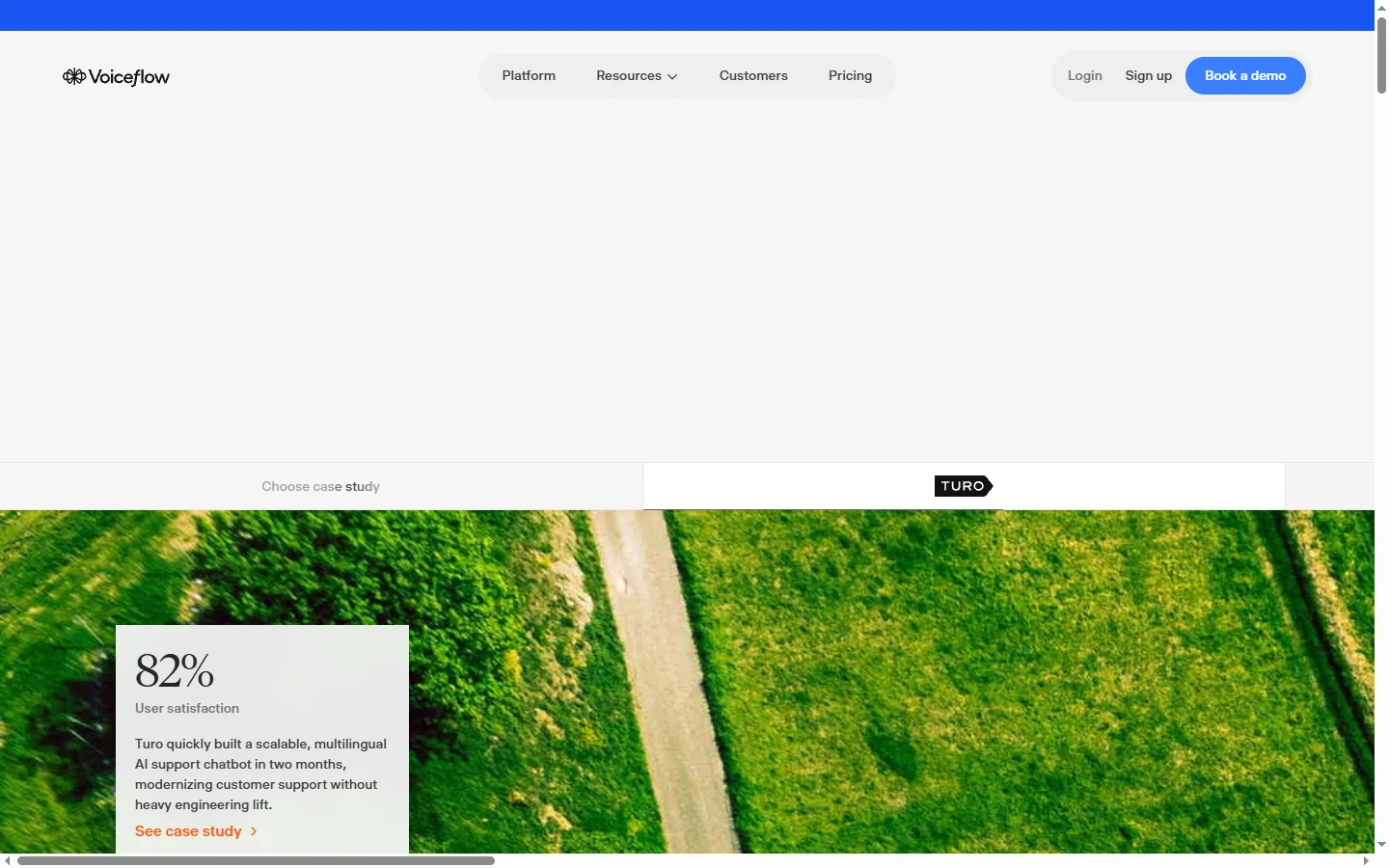
Voiceflow AI is a conversational AI platform that lets product, design, and engineering teams collaboratively design, build, and deploy chat and voice agents for customer support, e-commerce, internal operations, and IVR use cases. The voiceflow ai canvas combines a visual flow designer with large language model integration so teams can ship grounded, intent-driven agents that use company knowledge bases and APIs rather than relying purely on hallucination-prone prompts. Agents built in Voiceflow deploy to websites, mobile apps, WhatsApp, Messenger, voice IVRs, and custom channels through a single API.
The Voiceflow AI platform includes retrieval-augmented generation over uploaded knowledge bases, function calling to existing APIs, intent detection, multilingual support, analytics, and prompt testing — all inside a collaboration model where designers iterate on flows while developers extend with code. Voiceflow supports OpenAI, Anthropic, and other major model providers, letting teams pick the model that fits cost, latency, and quality requirements per step. Version control, review workflows, and sandbox environments make the platform suitable for enterprise governance, and SOC 2 Type II compliance enables deployments in regulated contexts.
Voiceflow AI is most valuable for companies that have outgrown no-code chatbot builders but do not want to build every conversational agent from scratch in code. Customer support teams ship deflection bots with knowledge-base grounding, product teams build in-app assistants, and operations teams automate internal workflows. The platform competes with Botpress, Kore.ai, and Dialogflow but differentiates through design-first collaboration, strong visual tooling, and a large community of builders. Pricing ranges from a free tier for individual builders to team and enterprise plans with SSO, audit logs, and premium support.
⚡ Key Features of Voiceflow AI
Visual Conversation Designer
Voiceflow AI's drag-and-drop canvas lets designers and product managers build conversation flows visually with AI, API, and logic steps. Developers extend the canvas with custom code when needed. This design-first approach accelerates team collaboration compared to code-only chatbot frameworks. The voiceflow ai canvas is a recognized standard in the conversational design community.
Knowledge Base Grounding
Upload documents, URLs, and help center content, and Voiceflow automatically retrieves relevant passages at runtime to ground AI responses. This prevents hallucinations common in ungrounded LLM chatbots and keeps answers aligned with the company's actual policies and documentation. Multiple knowledge bases per project support granular routing.
Multi-Provider LLM Support
Voiceflow AI supports OpenAI, Anthropic, Google, and open-source models, letting builders select the right model per step based on cost, latency, and quality. This avoids vendor lock-in and enables hybrid strategies like using a cheaper model for intent detection and a premium one for generation. Costs are visible per step for budget optimization.
Omnichannel Deployment
Agents deploy to web widgets, mobile SDKs, WhatsApp, Messenger, SMS, voice IVRs, and custom channels through a single API. One conversation design runs across channels with channel-specific rendering. This omnichannel capability is central to voiceflow ai's positioning for enterprise deployments.
Analytics and Testing
Built-in analytics track intent recognition, fallback rates, deflection, CSAT, and path performance. Prompt testing compares model outputs on representative conversations to catch regressions before deployment. This discipline matters because conversational quality drifts silently without visibility. Teams can A/B test flows and model selections.
Enterprise Governance
Version control, review workflows, role-based access, audit logs, SSO, and SOC 2 Type II compliance make Voiceflow suitable for regulated and enterprise deployments. Sandbox environments let teams iterate safely before promoting to production. Admins have visibility across workspaces and can enforce publishing policies.
🎯 Use Cases for Voiceflow AI
⚖️ Voiceflow AI Pros & Cons
Advantages
- ✓Design-first canvas accelerates collaboration
- ✓Knowledge base grounding reduces hallucinations
- ✓Multi-provider LLM support avoids lock-in
- ✓Omnichannel deployment from a single design
- ✓SOC 2 Type II and enterprise governance features
Drawbacks
- ✗Advanced logic still requires developer skill
- ✗Enterprise features require paid tiers
- ✗Pricing scales with active users and channels
- ✗Voice IVR deployments need telephony expertise
📖 How to Use Voiceflow AI
Sign up at voiceflow.com and create a new project on the free tier.
Import your knowledge base — website URLs, documents, help center content.
Design the conversation flow on the canvas using AI, logic, and API steps.
Test flows using the built-in prototyper and prompt testing tools.
Deploy to web, WhatsApp, mobile SDK, or voice channels through Voiceflow's APIs.
Monitor analytics and iterate with your team using version control and review workflows.
❓ Voiceflow AI FAQ
Voiceflow AI is a collaborative platform for designing, building, and deploying AI chat and voice agents across web, messaging, and voice channels, with knowledge base grounding and multi-provider LLM support.
Yes. The voiceflow ai platform offers a free tier for individual builders. Team and enterprise tiers add collaboration, governance, SSO, and premium support.
Voiceflow supports OpenAI, Anthropic, Google, and open-source models, letting builders select the right model per step based on cost, latency, and quality.
Yes. Voiceflow AI supports voice channel deployments including IVR use cases, though telephony deployments require integration with a voice infrastructure provider.
Yes. Voiceflow is SOC 2 Type II compliant with SSO, role-based access, audit logs, version control, and sandbox environments suitable for regulated and enterprise deployments.
Related to Voiceflow AI

Abby AI
Abby AI is an AI therapy and mental wellness chatbot that offers CBT-informed conversations, mood tracking, and self-guided coping tools.

Accrete AI
Accrete AI builds autonomous enterprise AI agents for defense, government, and commercial intelligence workflows.

Ace AI
Ace AI is an AI-powered interview and career coach that helps job seekers prepare with mock interviews, resume feedback, and personalized career guidance.

Actively AI
Actively AI is an AI sales prospecting platform that researches accounts, identifies buyer signals, and writes personalized outbound at pipeline scale.

Clyde AI
Clyde AI is a Discord-integrated AI chatbot that answers questions, moderates conversations, and sparks discussion inside community servers.

Unify AI
Unify AI is a go-to-market platform that combines B2B account intelligence with AI-generated research and outbound workflows for sales teams.
Featured on WhatIf.ai
Add this badge to your website to show you're listed on WhatIf AI
Alternatives to Voiceflow AI

Base44 AI
Base44 AI is an AI app builder and website builder that generates full-stack web applications from natural language descriptions with backend, database, and UI included.

Browse AI
Browse AI is a no-code web scraping and monitoring tool that extracts structured data from any website and tracks changes over time without writing code.


Cantina AI
Cantina AI is a freemium platform for building and deploying full-stack web applications using AI-assisted development with live preview and one-click deployment.

ChatGPT
ChatGPT AI assistant by OpenAI for writing, coding, research, image analysis, and everyday problem-solving.