
Sardine AI
Paid ✓ VerifiedSardine AI is an AI-powered fraud, compliance, and risk platform for fintechs, crypto firms, and marketplaces that detects bad actors in real time.
📋 About Sardine AI
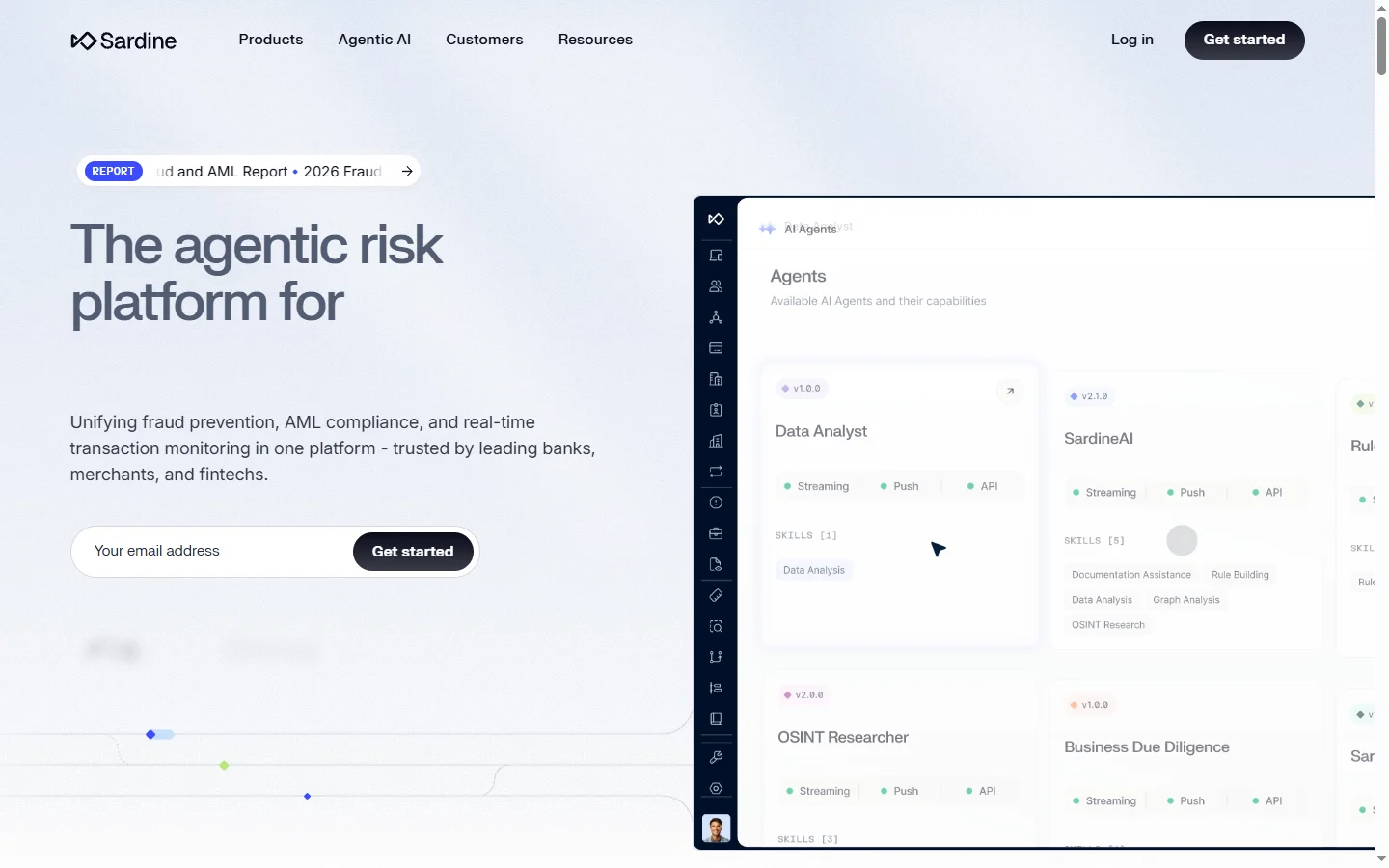
Sardine AI is a fraud prevention and compliance platform that uses machine learning, device intelligence, and behavioral biometrics to detect fraud, money laundering, and account takeovers in real time. It serves fintechs, banks, crypto exchanges, and marketplaces that need to onboard new users, process transactions, and stay compliant without building an entire risk infrastructure from scratch. The platform aggregates more than 4,000 signals per transaction — device fingerprinting, IP reputation, typing cadence, known fraud rings — and scores each event in milliseconds.
What distinguishes Sardine AI from legacy fraud vendors is its focus on modern internet businesses and its willingness to take on risk. Many crypto and neobank customers use Sardine AI in a chargeback guarantee model where the platform takes financial responsibility for fraud it fails to catch. This alignment of incentives pushes the platform to continuously improve detection rather than simply providing reports. Sardine AI also offers built-in workflows for KYC, AML, sanctions screening, and transaction monitoring, consolidating what used to require three or four separate vendors.
The platform is used by companies like FTX (prior to its collapse), Brex, Novo, MoonPay, and many other high-growth fintechs. Risk and compliance teams appreciate the self-serve rule engine, which lets non-engineers build complex detection logic without waiting on data science. A robust API and SDK make it straightforward to integrate into any product, and the reporting dashboards satisfy auditor and regulator expectations out of the box.
⚡ Key Features of Sardine AI
Real-Time Fraud Scoring
Sardine AI evaluates more than 4,000 signals per event — device fingerprint, IP reputation, behavioral biometrics, geolocation mismatches, and known fraud ring associations — to produce a risk score in milliseconds. This lets merchants approve, challenge, or decline transactions at the moment of purchase rather than after the fact. The scoring model is continuously updated based on confirmed fraud outcomes across the Sardine AI customer network, which improves detection for everyone.
Behavioral Biometrics
The platform captures typing cadence, mouse movement patterns, touch gestures, and device handling behaviors to build a behavioral profile of each user. Deviations from that profile — such as a bot-like typing rhythm or a sudden change in gesture style — can indicate an account takeover even when credentials are correct. This is particularly effective for detecting credential-stuffing attacks and session hijacking. The biometrics layer operates silently without adding any user friction.
Device Intelligence
Sardine AI maintains one of the largest fraud-focused device graphs, linking device fingerprints to known fraud patterns across its customer network. When a new device appears that matches characteristics of prior fraud devices — same emulator signature, same suspicious geolocation pattern — Sardine AI flags it immediately. This shared intelligence means fintechs benefit from fraud seen elsewhere on the network without having to suffer it themselves.
KYC and AML Automation
Built-in workflows handle identity verification, document authenticity checks, sanctions screening, politically exposed person checks, and ongoing transaction monitoring. Compliance teams configure rules through a self-serve interface rather than writing code. Audit logs and regulator-ready reports are generated automatically, which accelerates exam preparation and reduces the burden on small compliance teams at growth-stage companies.
Chargeback Guarantee Model
For select verticals, Sardine AI offers a fraud liability shift where the platform covers chargebacks on transactions it scored as low risk. This aligns incentives between vendor and customer in a way that traditional fraud tools do not. Companies using this model report both lower fraud losses and higher approval rates because Sardine AI is confident enough in its scoring to take on the financial risk itself.
Self-Serve Rule Engine
Risk analysts and compliance officers can create, test, and deploy detection rules through a visual interface without engineering involvement. Rules can combine Sardine AI signals, internal data, and custom logic, and can be A/B tested against baseline before going live. This agility is critical for keeping up with evolving fraud patterns. Non-technical analysts have reported shipping dozens of rules per week that previously required data science sprints.
Unified Case Management
Flagged transactions, suspicious users, and AML alerts flow into a single case management interface where investigators can review evidence, collaborate, and make decisions. The system tracks every action for audit purposes and supports SARs filing workflows. Teams previously juggling multiple vendor dashboards can consolidate operations here, which reduces handoff errors and accelerates investigation cycles.
🎯 Use Cases for Sardine AI
⚖️ Sardine AI Pros & Cons
Advantages
- ✓Consolidates fraud, KYC, AML, and device intelligence in one platform
- ✓Real-time scoring in milliseconds at transaction time
- ✓Chargeback guarantee aligns vendor and customer incentives
- ✓Self-serve rule engine for non-engineer compliance teams
- ✓Strong fit for crypto and modern fintech use cases
Drawbacks
- ✗Enterprise pricing can be prohibitive for early-stage startups
- ✗Rule engine has a learning curve for new analysts
- ✗Integration effort required to instrument SDK across all flows
- ✗Dashboards focused more on risk teams than product managers
📖 How to Use Sardine AI
Contact Sardine AI sales at sardine.ai to discuss your fraud and compliance needs and receive a tailored demo.
Sign the master services agreement and complete the security and compliance review process.
Integrate the Sardine AI SDK into your web and mobile applications to capture device and behavioral signals.
Connect the server-side API to receive real-time fraud scores at signup, login, and transaction events.
Configure detection rules, KYC workflows, and case management using the self-serve admin dashboard.
Monitor fraud metrics, iterate on rules, and take advantage of Sardine AI's customer success team for tuning.
❓ Sardine AI FAQ
Sardine AI serves fintechs, neobanks, crypto exchanges, payment processors, marketplaces, and any modern internet business that needs to detect fraud and stay compliant with KYC and AML requirements.
Yes. For select verticals, Sardine AI offers a fraud liability shift where the platform covers chargebacks on transactions it scored as low risk. This aligns incentives between vendor and customer.
Sardine AI combines device fingerprinting, IP reputation, behavioral biometrics (typing cadence, mouse movement), and known fraud ring associations to detect account takeovers in real time, even when the correct credentials are used.
Pricing is custom based on transaction volume, verticals, and features used. Sardine AI is designed for growth-stage and enterprise companies and does not have a self-serve pricing tier.
Yes. Sardine AI includes identity verification, document authenticity checks, sanctions screening, politically exposed person checks, and ongoing transaction monitoring as part of its platform.
Related to Sardine AI

A2E AI
A2E AI productivity platform converts audio and video recordings into transcripts, summaries, and action items with speaker identification.

Abnormal AI
Abnormal AI uses behavioral AI to detect business email compromise, account takeover, and socially engineered phishing that bypasses secure email gateways.

Abridge AI
Abridge AI medical documentation platform that records and summarizes clinical conversations into structured physician notes in real time.

Accrete AI
Accrete AI builds autonomous enterprise AI agents for defense, government, and commercial intelligence workflows.
Featured on WhatIf.ai
Add this badge to your website to show you're listed on WhatIf AI
Alternatives to Sardine AI

A2E AI
A2E AI productivity platform converts audio and video recordings into transcripts, summaries, and action items with speaker identification.

Abnormal AI
Abnormal AI uses behavioral AI to detect business email compromise, account takeover, and socially engineered phishing that bypasses secure email gateways.

Abridge AI
Abridge AI medical documentation platform that records and summarizes clinical conversations into structured physician notes in real time.


Air AI
Air AI conducts autonomous full-length AI phone calls for sales prospecting, appointment setting, and customer service without human agents.