
Relyance AI
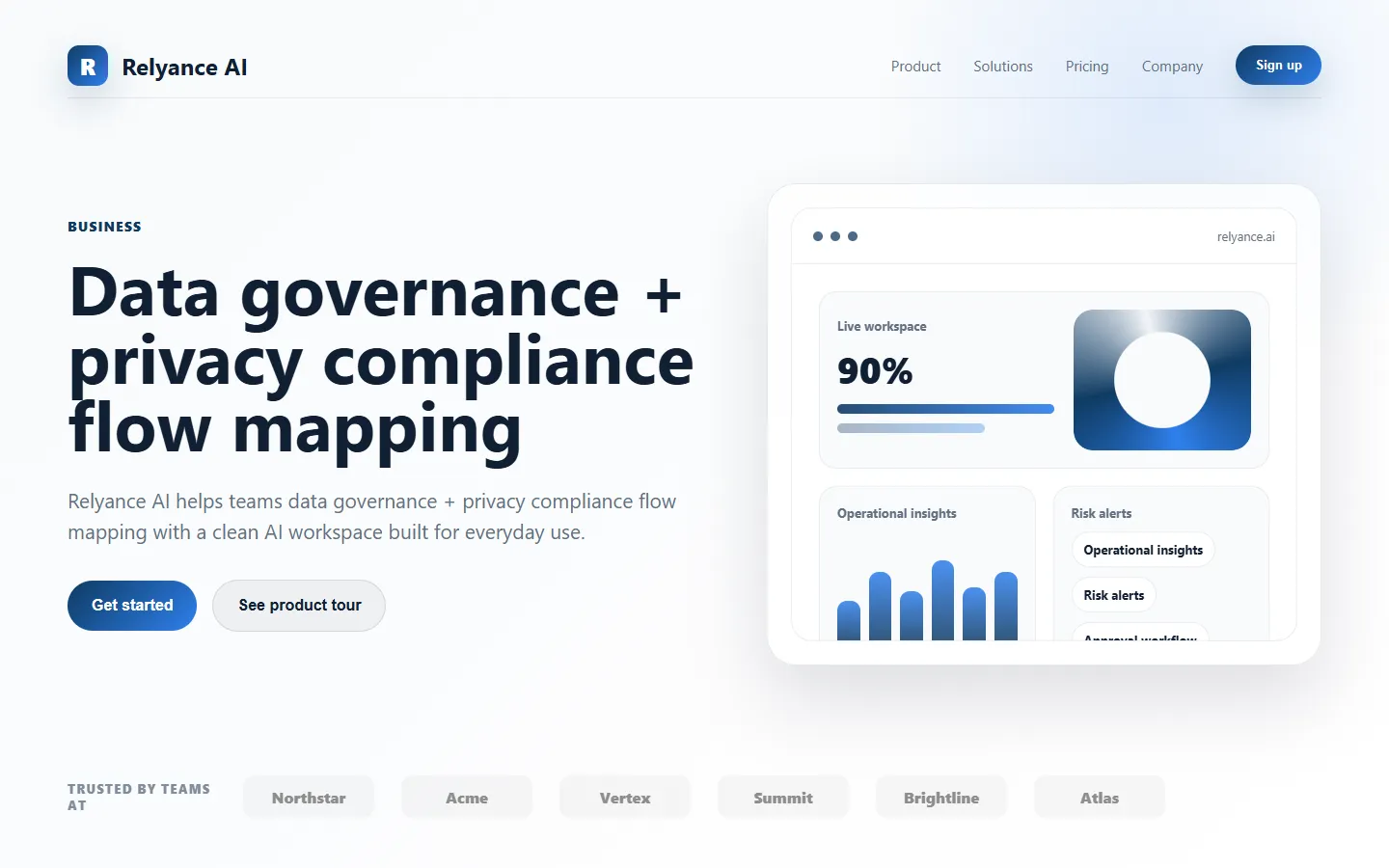
Paid ✓ VerifiedRelyance AI is a data governance and privacy compliance platform that maps how data flows through an organization and automates regulatory obligations.
📋 About Relyance AI
Relyance AI is a data governance, privacy, and AI compliance platform that helps modern enterprises understand and control how personal and sensitive data flows through their systems. The core technology is a data journey graph that continuously scans source code, APIs, infrastructure, and contracts to map where data comes from, where it goes, and how it is used, without relying on manual surveys that quickly go stale. By combining technical discovery with contract and policy analysis, relyance ai bridges the gap between what privacy teams have promised and what engineering has actually built.
The platform covers a broad regulatory scope including GDPR, CCPA, HIPAA, the EU AI Act, and emerging state and sectoral laws. Automated obligation libraries match specific regulatory requirements to actual data flows, flagging gaps where a system handles personal data in ways that are not covered by existing contracts, DPAs, or consent artifacts. This closes the common compliance blind spot where modern SaaS architectures evolve faster than static documentation can keep up. AI-powered review of vendor contracts extracts processing obligations and compares them against real behavior for continuous assurance.
Relyance AI targets mid-market and enterprise privacy, legal, and security teams that need provable compliance across sprawling cloud architectures with many vendors and internal services. Typical customers replace months of manual data mapping with continuous automated discovery, shortening audit preparation and reducing regulatory risk. The platform's emphasis on a single source of truth spanning engineering and legal data is particularly valuable as AI governance requirements like the EU AI Act extend obligations deeper into technical systems.
⚡ Key Features of Relyance AI
Continuous Data Journey Mapping
Relyance ai continuously scans source code repositories, APIs, cloud infrastructure, and data platforms to build an always-current graph of where data originates, how it moves, and who consumes it. This replaces the common practice of one-off data mapping surveys that go stale within weeks of completion. The graph spans first-party systems, third-party vendors, and internal services, giving privacy teams a unified view. Changes detected in real time trigger alerts when new data flows appear.
AI Contract Intelligence
The platform reads vendor contracts, DPAs, and internal policies using AI extraction to identify data processing commitments, restrictions, and obligations. These extracted terms are compared against observed data flows to flag discrepancies — for example, when a vendor is receiving data for a purpose not covered by the contract. This alignment between legal commitments and engineering reality is difficult to achieve manually at scale. Legal teams use the output for vendor risk management and renewal negotiations.
Regulatory Obligation Library
Built-in obligation libraries for GDPR, CCPA, HIPAA, LGPD, the EU AI Act, and other frameworks automatically map requirements to actual data flows and processing activities. Gaps surface as actionable tasks assigned to the appropriate owner, with supporting evidence drawn from the data graph. This turns regulatory compliance from a periodic audit exercise into continuous operational assurance. New regulations are added as they come into force with minimal customer lift.
Record of Processing Activities
ROPA, PIA, and DPIA artifacts are generated and kept current automatically using the data graph as the underlying source of truth. This eliminates manual maintenance of spreadsheets and documents that auditors traditionally review. Version history captures changes over time for regulatory review. Outputs can be exported in formats that match common audit and supervisory authority requirements.
AI Governance and EU AI Act Support
As AI systems proliferate, relyance ai extends its data governance approach to model inputs, training data, and inference pipelines. The platform supports EU AI Act risk classification, transparency documentation, and ongoing monitoring requirements. AI system inventories track each production model alongside its data sources, risk tier, and required controls. This unified view is essential as AI governance becomes a formal legal obligation rather than a voluntary practice.
DSAR and Consent Automation
Data subject access requests and consent management are grounded on the same data graph, so responses reflect where personal data actually resides rather than where it was theoretically stored. This significantly improves DSAR accuracy and response time while reducing legal exposure from incomplete disclosures. Automated workflows route requests to system owners and track completion against regulatory deadlines. Audit trails document every step for supervisory review.
Engineering and Legal Collaboration
The platform provides distinct workflows for privacy, legal, security, and engineering roles while keeping them grounded on the same underlying graph. Engineers see code-level findings and suggested fixes, privacy teams see regulatory obligations and risk scores, and legal teams see contract and policy implications. This shared context reduces the coordination overhead that slows most privacy programs. Role-based permissions ensure sensitive information is visible only to appropriate users.
🎯 Use Cases for Relyance AI
⚖️ Relyance AI Pros & Cons
Advantages
- ✓Continuous automated data mapping replaces stale surveys
- ✓Combines contract intelligence with technical data flow discovery
- ✓Regulatory obligation library covers major global frameworks
- ✓Supports emerging EU AI Act and AI governance requirements
- ✓Single source of truth spans legal and engineering teams
Drawbacks
- ✗Enterprise pricing limits access for small organizations
- ✗Initial connector setup requires engineering cooperation
- ✗Depth in specialized sectors like healthcare may need professional services
- ✗Complex UI can be daunting for infrequent users
📖 How to Use Relyance AI
Contact the relyance ai team to scope a deployment based on your regulatory profile and systems landscape.
Work with the implementation team to connect code repositories, cloud infrastructure, data platforms, and contract repositories.
Review the generated data journey graph to validate discovered flows and add organizational context like business purposes and legal bases.
Activate regulatory obligation libraries for frameworks relevant to your jurisdictions and industry.
Assign owners to identified gaps and track remediation tasks through the integrated workflow tools.
Generate ROPA, DPIA, and audit evidence on demand, and review continuous alerts as new data flows or regulatory changes emerge.
❓ Relyance AI FAQ
Relyance ai is a data governance and privacy compliance platform that continuously maps how data flows through an organization and automates obligations under GDPR, CCPA, HIPAA, the EU AI Act, and other regulations.
Most traditional tools rely on manual surveys and spreadsheets that go stale quickly. Relyance AI continuously discovers data flows by scanning code, APIs, and infrastructure, which keeps the compliance record current automatically.
Yes. The platform extends its data governance approach to AI systems, supporting AI system inventories, risk classification, transparency documentation, and ongoing monitoring required by the EU AI Act.
Typical deployments connect source code repositories, cloud infrastructure, data warehouses, identity providers, and contract repositories. The implementation team guides customers through standard connector configuration.
Relyance AI is priced and engineered for mid-market and enterprise deployments. Small businesses with simpler data estates typically find it more than they need and should consider lighter-weight privacy tools.
Related to Relyance AI

A2E AI
A2E AI productivity platform converts audio and video recordings into transcripts, summaries, and action items with speaker identification.

Abnormal AI
Abnormal AI uses behavioral AI to detect business email compromise, account takeover, and socially engineered phishing that bypasses secure email gateways.

Abridge AI
Abridge AI medical documentation platform that records and summarizes clinical conversations into structured physician notes in real time.

Accrete AI
Accrete AI builds autonomous enterprise AI agents for defense, government, and commercial intelligence workflows.
Featured on WhatIf.ai
Add this badge to your website to show you're listed on WhatIf AI
Alternatives to Relyance AI

A2E AI
A2E AI productivity platform converts audio and video recordings into transcripts, summaries, and action items with speaker identification.

Abnormal AI
Abnormal AI uses behavioral AI to detect business email compromise, account takeover, and socially engineered phishing that bypasses secure email gateways.
Abridge AI
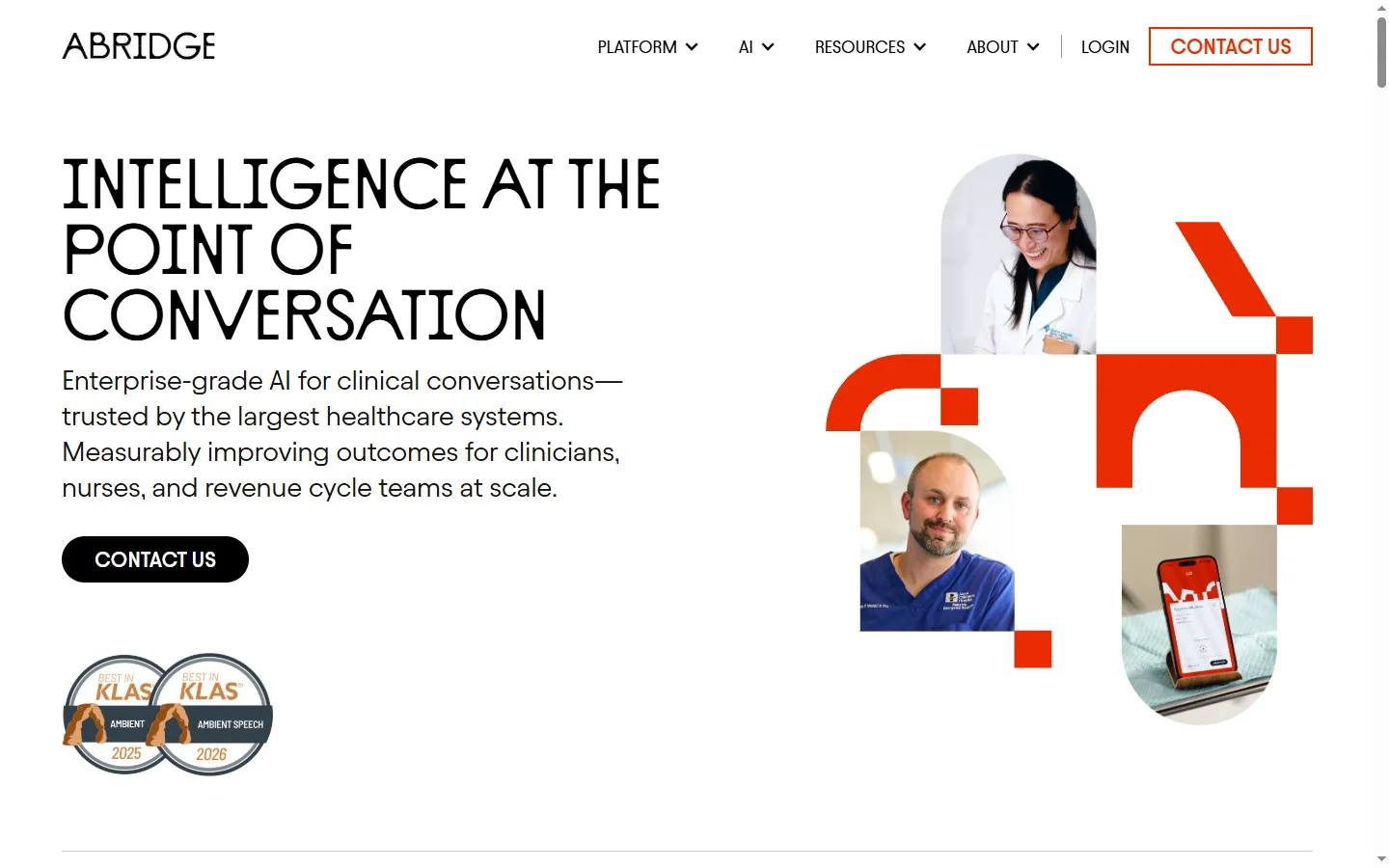
Abridge AI medical documentation platform that records and summarizes clinical conversations into structured physician notes in real time.

Air AI
Air AI conducts autonomous full-length AI phone calls for sales prospecting, appointment setting, and customer service without human agents.