
Laurel AI
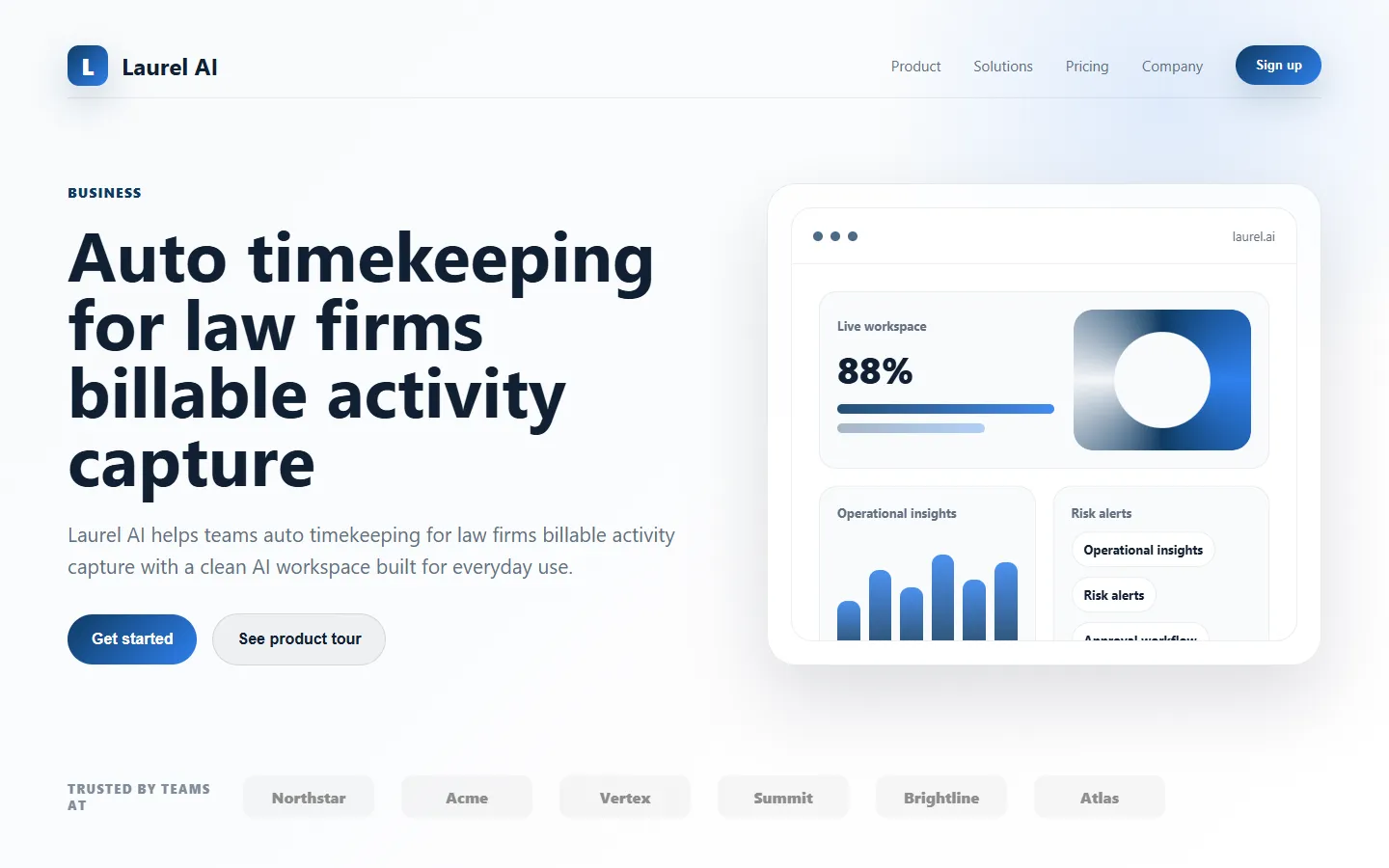
Paid ✓ VerifiedLaurel AI is an AI-powered timekeeping platform for law firms and professional services that automatically captures and classifies billable activity.
📋 About Laurel AI
Laurel AI is a machine learning timekeeping platform built specifically for law firms, accounting firms, and other professional services organizations that bill clients by the hour. The product addresses a chronic problem in these industries — attorneys and consultants routinely undercapture billable time because manual entry at the end of a long day misses the reality of how work actually unfolds. By passively observing activity across email, calendar, documents, and communication tools, laurel ai reconstructs the day's work into accurate, client-matter-attributed time entries that professionals review and approve rather than create from scratch.
The platform uses ML models trained on legal and professional services workflows to classify activities, infer client and matter attribution, and suggest narrative descriptions that meet billing guidelines. Timekeepers typically review a pre-populated timesheet at the end of the day or week, making quick adjustments rather than reconstructing activities from memory. This dramatically reduces time entry burden while increasing capture rates, often surfacing hours that would otherwise have been written off. Integrations with major practice management and ERP systems like Aderant, Elite, and SAP ensure approved time flows into billing without manual double-entry.
Laurel AI serves law firms, accounting firms, and other professional services organizations ranging from mid-sized practices to the Am Law 100 and Big Four. Measurable benefits include higher realization rates, reduced write-offs, improved compliance with outside counsel billing guidelines, and materially happier timekeepers who reclaim hours previously spent on administrative entry. Enterprise features including SOC 2 compliance, private cloud deployment, and granular privacy controls support adoption in firms where client confidentiality is paramount.
⚡ Key Features of Laurel AI
Passive Activity Capture
Laurel ai observes activity across email, calendar, documents, and communication tools to reconstruct what a timekeeper worked on throughout the day. This eliminates the need to remember or estimate time at the end of a busy workday. Capture runs in the background without interrupting normal workflow. The passive approach has been shown to increase capture rates significantly compared to manual entry, directly improving realization.
ML-Powered Matter Attribution
ML models trained on legal and professional services data infer client and matter attribution for each activity with high accuracy. The models learn firm-specific patterns like partner-client relationships, matter numbering conventions, and team structures over time. Ambiguous activities surface for user confirmation rather than being miscategorized silently. Correct attribution is critical for accurate billing and conflicts management.
Narrative Generation
The platform suggests narrative descriptions that comply with common outside counsel billing guidelines, including required task codes and formatting. Narratives are grounded in actual observed activity rather than generic phrases, reducing the risk of vague entries that invoke client write-downs. Users edit suggestions as needed, which trains the model to match personal style over time. This saves significant editing effort on large timesheets.
Timesheet Review Workflow
Pre-populated daily or weekly timesheets arrive ready for review rather than as blank forms to fill out. Timekeepers approve, edit, or merge entries through a streamlined UI optimized for fast review. Batch operations handle common adjustments across many entries at once. This workflow inversion — review rather than create — is the core productivity insight of the platform.
Practice Management Integration
Native integrations with Aderant, Elite, SAP, and other major practice management and ERP systems flow approved time directly into billing. Matter and client data syncs from the system of record to ensure attribution uses canonical values. This eliminates double-entry between timekeeping and billing systems. Integration setup is handled by the implementation team during rollout.
Privacy and Confidentiality Controls
Granular privacy controls let firms configure what activity is captured and how long data is retained, respecting attorney-client privilege and personal privacy boundaries. Private cloud deployment options address firms with strict data residency or isolation requirements. SOC 2 compliance and audit logging support enterprise governance needs. These controls have been critical to adoption in large firms with sophisticated IT and risk functions.
Analytics and Realization Reporting
Dashboards report capture rates, realization trends, and timekeeper-level metrics that help practice leaders identify opportunities for improvement. Historical analysis shows changes in capture patterns after Laurel rollout, making ROI visible. Benchmarks compare against other firms in the Laurel customer base where permitted. This data transforms timekeeping from pure overhead into a strategic tool for practice management.
🎯 Use Cases for Laurel AI
⚖️ Laurel AI Pros & Cons
Advantages
- ✓Passive capture increases billable hour realization
- ✓Reduces administrative burden on timekeepers
- ✓Integrates with major practice management systems
- ✓Strong privacy and compliance controls
- ✓Analytics expose previously hidden realization issues
Drawbacks
- ✗Enterprise pricing targeted at firms, not solo practitioners
- ✗Initial deployment requires firm-wide rollout planning
- ✗Cultural change needed for timekeepers to trust passive capture
- ✗Integration work for legacy practice management systems can be significant
📖 How to Use Laurel AI
Contact the laurel ai team to scope a deployment for your firm based on practice areas, system landscape, and timekeeper count.
Complete security and privacy reviews, then install the Laurel client or browser extension across timekeepers.
Configure practice management integrations to sync clients, matters, and billing rules.
Train timekeepers on reviewing pre-populated timesheets rather than entering time from scratch.
Review daily or weekly timesheets, edit narratives as needed, and approve entries to flow into billing.
Monitor realization metrics and capture rates in the analytics dashboard to measure ROI and identify improvement opportunities.
❓ Laurel AI FAQ
Laurel ai is an AI-powered timekeeping platform for law firms and professional services that automatically captures and classifies billable activity to reduce time entry burden and improve realization.
Laurel inverts the model — timekeepers review pre-populated timesheets rather than create entries from scratch. Manual adjustments remain possible and recommended, but the burden shifts from creation to verification.
Native integrations cover Aderant, Elite, SAP, and other major practice management and ERP systems used by law firms and professional services. Additional integrations are added as customer demand grows.
Laurel AI is primarily targeted at firms rather than solo practitioners. Pricing and implementation are sized for multi-timekeeper deployments with professional IT support.
Granular privacy controls, SOC 2 compliance, private cloud options, and detailed audit logging support firms with strict confidentiality requirements. Firms configure what activity is captured and how long it is retained.
Related to Laurel AI

A2E AI
A2E AI productivity platform converts audio and video recordings into transcripts, summaries, and action items with speaker identification.

Abnormal AI
Abnormal AI uses behavioral AI to detect business email compromise, account takeover, and socially engineered phishing that bypasses secure email gateways.

Abridge AI
Abridge AI medical documentation platform that records and summarizes clinical conversations into structured physician notes in real time.

Accrete AI
Accrete AI builds autonomous enterprise AI agents for defense, government, and commercial intelligence workflows.
Featured on WhatIf.ai
Add this badge to your website to show you're listed on WhatIf AI
Alternatives to Laurel AI
A2E AI
A2E AI productivity platform converts audio and video recordings into transcripts, summaries, and action items with speaker identification.

Abnormal AI
Abnormal AI uses behavioral AI to detect business email compromise, account takeover, and socially engineered phishing that bypasses secure email gateways.
Abridge AI
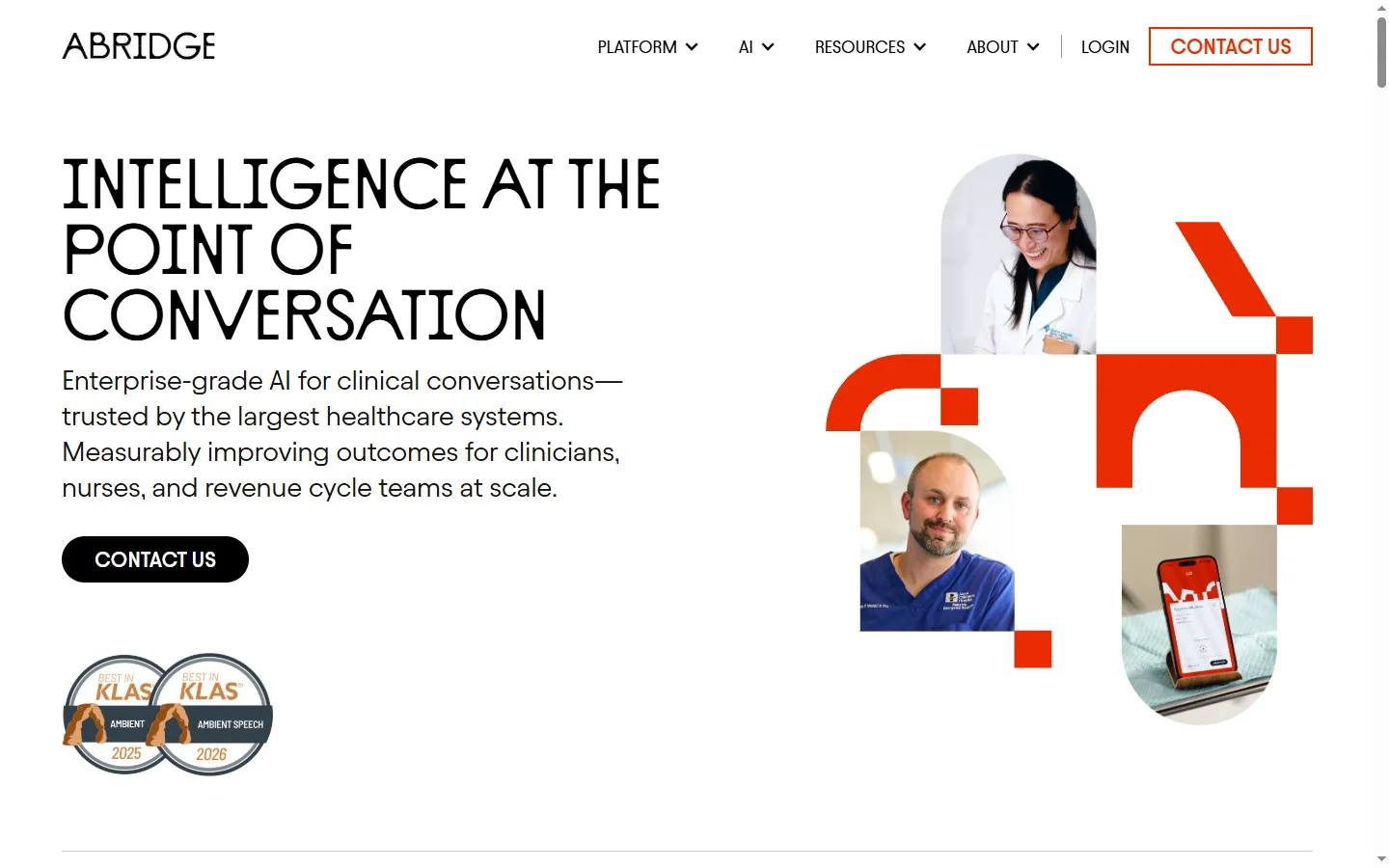
Abridge AI medical documentation platform that records and summarizes clinical conversations into structured physician notes in real time.

Air AI
Air AI conducts autonomous full-length AI phone calls for sales prospecting, appointment setting, and customer service without human agents.