
Joist AI
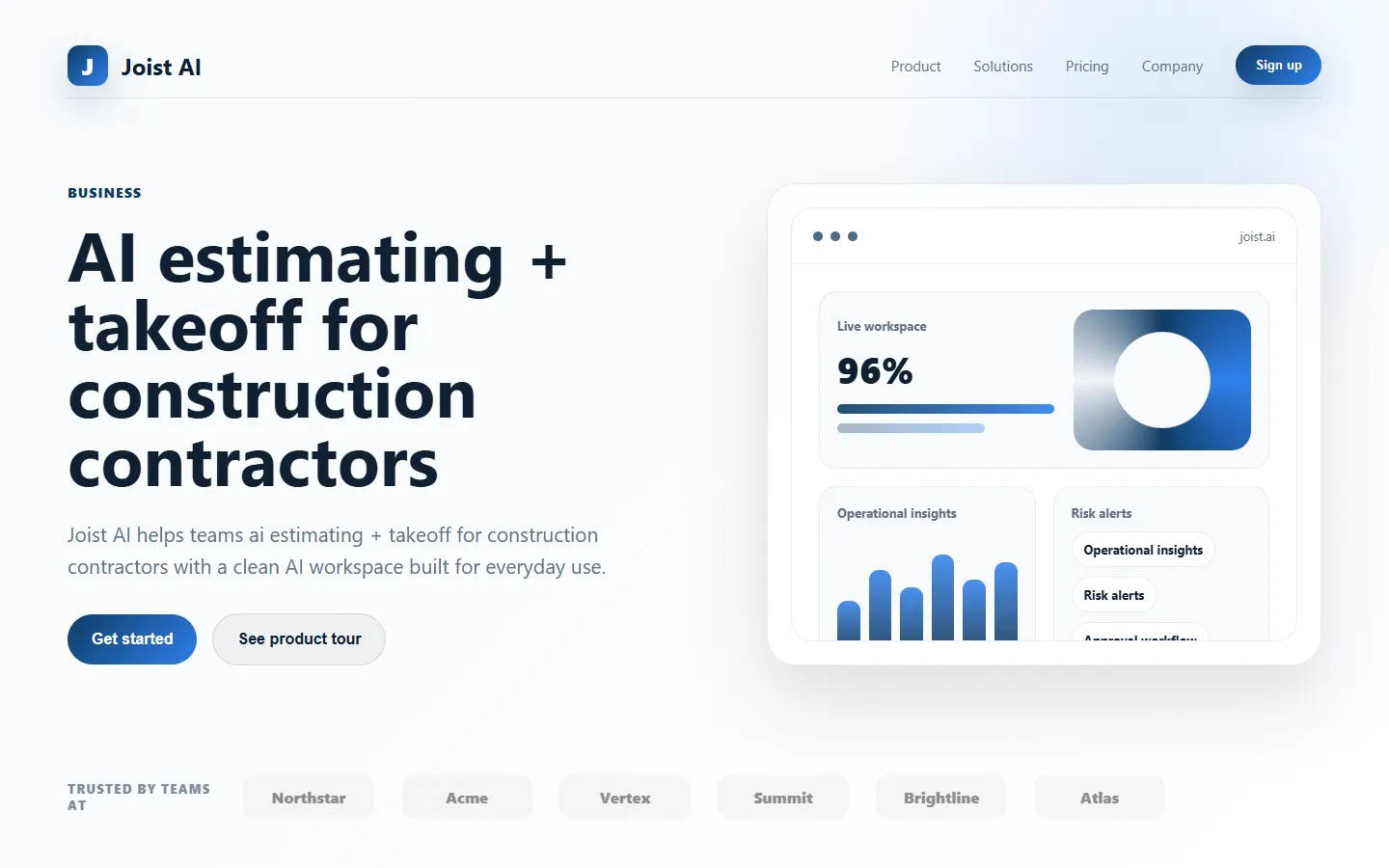
Paid ✓ VerifiedJoist AI is an AI-powered estimating and takeoff platform for construction contractors that automates material quantification from blueprints and bid documents.
📋 About Joist AI
Joist AI is an AI-powered estimating and takeoff platform built for construction contractors, subcontractors, and material suppliers who need to produce accurate bids quickly. Traditional takeoff work — measuring lengths, counting fixtures, and quantifying materials from blueprints — can take days and remains error-prone even for experienced estimators. Joist ai automates the measurement and quantification pipeline using computer vision models trained on construction drawings, turning PDF plans into structured material lists in a fraction of the time while maintaining the accuracy needed for competitive bidding.
The platform ingests architectural, structural, and MEP drawings, identifies scope items like walls, openings, fixtures, and finishes, and produces quantified outputs broken down by area, floor, or scope package. Estimators review AI-generated takeoffs against the original drawings through an integrated viewer, correcting any missed or misclassified items before pricing. Pricing integrations connect to material suppliers and internal cost databases to produce complete estimates. Collaboration features let multiple estimators and subcontractors contribute to the same project, with version control protecting against overwrites.
Joist AI serves general contractors, specialty trade contractors, material suppliers, and building owners who need faster, more accurate estimating. Typical outcomes include substantially shorter bid turnaround times, higher bid-to-win ratios due to the ability to bid more jobs per week, and reduced risk from quantification errors that cause margin erosion mid-project. The platform fits into existing estimating workflows through exports to major estimating software like Sage, ProEst, and Bluebeam, preserving the deliverables downstream teams expect.
⚡ Key Features of Joist AI
Automated Takeoff from Drawings
Joist ai ingests PDF construction drawings and identifies scope items like walls, doors, windows, fixtures, and finishes using computer vision models trained on construction documents. The system quantifies items automatically, producing lengths, areas, counts, and volumes as appropriate. This reduces takeoff time from days to hours for most projects. Accuracy matches or exceeds manual takeoff for standard scope packages.
Integrated Drawing Viewer
A built-in drawing viewer lets estimators review AI-generated takeoffs overlaid on original plans, with clear visualization of what was detected and quantified. Estimators can correct missed or misclassified items, add manual measurements, and confirm quantities before pricing. The viewer supports common drawing formats and multi-sheet projects. This review workflow is essential for estimator trust in AI-generated output.
Scope Package Organization
Takeoffs are organized by scope package, trade, floor, or custom categorization to match how estimators price work. This structure fits naturally with how subcontractors bid specific scopes rather than whole projects. Custom categorizations can be saved as templates for repeat use across similar projects. Output structure supports both prime contractor and specialty trade workflows.
Pricing and Cost Database
Quantified items can be priced against internal cost databases, material supplier catalogs, or published pricing references to produce complete estimates. Historical project data informs cost estimates for custom items without published pricing. Markup rules apply labor burden, overhead, and profit percentages per scope. Finished estimates can be exported for submission or further processing in downstream tools.
Collaboration and Version Control
Multiple estimators, subcontractors, and project stakeholders can collaborate on the same takeoff project with role-based access and edit locks that prevent overwrites. Version history captures every change for audit and rollback. Comments and annotations on specific items facilitate review and approval workflows. Collaboration features support both internal teams and external subcontractor bid packages.
Integrations with Estimating Software
Exports to Sage Estimating, ProEst, Bluebeam, Excel, and other major tools let joist ai fit into existing estimating and project management workflows without forcing a full platform change. Output formats preserve scope structure and quantification for downstream use. Integration reduces the adoption risk of adding a new tool to established workflows. APIs support custom integrations into ERP and accounting systems.
Specialty Trade Modes
Specialized modes for electrical, plumbing, HVAC, drywall, flooring, and other common trades apply trade-specific detection logic and quantification rules. Specialty contractors benefit from output tuned to their specific deliverables rather than generic measurements. Coverage expands over time as trade-specific feedback improves detection models. This focus distinguishes the platform from generic blueprint OCR tools.
🎯 Use Cases for Joist AI
⚖️ Joist AI Pros & Cons
Advantages
- ✓Significantly faster takeoffs than manual methods
- ✓Reduces quantification errors that hurt margins
- ✓Integrates with major estimating software
- ✓Specialty trade modes for electrical, plumbing, HVAC, and others
- ✓Collaboration and version control for multi-user projects
Drawbacks
- ✗Accuracy varies based on drawing quality and clarity
- ✗Complex custom scopes may still require manual review
- ✗Price point aimed at commercial contractors, not residential DIY
- ✗Full benefit requires estimator trust and workflow change
📖 How to Use Joist AI
Sign up at joist.ai and create a project for the bid you are working on.
Upload the PDF drawings for the project — architectural, structural, and MEP as appropriate.
Run automated takeoff and select the scope packages or trades you need quantified.
Review AI-generated takeoffs in the integrated drawing viewer, correcting any missed or misclassified items.
Apply pricing from your cost database or material supplier catalogs to produce a complete estimate.
Export the finished estimate to your estimating software, spreadsheet, or downstream project management system.
❓ Joist AI FAQ
Joist ai is an AI-powered estimating and takeoff platform for construction contractors that automates material quantification from blueprints and bid documents, reducing takeoff time significantly.
Joist supports general contracting along with specialty trades including electrical, plumbing, HVAC, drywall, flooring, and others. Coverage expands over time as trade-specific feedback improves detection models.
Accuracy varies with drawing quality but typically matches or exceeds manual takeoff for standard scope packages. Estimators review AI output through an integrated viewer before finalizing quantities.
Yes. Joist exports to Sage Estimating, ProEst, Bluebeam, Excel, and other major tools so the platform fits into existing workflows. APIs are available for custom integrations.
Joist AI is primarily targeted at commercial contractors and specialty trade contractors. Residential use is possible but pricing and features are optimized for commercial bid workflows.
Related to Joist AI

A2E AI
A2E AI productivity platform converts audio and video recordings into transcripts, summaries, and action items with speaker identification.

Abnormal AI
Abnormal AI uses behavioral AI to detect business email compromise, account takeover, and socially engineered phishing that bypasses secure email gateways.

Abridge AI
Abridge AI medical documentation platform that records and summarizes clinical conversations into structured physician notes in real time.

Accrete AI
Accrete AI builds autonomous enterprise AI agents for defense, government, and commercial intelligence workflows.
Featured on WhatIf.ai
Add this badge to your website to show you're listed on WhatIf AI
Alternatives to Joist AI

A2E AI
A2E AI productivity platform converts audio and video recordings into transcripts, summaries, and action items with speaker identification.

Abnormal AI
Abnormal AI uses behavioral AI to detect business email compromise, account takeover, and socially engineered phishing that bypasses secure email gateways.

Abridge AI
Abridge AI medical documentation platform that records and summarizes clinical conversations into structured physician notes in real time.

Air AI
Air AI conducts autonomous full-length AI phone calls for sales prospecting, appointment setting, and customer service without human agents.