
Glider AI
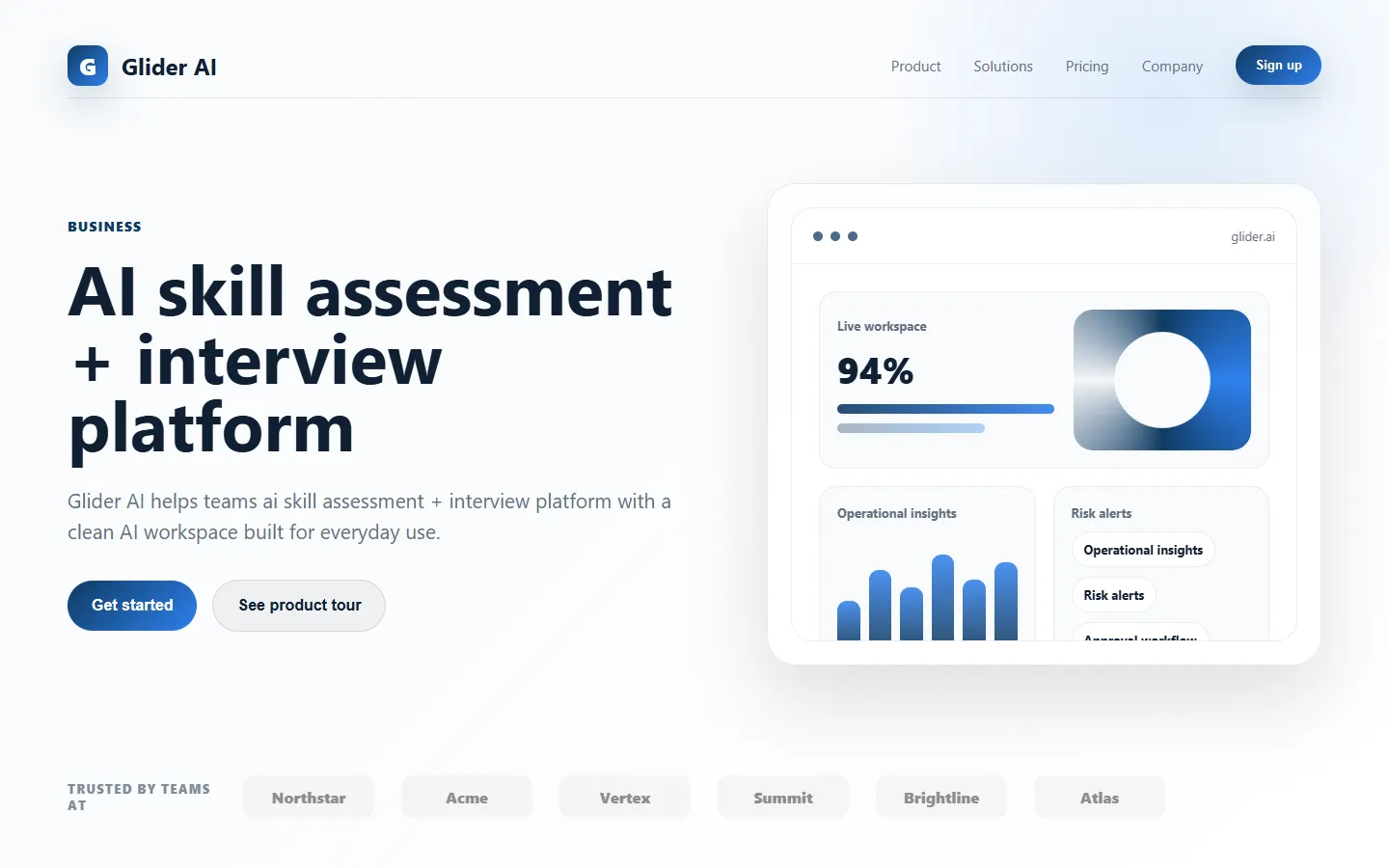
Paid ✓ VerifiedGlider AI is a skill intelligence platform that uses AI to assess, validate, and interview candidates at scale for enterprise hiring.
📋 About Glider AI
Glider AI is a skill intelligence platform that helps enterprises validate candidate capabilities through AI-driven assessments, coding challenges, behavioral interviews, and video proctoring. The glider ai platform replaces or augments the traditional resume screen with skill-based signals, letting recruiters make hiring decisions based on what candidates can actually do rather than self-reported credentials. Large employers and staffing firms use it to manage thousands of concurrent assessments across roles ranging from software engineering to customer service.
The glider ai product combines a library of over a hundred thousand validated questions, automated coding environments that support dozens of languages, AI-scored live and asynchronous video interviews, and role-specific skill benchmarks calibrated against industry data. Hiring managers build assessments from curated templates or draft their own with AI assistance, then invite candidates who take the evaluation in a secure proctored environment. Results are summarized into a skill profile with pass/fail indicators, percentile rankings, and detailed sub-skill breakdowns.
Enterprises and IT staffing firms are the primary customers, using glider ai to filter high-volume applicant funnels, validate contractor capabilities before placement, and support internal mobility programs. The platform integrates with major applicant tracking systems including Workday, Greenhouse, and iCIMS, slotting into existing recruiting workflows with minimal friction. By blending assessment content, AI scoring, and anti-cheating safeguards, glider ai positions itself as a serious talent evaluation partner for companies that treat hiring quality as a competitive advantage.
⚡ Key Features of Glider AI
Skill Intelligence Library
Glider AI maintains a library of more than one hundred thousand validated assessment questions covering technical, functional, and behavioral skills across hundreds of job roles. Each item is tagged with difficulty, topic, and competency, and items are regularly refreshed to discourage answer leakage. Recruiters can compose role-specific assessments from templates or mix in custom questions, letting them evaluate exactly the skills that matter for a given opening. This library is the foundation of the glider ai value proposition.
Live Coding and Simulation Environments
For technical roles, glider ai provides in-browser coding environments for dozens of languages, along with SQL, data analysis, and full-stack simulations. Candidates work on realistic problems with syntax highlighting, test cases, and autosave, while the platform records keystrokes and runs submissions through automated test suites. Hiring managers review scoring rubrics and can replay sessions to understand how candidates approached problems. This gives teams a reliable signal on real coding ability beyond take-home projects.
AI Video Interviews
Candidates can record structured video responses to behavioral and role-specific questions, which glider ai evaluates using AI models that analyze content, clarity, and relevance. The platform summarizes responses with confidence scores and calls out red or green flags for human interviewers to verify. Live AI-assisted interviews are also supported, where a virtual interviewer guides the conversation and produces a structured summary afterwards. This helps hiring teams preserve bandwidth while still giving each candidate a thorough first touch.
AI Proctoring and Integrity
Remote assessments are protected by AI proctoring that monitors webcams, detects tab switching, and flags likely cheating attempts. Glider AI also uses dynamic question sets, time limits, and plagiarism detection on coding responses to reduce the value of answer sharing. Flagged sessions are surfaced to recruiters with evidence, who can then review or invalidate results. This anti-cheating stack is essential for enterprises that rely on assessment scores to make real hiring decisions.
Skill Benchmarks and Scoring
Candidate results are not just pass or fail — they are placed on benchmarks derived from aggregated data across roles and industries. Recruiters can see how a candidate compares to peers in the same role family, and drill down into sub-skill breakdowns to understand specific strengths and weaknesses. The glider ai scoring engine supports configurable rubrics and weighting so hiring managers can tailor cutoffs to their role. This turns raw assessment data into decision-ready signal.
ATS and HR Tech Integrations
Glider AI plugs into major applicant tracking systems including Workday, Greenhouse, iCIMS, Lever, and SmartRecruiters, as well as HRIS and learning platforms. Integrations keep assessments, invites, and results synced with existing recruiting workflows so teams do not have to manage another inbox. APIs are available for custom workflows, and implementation teams help configure connections during onboarding. This reduces the operational friction of adopting a new assessment platform at enterprise scale.
Skills Analytics and Workforce Insights
Across many hires, glider ai produces analytics that help workforce planning teams see skill trends, hotspots, and gaps across their talent pool. These insights extend to internal mobility and upskilling programs, letting HR identify employees whose assessed skills align with open internal opportunities. Dashboards surface metrics such as time-to-hire improvements and quality-of-hire indicators. Leaders use this data to justify investment in skill-based hiring and to prioritize training programs.
🎯 Use Cases for Glider AI
⚖️ Glider AI Pros & Cons
Advantages
- ✓Large library of validated assessment content
- ✓Support for technical simulations and coding challenges
- ✓Integrations with major ATS and HRIS platforms
- ✓AI proctoring reduces cheating at scale
- ✓Skill benchmarks add context to raw scores
Drawbacks
- ✗Best suited to mid-market and enterprise customers
- ✗Setup and configuration can take weeks
- ✗Assessment fatigue can affect candidate experience if overused
- ✗Pricing is opaque without sales conversation
📖 How to Use Glider AI
Contact Glider AI sales to discuss your hiring volume and role mix.
Work with implementation to integrate with your ATS and configure assessment templates.
Build or select assessments from the skill library for each open role.
Invite candidates to complete assessments, which run in a proctored browser environment.
Review skill profiles and AI-generated summaries alongside existing recruiter signals.
Use analytics to refine benchmarks and assessment design over time.
❓ Glider AI FAQ
Glider ai covers technical, functional, and behavioral roles including software engineering, data analysis, customer service, sales, and many more, with a library of more than one hundred thousand questions across hundreds of job families.
The platform uses AI proctoring, dynamic question sets, time limits, and plagiarism detection to reduce cheating. Flagged sessions are surfaced with evidence so recruiters can investigate or invalidate results.
Yes. Glider AI integrates with major applicant tracking systems including Workday, Greenhouse, iCIMS, Lever, and SmartRecruiters, and offers APIs for custom workflows.
The platform emphasizes skills-based evaluation which can reduce reliance on proxies like pedigree. Glider AI continuously tests its content and models for fairness, and enterprise customers can request documentation on its bias mitigation practices.
Glider AI uses enterprise pricing based on assessment volume, modules, and integrations. Interested teams should contact sales for a tailored quote.
Related to Glider AI

A2E AI
A2E AI productivity platform converts audio and video recordings into transcripts, summaries, and action items with speaker identification.

Abby AI
Abby AI is an AI therapy and mental wellness chatbot that offers CBT-informed conversations, mood tracking, and self-guided coping tools.

Abnormal AI
Abnormal AI uses behavioral AI to detect business email compromise, account takeover, and socially engineered phishing that bypasses secure email gateways.
Abridge AI
Abridge AI medical documentation platform that records and summarizes clinical conversations into structured physician notes in real time.

Tribe AI
AI consulting and talent network that pairs enterprises with vetted machine learning engineers, data scientists, and AI strategists for end-to-end project delivery.

Trophi AI
AI-powered fundraising intelligence platform that helps nonprofits identify, engage, and retain major donors through predictive analytics and personalized outreach.
Featured on WhatIf.ai
Add this badge to your website to show you're listed on WhatIf AI
Alternatives to Glider AI
A2E AI
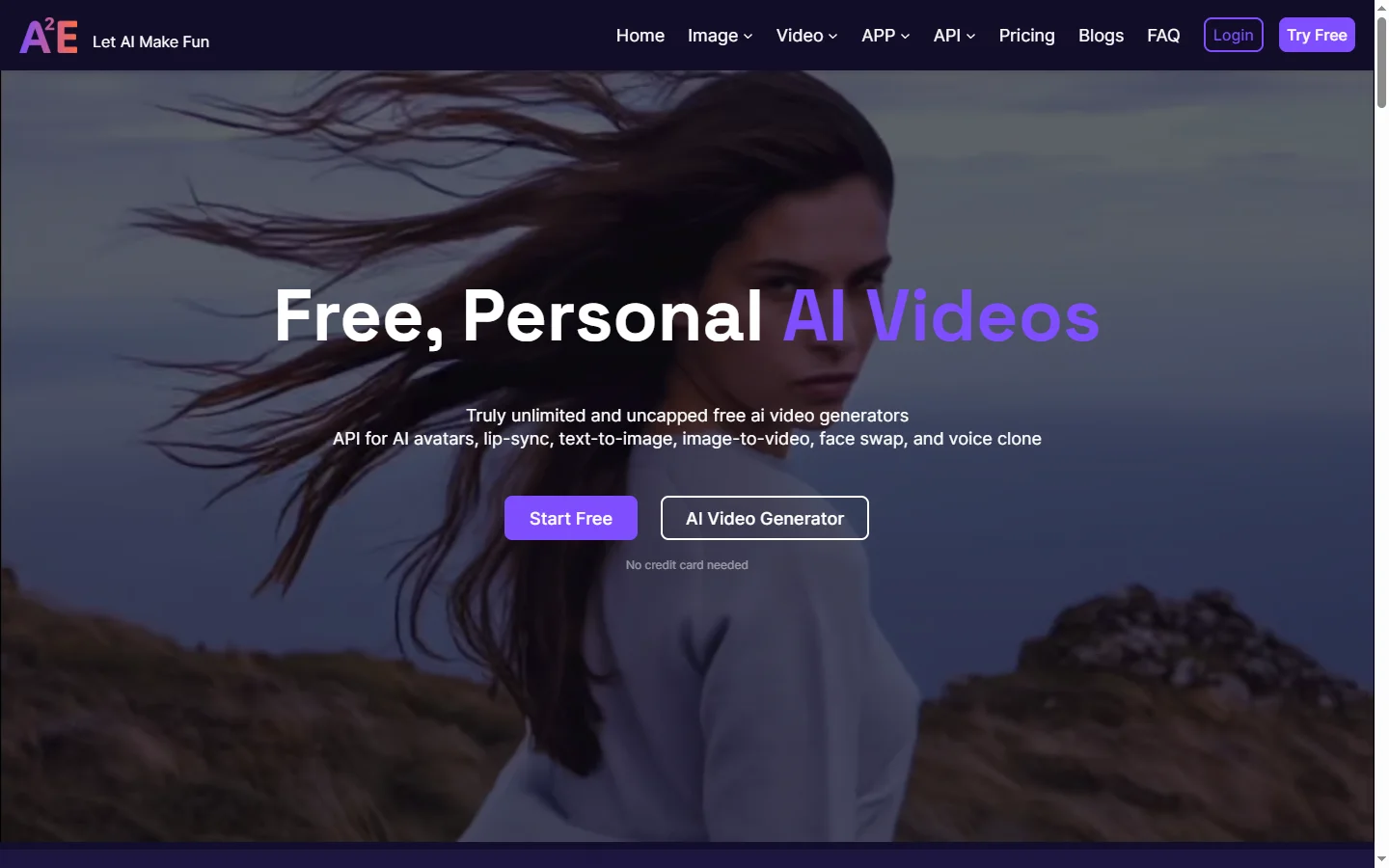
A2E AI productivity platform converts audio and video recordings into transcripts, summaries, and action items with speaker identification.
Abnormal AI
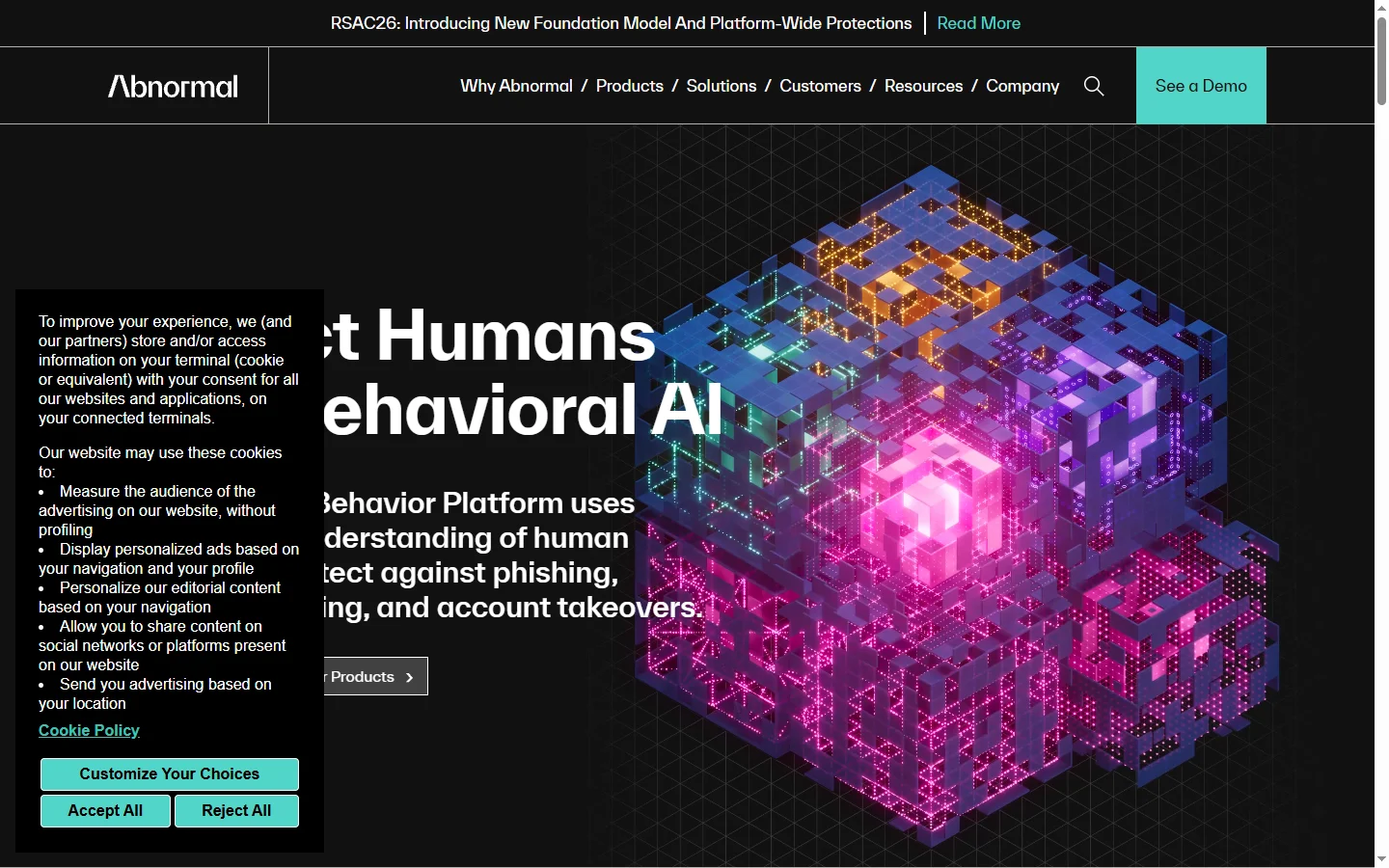
Abnormal AI uses behavioral AI to detect business email compromise, account takeover, and socially engineered phishing that bypasses secure email gateways.
Abridge AI
Abridge AI medical documentation platform that records and summarizes clinical conversations into structured physician notes in real time.

Air AI
Air AI conducts autonomous full-length AI phone calls for sales prospecting, appointment setting, and customer service without human agents.