
Ask Sage AI
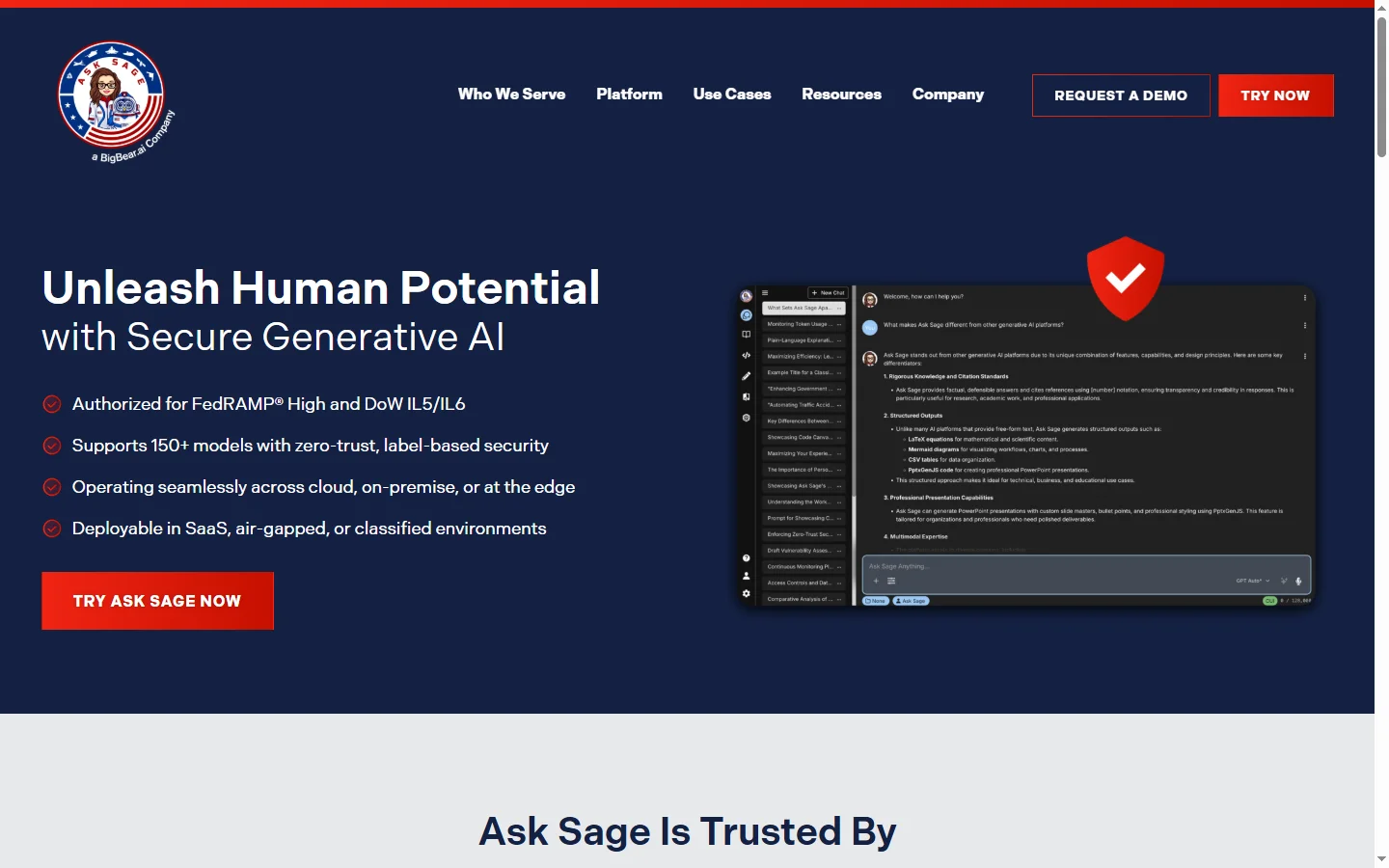
Paid ✓ VerifiedAsk Sage AI is a multi-model generative AI platform built for government, defense, and regulated enterprises with secure, auditable deployments.
📋 About Ask Sage AI
Ask Sage AI is a generative AI platform purpose-built for government agencies, defense organizations, and regulated enterprises that need access to leading large language models inside environments with strict security, compliance, and sovereignty requirements. Unlike general consumer AI chat products, ask sage ai runs across FedRAMP, IL5, IL6, and sovereign cloud boundaries, supports air-gapped deployments, and gives customers control over logging, retention, and data residency. This makes it suitable for mission-critical workflows involving CUI, classified, or other sensitive data where consumer LLMs are not authorized.
The ask sage ai platform provides a unified interface to dozens of frontier models — GPT-4, Claude, Llama, Gemini, Mistral, and others — so users can choose the best model per task without separate vendor relationships. A no-code prompt studio lets analysts, contracting officers, and program managers build reusable workflows for document summarization, proposal drafting, policy analysis, and intelligence synthesis. Developers can call the same capabilities via an API, and administrators retain granular control over which models are accessible, what data can be used, and how outputs are audited.
Ask Sage is used across DoD, civilian agencies, and large enterprise compliance functions for workflows like proposal writing, RFP analysis, policy drafting, after-action reports, intelligence summarization, and automated documentation. Customers value that ask sage ai government deployments provide model choice, full audit logs, and formal Authority To Operate documentation, which unlocks generative AI use in contexts where tools like ChatGPT cannot be approved. For regulated private-sector customers — financial services, healthcare, critical infrastructure — the same compliance posture simplifies internal risk reviews and accelerates adoption.
⚡ Key Features of Ask Sage AI
FedRAMP and DoD Authorized Environments
Ask sage ai operates in FedRAMP Moderate, High, IL5, and IL6 environments with formal authorization documentation that customers can reference in their own ATO packages. This unlocks generative AI use in government settings where consumer LLMs are prohibited, enabling agencies to deploy Sage without running a months-long security review from scratch. Sovereign and air-gapped deployments are available for classified or highly sensitive workloads. The ask sage ai government posture is a key differentiator from general-purpose AI vendors.
Multi-Model Access in One Interface
Users can switch between GPT-4, Claude, Llama, Gemini, Mistral, and dozens of other frontier and open-weight models inside a single interface, picking the best model per task without managing separate vendor accounts. This model-agnostic posture protects customers from lock-in and lets them match cost, capability, and compliance constraints to each workflow. Administrators can whitelist or blacklist specific models to match policy, data residency, and budget requirements. Benchmarking tools help teams evaluate which model performs best on their actual work.
Secure Document and Data Handling
Documents, prompts, and outputs can be configured with strict retention, redaction, and residency controls to match CUI, PII, HIPAA, or agency-specific classification requirements. Every interaction is logged with tamper-evident audit trails that satisfy IG and oversight requirements. Users can chat with uploaded documents, datasets, and knowledge bases without their contents leaving the authorized boundary. This is essential for workflows like RFP analysis, case review, and internal policy drafting.
No-Code Prompt Studio
Program managers, analysts, and contracting officers can build reusable prompts and multi-step workflows through a visual editor without writing code. These workflows are versioned and shareable across teams, so best practices spread rather than reinventing prompts per user. The ask sage ai secure generative ai platform studio supports variables, conditional branching, and document uploads, enabling sophisticated templated tasks. Rolling out standardized prompts across an agency becomes a configuration exercise rather than a training campaign.
Agent and Tool Use
Sage supports agentic workflows where the platform orchestrates multiple model calls, tool invocations, and document retrievals to complete complex tasks like 'analyze this RFP, extract evaluation criteria, and draft response section outlines'. Tool use integrates with internal knowledge bases, enterprise search, and sanctioned external APIs. Guardrails control which tools each user role can invoke, maintaining the compliance posture even in agent contexts. Traceability is preserved for every step so outputs can be audited.
Enterprise API and SDKs
Developers can integrate ask sage ai capabilities directly into internal applications through REST APIs and Python SDKs that preserve the platform's security and audit model. This lets engineering teams embed LLM features into existing government or enterprise software without needing separate vendor approvals for each use case. SSO, RBAC, and per-application keys make enterprise administration straightforward. API usage is logged alongside interactive sessions for unified governance.
Training, Support, and Change Management
Ask sage ai includes structured training programs, role-specific playbooks, and customer success engagement designed specifically for government and regulated-enterprise adoption patterns. This addresses a major barrier to generative AI value capture, which is workforce adoption rather than technology availability. Reference architectures and use-case libraries accelerate time to value for common workflows. Executive dashboards track adoption, productivity metrics, and estimated time savings.
🎯 Use Cases for Ask Sage AI
⚖️ Ask Sage AI Pros & Cons
Advantages
- ✓FedRAMP, IL5, IL6, and air-gapped deployment options available
- ✓Single interface for dozens of frontier and open-weight models
- ✓Strong audit, retention, and data residency controls
- ✓No-code prompt studio plus enterprise API for broad user coverage
- ✓Structured adoption programs built for government and regulated industries
Drawbacks
- ✗Enterprise-grade pricing is significant for small teams
- ✗UI is functional rather than consumer-polished
- ✗Requires procurement, security review, and change management effort
- ✗Feature depth varies depending on which underlying model is selected
📖 How to Use Ask Sage AI
Visit asksage.ai and request a demo — the platform is enterprise-focused and onboarded through sales.
Work with Ask Sage to select the appropriate deployment — FedRAMP, IL5, IL6, commercial, or air-gapped — for your compliance needs.
Configure model whitelists, data residency, retention, and audit settings aligned to your policy framework.
Build or import reusable prompt workflows in the no-code studio for your common use cases.
Roll out to pilot users with role-specific training, then expand across teams as adoption and ROI are demonstrated.
Integrate ask sage ai into internal applications through the API when embedded capabilities are required.
❓ Ask Sage AI FAQ
No. Ask sage ai is an enterprise platform with subscription-based pricing negotiated through sales. Pilots and proofs of concept are typical before production deployment.
Ask sage ai operates across FedRAMP Moderate, FedRAMP High, DoD IL5, and IL6 environments, with formal authorization documentation that customers reference in their own ATO packages. Sovereign and air-gapped deployment options are available for classified and highly sensitive workloads.
The platform provides a single interface to dozens of frontier and open-weight models including GPT-4, Claude, Llama, Gemini, and Mistral. Administrators can whitelist or blacklist models to match policy, data residency, and budget requirements.
Yes. The ask sage ai government configurations support CUI in FedRAMP Moderate and High environments, and classified workloads in IL5, IL6, and sovereign deployments. Data residency, retention, and audit controls are designed to meet the corresponding compliance requirements.
Ask sage ai provides access to many models in one interface — not just OpenAI — and is specifically accredited for DoD and federal environments where ChatGPT Enterprise is often not authorized. For regulated private-sector customers, both can work, but Sage's multi-model and compliance posture are differentiators.
Related to Ask Sage AI

A2E AI
A2E AI productivity platform converts audio and video recordings into transcripts, summaries, and action items with speaker identification.

Abnormal AI
Abnormal AI uses behavioral AI to detect business email compromise, account takeover, and socially engineered phishing that bypasses secure email gateways.

Abridge AI
Abridge AI medical documentation platform that records and summarizes clinical conversations into structured physician notes in real time.

Accrete AI
Accrete AI builds autonomous enterprise AI agents for defense, government, and commercial intelligence workflows.

ChatGPT
ChatGPT AI assistant by OpenAI for writing, coding, research, image analysis, and everyday problem-solving.

Claude
Claude AI assistant by Anthropic with a 200K context window, strong reasoning, and safety-focused design for writing, coding, and analysis.
Featured on WhatIf.ai
Add this badge to your website to show you're listed on WhatIf AI
Alternatives to Ask Sage AI
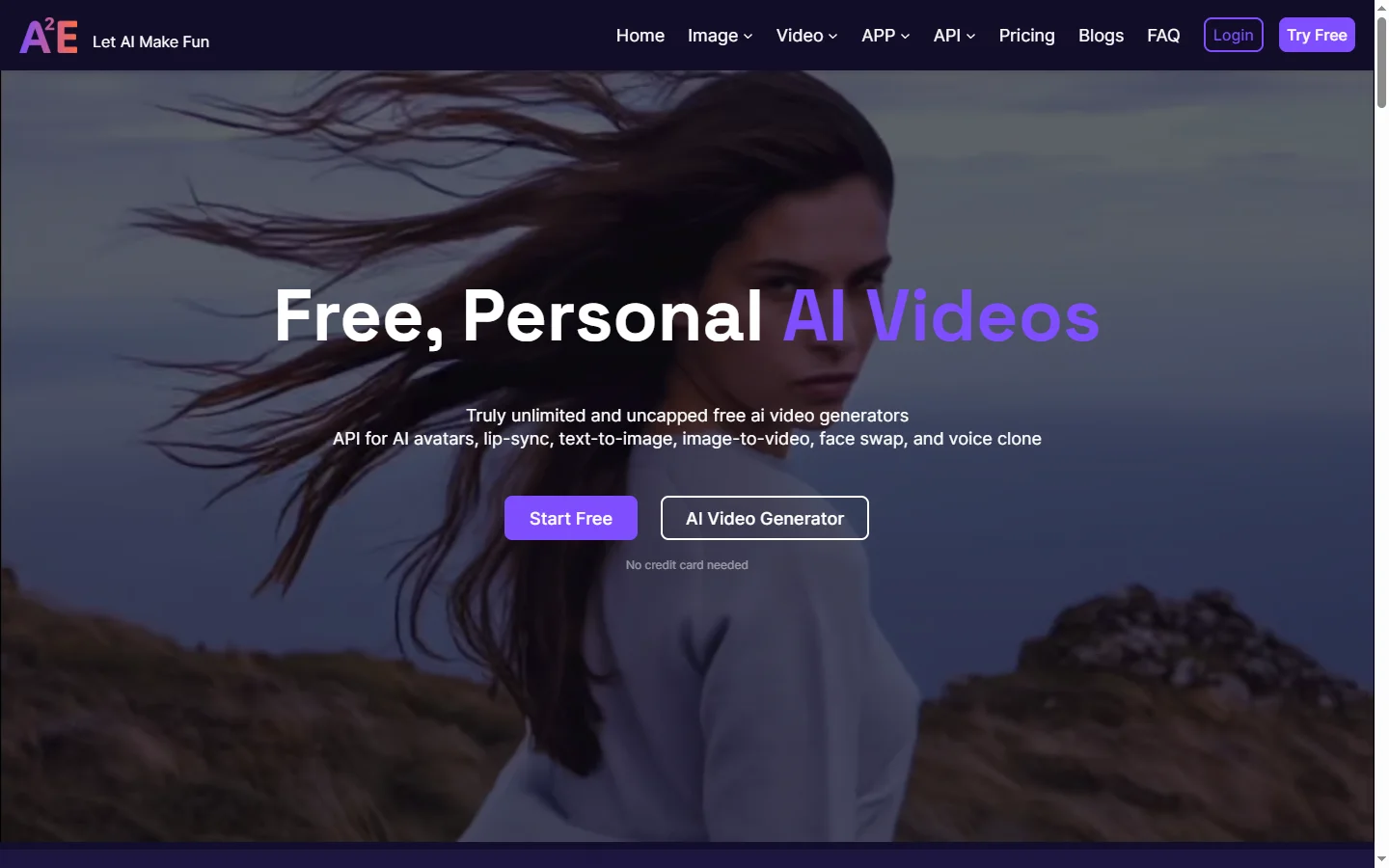
A2E AI
A2E AI productivity platform converts audio and video recordings into transcripts, summaries, and action items with speaker identification.
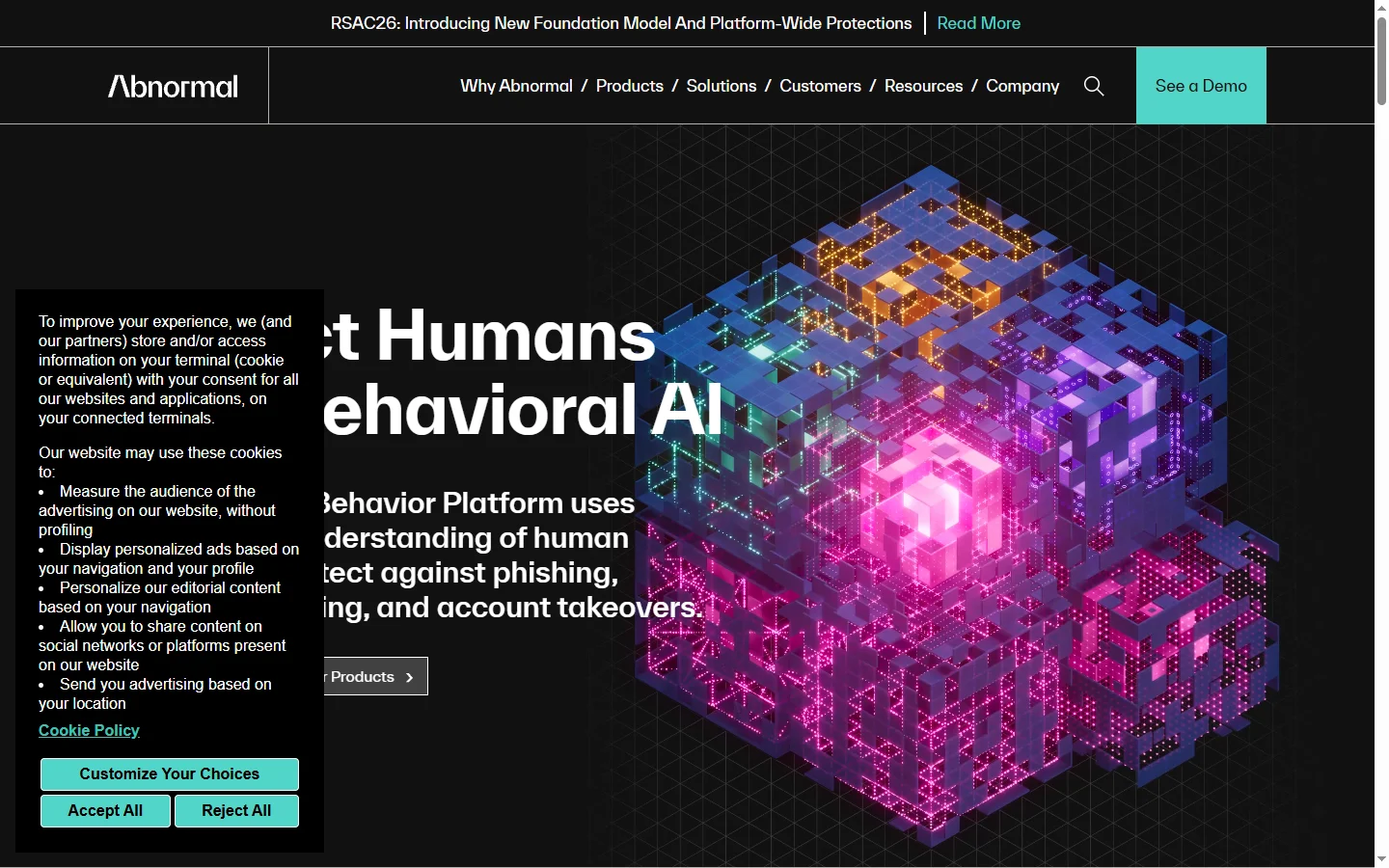
Abnormal AI
Abnormal AI uses behavioral AI to detect business email compromise, account takeover, and socially engineered phishing that bypasses secure email gateways.
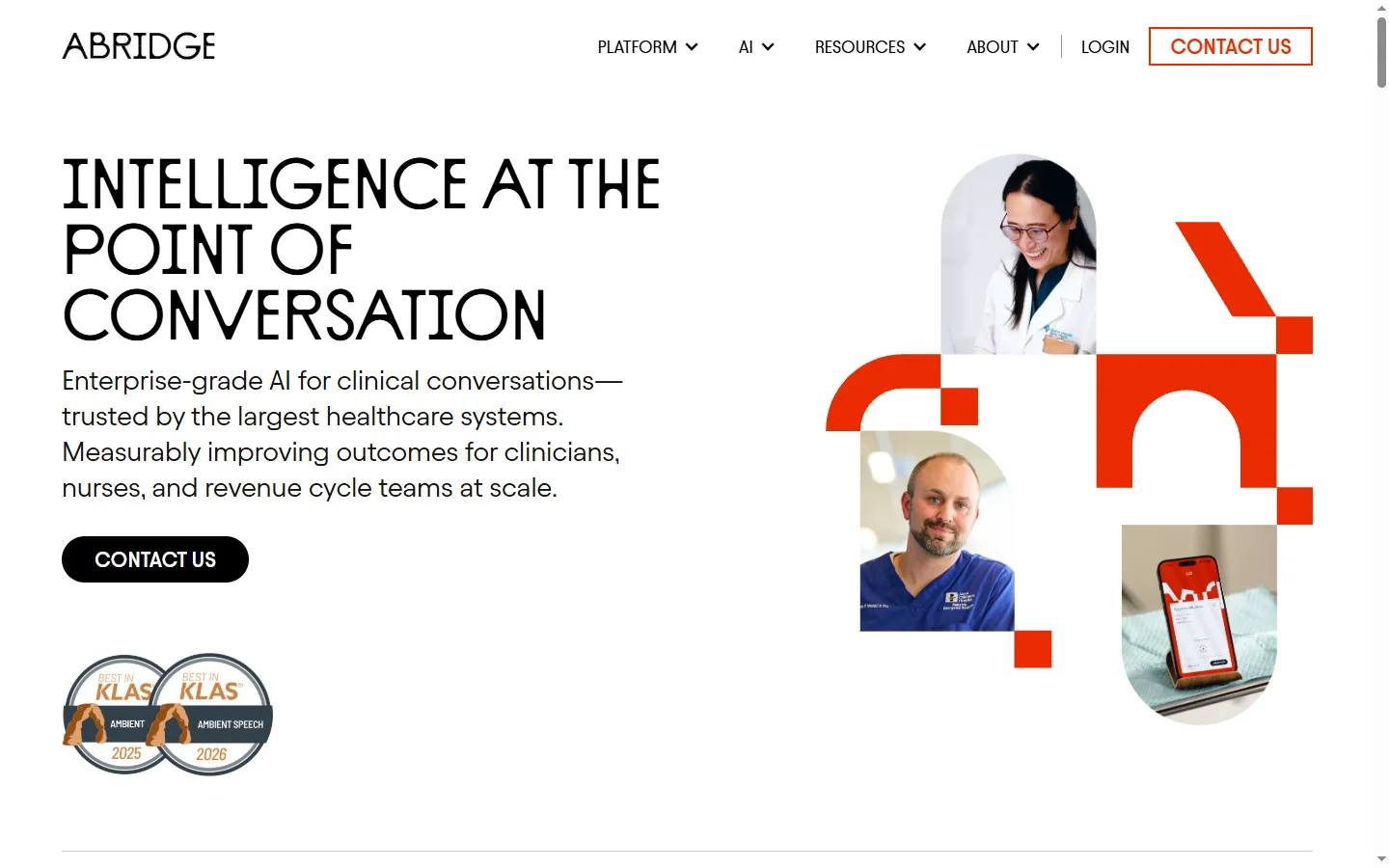
Abridge AI
Abridge AI medical documentation platform that records and summarizes clinical conversations into structured physician notes in real time.

Air AI
Air AI conducts autonomous full-length AI phone calls for sales prospecting, appointment setting, and customer service without human agents.