Amira Learning
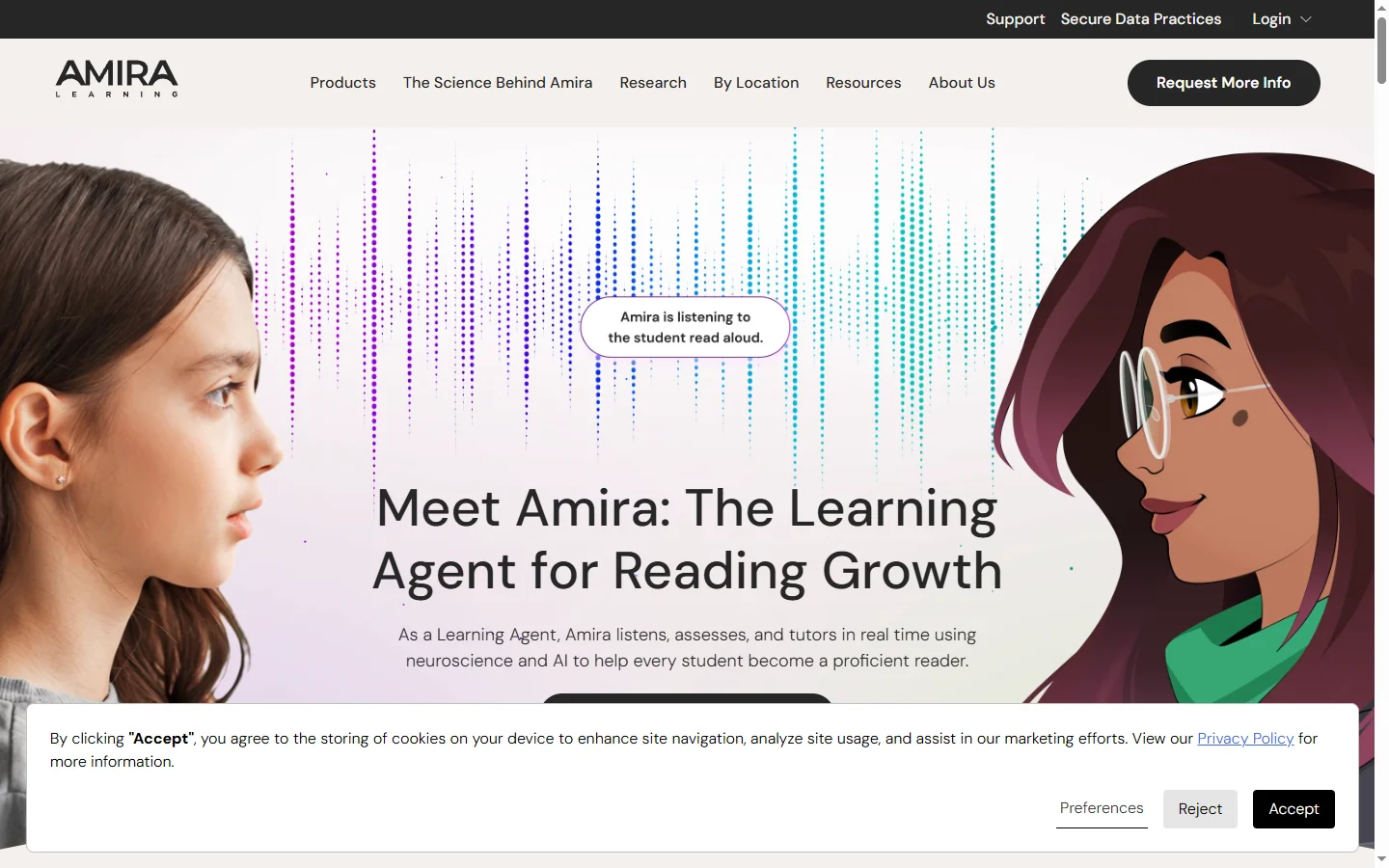
Paid ✓ VerifiedAmira Learning is an AI reading tutor for K-5 students that listens to children read aloud, gives real-time pronunciation help, and assesses literacy skills.
📋 About Amira Learning
Amira Learning is an AI reading tutor designed for K-5 elementary students that listens to children read aloud, provides real-time pronunciation and decoding help, and produces formative literacy assessments for teachers. Built on years of research from Carnegie Mellon University and the Center for Game Science, Amira combines speech recognition fine-tuned for child voices with an evidence-based science-of-reading instructional model. The result is a one-on-one digital tutor that can deliver the kind of personalized reading practice that classroom teachers can rarely provide at scale, particularly for early readers who need consistent feedback to develop fluency and phonics skills.
When a student reads a passage on Amira, the AI tracks every word, recognizes mispronunciations and skipped words, and intervenes with the right kind of help — a phonics hint, a syllable breakdown, a re-read prompt, or a vocabulary explanation — based on the specific error type. Sessions automatically feed into running records, oral reading fluency (ORF) scores, dyslexia screening flags, and other literacy assessments that align to standards like DIBELS, Acadience, and state benchmarks. Teachers see a dashboard of class-level and individual progress, including which students are stuck on specific skills and what intervention the platform is delivering.
Amira is sold to school districts and adopted at the classroom or grade level rather than as a consumer product, and it integrates with major LMS and SIS platforms used in U.S. K-5 education. Pricing is per-student per-year, with district-wide implementations the most common deployment model. The platform is widely cited in school improvement plans as a way to deliver high-dosage reading tutoring without hiring proportional numbers of human tutors, and independent studies have linked its use to measurable gains in early literacy outcomes.
⚡ Key Features of Amira Learning
AI Reading Tutor with Voice Recognition
Amira listens to students as they read aloud and uses speech recognition tuned for child voices and developing readers to identify mispronunciations, skipped words, and self-corrections in real time. This is significantly more accurate than general-purpose ASR systems, which typically fail on the irregular pronunciations and pacing of early readers. The tutor responds with targeted help instead of waiting for the student to finish.
Evidence-Based Tutoring Moves
When a student stumbles, Amira selects from a library of research-backed tutoring interventions — phonics prompts, syllable segmentation, vocabulary glosses, re-read prompts, and modeled reading — that match the specific error type. The instructional model is grounded in the science of reading, drawing on five-pillar reading research and approaches like Orton-Gillingham. This is why districts can use Amira as a replacement or supplement for human tutoring time.
Oral Reading Fluency and Running Records
Every Amira session automatically produces a running record, words-correct-per-minute score, accuracy, prosody indicators, and other standard literacy metrics. These align to widely used assessments like DIBELS and Acadience, so teachers can compare Amira results to existing benchmark testing. The automation removes hours of manual one-on-one assessment time per class per assessment window.
Dyslexia and Reading Risk Screening
Amira can flag early indicators of dyslexia and other reading difficulties based on error patterns over many sessions — letter reversals, decoding errors, slow processing, and characteristic confusions. These flags are surfaced to teachers and reading specialists as recommendations to follow up with formal screening, not as diagnoses. This early identification is one of the strongest justifications districts cite for adopting the platform.
Leveled Library and Personalized Practice
Students read from a leveled library of fiction and informational texts that auto-adjusts to their current reading level. The library spans Lexile or guided-reading-equivalent levels from emergent reader through middle elementary, and content is curated to be culturally responsive and engaging for early readers. Practice is personalized so each student spends time on the texts that will most likely advance their skill.
Teacher Dashboard and Reporting
Teachers see classroom-level and individual student dashboards covering practice minutes, fluency growth, skills mastered, and current struggles. The dashboard surfaces actionable next steps — for example, that three students need targeted vowel team practice — instead of just dumping raw data. Administrators get school- and district-level rollups for monitoring implementation and outcomes.
LMS, SIS, and Standards Integration
Amira integrates with major LMS and SIS platforms used in K-5 education, supports Clever and ClassLink rostering, and aligns to state and Common Core ELA standards. This makes deployment manageable for district IT teams and ensures that data flows correctly between Amira, gradebooks, and student information systems. Single sign-on support keeps the student experience friction-free.
🎯 Use Cases for Amira Learning
⚖️ Amira Learning Pros & Cons
Advantages
- ✓Speech recognition tuned specifically for child voices
- ✓Evidence-based, science-of-reading instructional model
- ✓Automates time-consuming running records and ORF assessments
- ✓Early dyslexia and reading risk screening
- ✓Strong integration with K-5 LMS and SIS platforms
Drawbacks
- ✗Sold to schools/districts — not directly available to families
- ✗Per-student pricing can be significant for small districts
- ✗Best for K-5 — limited value for middle and high school readers
- ✗Requires reliable microphones and quiet enough classroom audio
📖 How to Use Amira Learning
Schools contact Amira Learning for a district or campus license and complete a rostering setup via Clever, ClassLink, or direct upload.
Teachers log into the Amira teacher dashboard and review the rostered class lists and initial benchmark recommendations.
Students sign in through SSO on a Chromebook, tablet, or laptop with a working microphone and headphones.
Each student opens an assigned passage and reads aloud — Amira listens, helps in real time, and records errors and fluency data.
Teachers review the dashboard after each session to see which students need follow-up and what specific skills to target in small-group instruction.
Administrators monitor school- and district-level reports to track implementation fidelity and reading outcomes over time.
❓ Amira Learning FAQ
No. Amira Learning is a paid product sold to school districts and individual schools on a per-student per-year subscription. There is no consumer or direct-to-family free version, though some districts may make it available to students through school-issued devices.
Amira Learning is designed for K-5 elementary readers, with the strongest value for students in the early stages of reading development. The content and pedagogy are tuned for emergent readers through middle-elementary fluency.
Amira is designed to supplement, not replace, classroom teachers. It delivers personalized practice and automated assessment that frees teachers to focus on small-group instruction, intervention, and the social aspects of reading instruction that AI cannot replicate.
Amira can identify early indicators of dyslexia and other reading difficulties based on error patterns, and flag students for follow-up with reading specialists or formal screening. It is not a diagnostic tool and does not replace formal assessment by a qualified professional.
Yes. Amira's instructional model is built on the science of reading and reflects research from Carnegie Mellon University and broader literacy research, including emphasis on phonemic awareness, phonics, fluency, vocabulary, and comprehension.
Featured on WhatIf.ai
Add this badge to your website to show you're listed on WhatIf AI
Alternatives to Amira Learning

Diffit AI
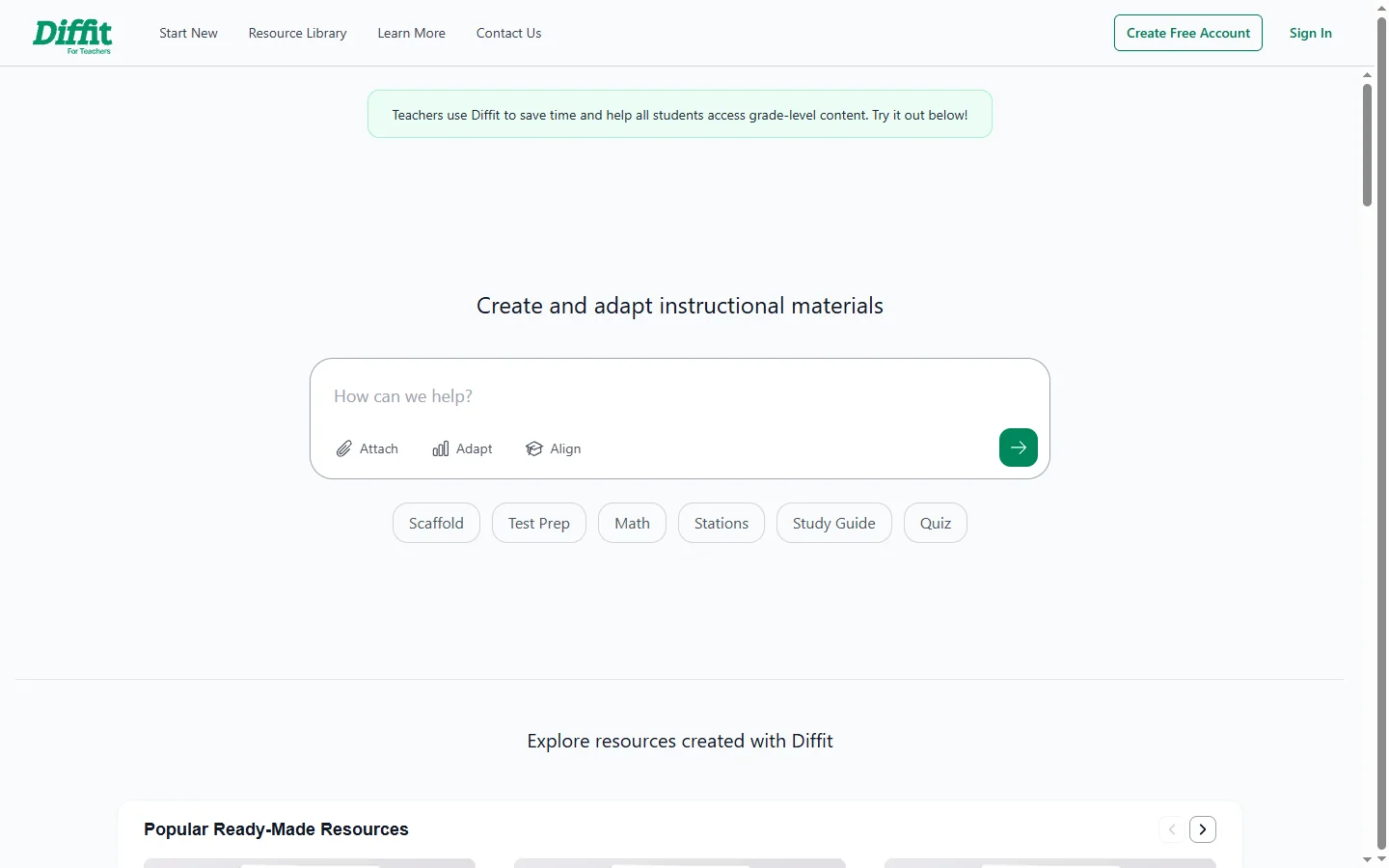
Diffit AI is a free educational tool that generates differentiated reading materials, quizzes, and vocabulary supports from any topic or source for classroom use.

Inspirit AI
Inspirit AI is an AI education platform offering courses, hands-on projects, and mentorship programs for students learning machine learning and AI.
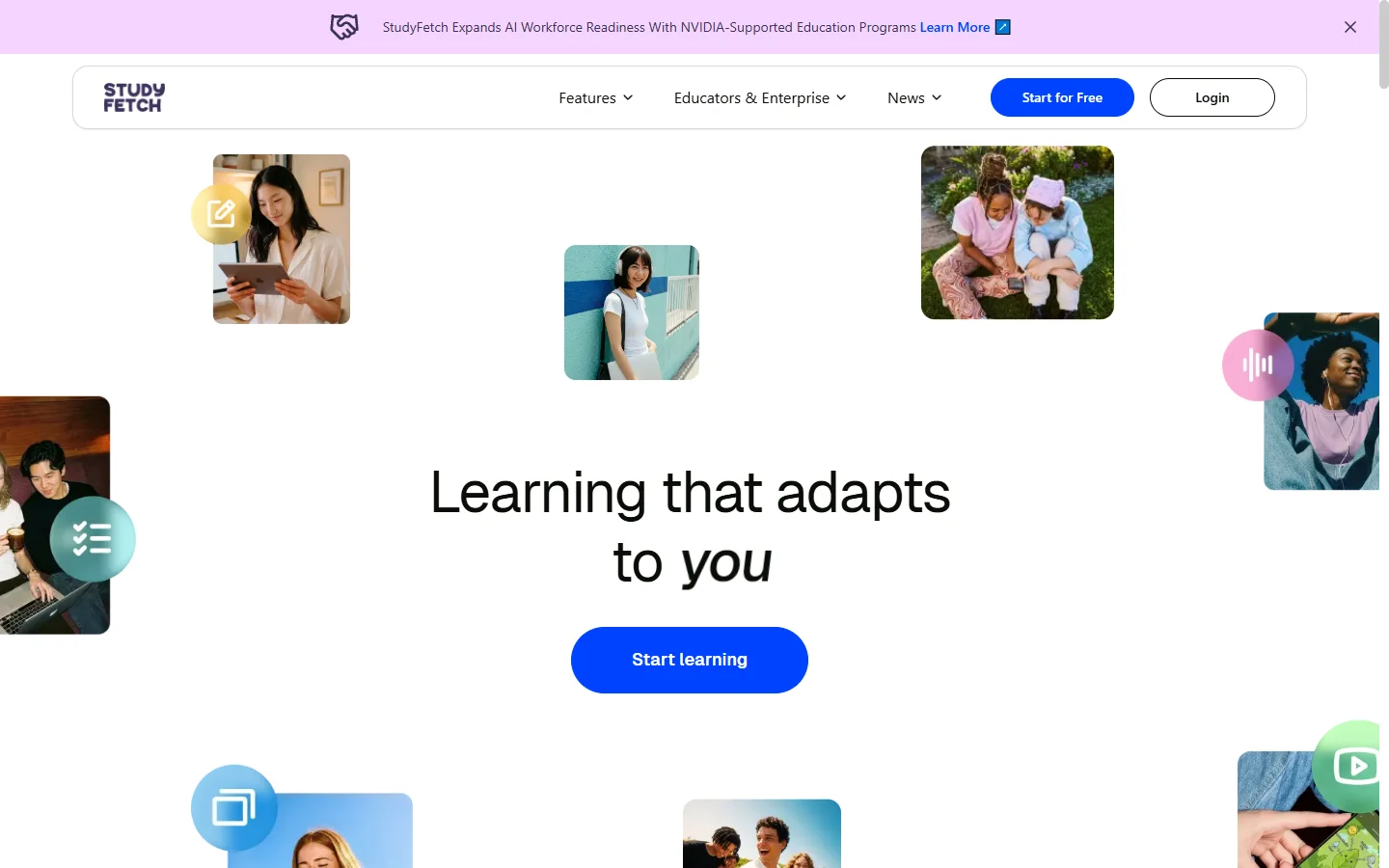

StudyFetch AI
StudyFetch AI converts course materials into flashcards, quizzes, and AI tutoring sessions to help students study more effectively from their own content.
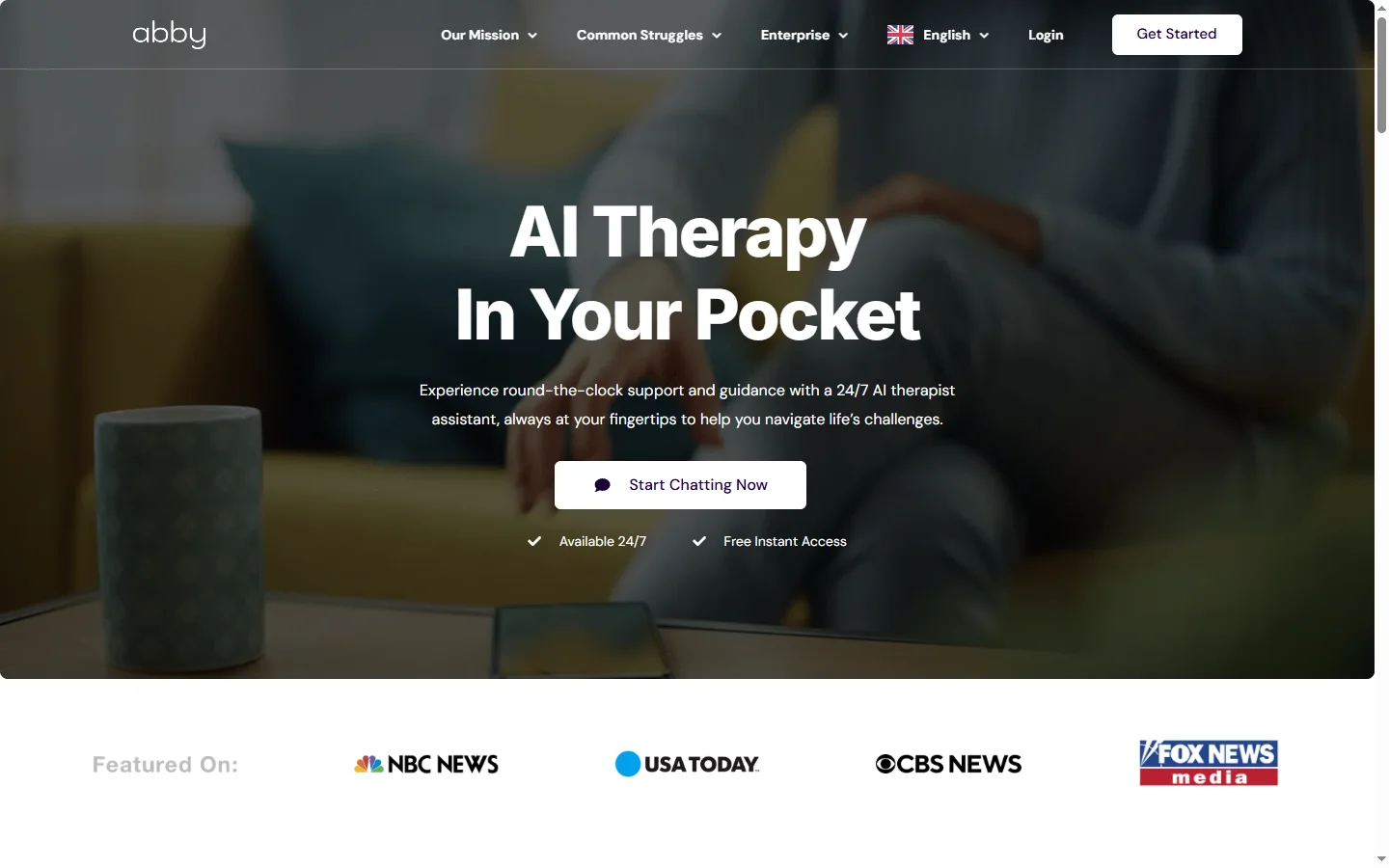

Abby AI
Abby AI is an AI therapy and mental wellness chatbot that offers CBT-informed conversations, mood tracking, and self-guided coping tools.